NEWS ARTICLE
Webcast series to build community resilience amid pandemic
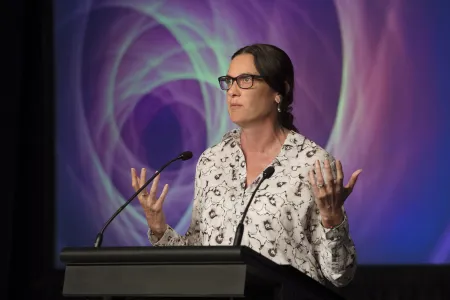
A free webcast series focusing on disaster, emergency management and community resilience will be run by Charles Darwin University’s Northern Institute starting this week.
The webcast series, named “Don’t Panic”, will draw on the Northern Institute’s research expertise to provide useful facts and perspectives from experts in the emergency management, risk and resilience, mitigation, response and recovery fields.
The first webcast will be held tomorrow (Thursday, 26 March), and features Deakin University’s Gerard Finnigan.
Mr Finnigan, an IKEA Foundation Humanitarian Leadership Scholar, will present an analysis of the critical challenges for the global health and disaster risk reduction sectors in the face of unprecedented humanitarian demand.
Director of the Northern Institute and Dean of the College of Indigenous Futures, Arts and Society, Professor Ruth Wallace said the webcast series would deliver relevant and accessible information to community members amid the ongoing impact of the COVID-19 pandemic.
“At a time of much uncertainty, these seminars aim to provide factual perspectives and information from key experts,” Professor Wallace said.
“Our aim is to keep our community informed, reassured and prepared. We hope the webcasts will help to answer people’s questions, deliver the facts and provide relevant information to help our communities remain resilient at this challenging time,” she said.
The webcasts will be held weekly, starting on Thursday, 26 March from 10.30am to 11.30am (ACDT).
To find out more follow the Northern institute on Facebook https://www.facebook.com/NorthernInstitute
Upcoming webcasts:
26 March 10.30am – 11.30am
Gerard Finnigan (Deakin University)
IKEA Foundation Humanitarian Leadership Scholar
PhD topic: preventing premature mortality from natural disasters
“Death, disasters and COVID19 – the hidden emergency for global health and Disaster Risk Reduction (DRR) sectors to confront”
2 April 10.30am – 11.30am
Dr Jonatan Lassa
Senior Lecturer - Emergency and Disaster Management
“Crisis Leadership from around the world: a brief reflection on COVID-19 pandemic”.
9 April 10.30 - 11.30am
Associate Professor Akhilesh Surjan
Research and Theme Leader - Humanitarian Response and Disaster Management Studies
“Disaster-environment-climate risk reduction in a rapidly urbanising world”
16 April 10.30 - 11.30am
Miranda Booth
Lecturer in Humanitarian, Emergency in Disaster Management Studies
PhD topic: Effective Foreign Military Engagement in Humanitarian Assistance and Disaster Relief: Australia in the South Pacific
“Crisis and Complacency: Why the cycle must stop with COVID-19”
23 April 10.30 - 11.30am
Dr Michaela Spencer - Postdoctoral Research Fellow – Indigenous Knowledge and Governance
Yasunori Hayashi - Lecturer in Indigenous Knowledges - Yolŋu Studies
Gawura Wanambi - Senior Lecturer in Aboriginal Studies
Joy Bulkanhawuy - Senior Lecturer in Aboriginal Studies
"From cyclones to COVID-19: Disaster management from an Yolŋu perspective"
Related Articles
Federal funding for Country-based health and climate resilience
A new research collaboration to support and strengthen Country-based health and climate resilience has received funding through the National Health and Medical Research Council’s Centres of Research Excellence scheme.
Read more about Federal funding for Country-based health and climate resilience
Indigenous people want violence out of their communities. Here’s a new approach
Read more about Indigenous people want violence out of their communities. Here’s a new approachElders say there are many drivers of community violence and unrest that go unaddressed by typical law and order responses. Here’s what they’re doing instead.

Location-specific solutions needed to manage heat in global climate crisis
Place-specific strategies for adapting to increasing temperatures are crucial to keeping remote towns and communities across Northern Australia habitable, according to a recent study on the future impacts of climate change-intensified heat on people in the geographic edges of Australia.
Read more about Location-specific solutions needed to manage heat in global climate crisis


