Opinion
‘You are a G. Not a gangster – you are a gift’: how art is supporting First Nations women in prison
Prison reform in Australia is experiencing what can only be described as a crisis of the imagination. The over-representation of Indigenous people in prisons is one Closing the Gap target that has not improved.
Yet, prison is also one of the places where the spirit of deadly resilience is most pronounced. Several well-known First Nations creatives either began their practice while incarcerated, or through some involvement with the prison system.
For example, Gunditjmara/Keeray Woorrong artists Christopher Austin, who features in the 2021 documentary The Art of Incarceration, matured his practice while in prison. And Ngarrindjeri artist Flick Chafer-Smith has talked openly about how art saved her life while in and out of prison.
In this, prison becomes a place of Indigenous resilience.
A growing effort
Since 2019, one of us (Adelle) has led the Y Write Prison Education Project in the Northern Territory. This project offers women in the Darwin Correctional Precinct the opportunity to engage in creative workshops focused on poetry, storytelling and mural painting. Last year, the project expanded to Northern Queensland.
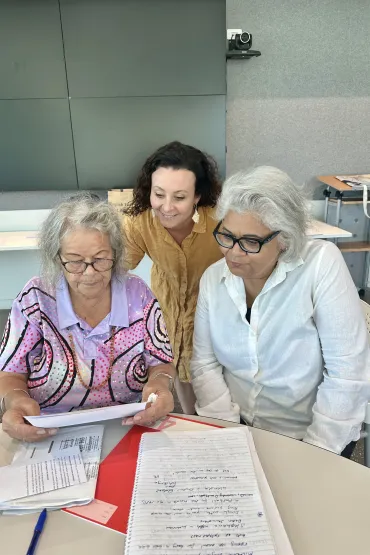
Since 2019, seven workshops have been run at the Darwin Correctional Precinct (typically coinciding with NAIDOC week) with more than 85 participants. The workshops explore themes that matter to the women. A 2023 workshop, for instance, explored the importance of being a “mother, doula or mentor”.
One participant from that year shared:
We do fall back, but we are strong right. We balance strength with everything else.
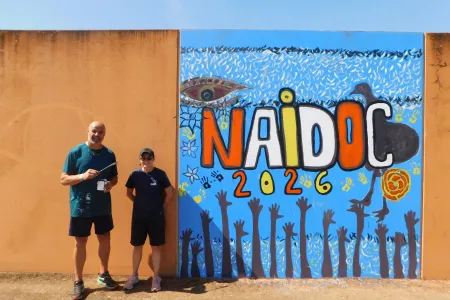
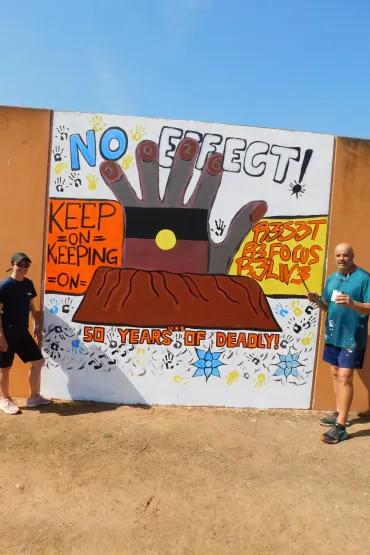
In NAIDOC week 2026, the project facilitated workshops in Darwin to create two murals celebrating this year’s theme, 50 Years of Deadly. This theme is:
a tribute to the people who built this movement. The Elders who stood firm, the organisers who made space, the artists who turned resistance into expression, and the communities who keep showing up, year after year.
The murals are now finished, on display inside the prison for incarcerated people to see and feel connected to NAIDOC celebrations.
Mentoring and connection
Throughout our years of involvement in this project, we have met many deadly artists within prisons. They have shared what creating art means to them, and their aspirations as artists.
As one workshop participant, Bianca, said in 2020:
Everyone is doing positive things and empowering each other, it’s uplifting and very encouraging. It’s deadly, deadly unna.
Workshops have also been held for women outside of the correctional system. One of the Townsville sessions was attended by First Nations poet Coralie Cassady. Cassady is a member of Elders for Change, a group dedicated to mentoring and supporting Aboriginal and Torres Strait Islander people in custody.
She visits the Townsville prison every Wednesday to support those on the inside. Cassady has also helped incarcerated authors edit their work for publication.
A chance for dreaming
Imaginative work can challenge old narratives about people in prison, encouraging First Nations creatives to dream their lives anew.
One Darwin poetry workshop participant explained what this meant to them:
This project means we can showcase our talents and skills which is a means to have a different outlook on our journey through life. Art is very important to me because it is an expression of my culture, my religion, my family, my prison community, my purpose in life and my country. It helps me to utilise my strengths and beliefs to the extent of being one with these things as well as providing an opportunity to reveal who I am.
Through these art workshops, First Nations women can imagine a better life for themselves and who they are becoming.
As one workshop facilitator expressed to participants:
You are a ‘G’. Not a gangster – you are a gift.
Adelle Sefton-Rowston, Associate Professor, Charles Darwin University and Yvette Holt, Indigenous Knowlegde, Indigenous Knowledge
This article is republished from The Conversation under a Creative Commons license. Read the original article.
Disclaimer: This is an opinion piece. The views and ideas discussed in this story are solely those of the author and it is not the position of the University. CDU is a university the nurtures the sharing and debating of ideas and issues for a better world.
Aligned with the United Nations Sustainable Development Goals
Good health and well-being
Goal 3
Ensure healthy lives and promote well-being for all at all ages.
Quality education
Goal 4
Ensure inclusive and equitable quality education and promote lifelong learning opportunities for all.
Peace, justice and strong institutions
Goal 16
Promote peaceful and inclusive societies for sustainable development, provide access to justice for all and build effective, accountable and inclusive institutions at all levels.
Related Articles
Rangers reimagine AI in wildlife monitoring
As workplaces around the world wrestle to integrate Artificial Intelligence in their operations, researchers and rangers in the heart of West Arnhem are successfully embracing this technology in conservation without compromising respect and knowledge.
Read more about Rangers reimagine AI in wildlife monitoring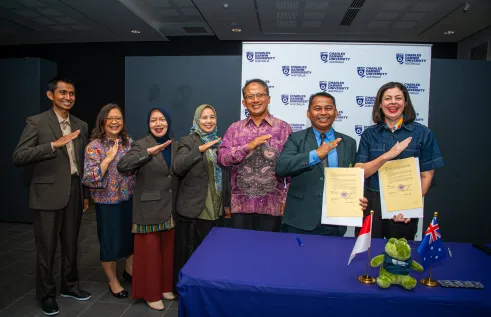
Partnership with Indonesian university to support education and research
A new partnership with one of East Java’s leading education institutions is aligning Charles Darwin University with priorities to strengthen Australia’s relationship with Indonesia.
Read more about Partnership with Indonesian university to support education and research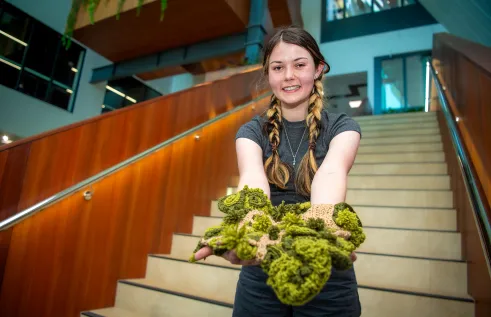
Crocheted landscape takes the gold in architecture competition
When tasked to defy growing reliance on artificial intelligence and create a landscape model without digital tools, Charles Darwin University (CDU) Bachelor of Architectural Design student Jorja Handebo turned to her hobby of the past five years: crochet.
Read more about Crocheted landscape takes the gold in architecture competition


