Northern Institute
Economic Justice for Indigenous Australians in the Renewable Energy Transition
| Presenter | Associate Professor Duygu Yengin – University of Adelaide | |
|---|---|---|
| Date/Time |
to
|
|
| Contact person |
Northern Institute
|
|
| Location | Room 08, Level 3, Danala Education and Community Precinct | |
| Open to | Public | |
The Impact of the Hydrogen and Renewable Energy Act 2023 (SA) on Bargaining Power and Economic Out Academic comes for Native Title Holders An Economic Modelling Analysis
About

The above report investigates the implications of the Hydrogen and Renewable Energy Act 2023 (SA)
(hereafter, the HRE Act) on the bargaining power and economic outcomes of native title holders with respect to renewable energy development on native title lands. The focus in this report is exclusively on Native Title Holders (hereafter, NTHs), who are uniquely affected by the Act’s design.
Utilizing economic modelling, this report examines how legislative mechanisms alter negotiation processes and seeks to inform deliberations on targeted amendments to the HRE Act to ensure that NTHs are able to negotiate on equal footing and receive compensation that properly reflects the full value of their land and cultural heritage. While the Act is currently specific to South Australia, other states may well adopt similar approaches. Comparable issues also arise in the mining sector.
Accordingly, the report provides insights and recommendations with relevance across Australia. It further highlights how legislation that is not subjected to economic analysis can inadvertently weaken Indigenous land rights and compensation outcomes.
Presenter
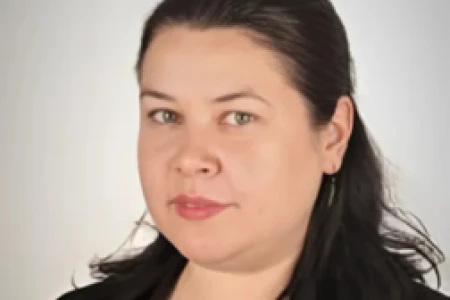
Assoc. Prof. Yengin (Uni of Adelaide) is a leading economist specializing in distributive justice, equitable resource allocation, fair negotiation processes, and social welfare analysis. Using advanced methodologies such as stakeholder analysis, bargaining, and game theory, she designs strategies that deliver just outcomes for communities with less bargaining power, particularly in contexts of poorly protected ownership rights, including compulsory land acquisitions and royalty negotiations.
Her interdisciplinary expertise, blending economics, law, and political philosophy, drives innovative approaches to societal challenges, ensuring negotiations balance fairness with efficiency, whether for land use, native title negotiations, clean energy, or resource distribution.
Her policy recommendations on compulsory acquisitions have shaped legislative processes, with key recommendations tabled in the SA Parliament in 2022. Her 2025 report analyzed the negative impacts on negotiation outcomes for Native Title holders under the Hydrogen and Renewable Energy Act (SA) 2023. A passionate advocate for equity and community empowerment, she is dedicated to partnering with First Nations groups to create fair, sustainable outcomes in clean energy transitions and resource management.
Registration
In-person: Please RSVP to attend in person.
Online: Once you register, you will receive an individual link from Zoom no-reply@zoom.us.
Each seminar is recorded and linked to our Seminars page.
Getting there
Room 08, Level 3
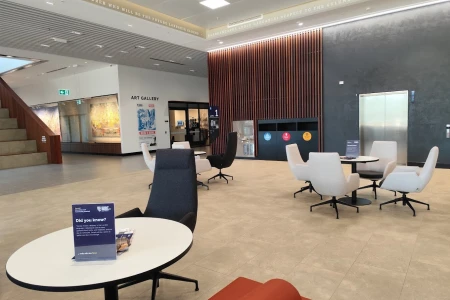
Danala Education and Community Precinct>
54 Cavenagh Street, Darwin City, NT, 0800
Google Maps Location
Access: If you have any additional access or support requirements, please contact us. Level 1 is street level and has bathrooms, CDU student services and security available on this floor. Please note that there will be directional signs on the event day and that the underground car parking is not available yet so please use the surrounding street parking.
Related Events

Seen, Heard, Counted: The power and importance of the Census in 2026
Join us in the lead up to the census, and understand its importance for Australias future.
Read more about Seen, Heard, Counted: The power and importance of the Census in 2026
Last refugium of a critically endangered species: Three decades of conservation
The Banggai Crow (Corvus unicolor), is one of the world’s most threatened endemic species. The bird survives in an increasingly fragmented refugium within the Banggai Archipelago, Central Sulawesi.
Read more about Last refugium of a critically endangered species: Three decades of conservation
Marine science in the NT: From research and monitoring to stock assessment
In this seminar, the team will provide an overview of fisheries research in the Northern Territory, highlighting monitoring programs, data collection, and how these activities inform stock assessment and fisheries management
Read more about Marine science in the NT: From research and monitoring to stock assessment


