Northern Institute
Mobile Phone Big Data Analysis and the COVID-19 Pandemic
| Presenter | Dr. Kazumasa Hanaoka | |
|---|---|---|
| Date/Time |
to
|
|
| Contact person |
Northern Institute
|
|
| Location | Room 16, Level 4, Education and Community Precinct, Charles Darwin University | |
| Open to | Public | |
About the seminar:
During the COVID-19 pandemic, many countries including Japan imposed lockdowns several times, leading to significant changes in people's spatial behaviour.
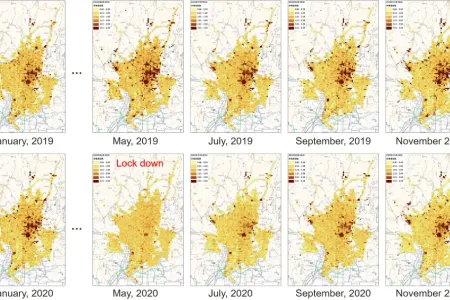
Spatial big data from mobile phones has emerged as a valuable tool for tracking these patterns. Using one of the largest datasets available in Japan, we propose methods to calculate the rates of outings and the geographical distributions, and inflows from outside the city during the pandemic at the 250-metre grid cell level in Kyoto City. We found that: first, the rate of 'staying at home' did not return to its previous level and remained about 5 percentage points higher. Second, people moved around the city broadly, but avoided visiting the city centre where they could not maintain social distance and where shops were closed by government requests. Third, after the lifting, the number of visitors from outside the city has recovered rapidly in the city centre and tourist areas, but not in residential and neighbourhood commercial areas.
About the presenter:
Dr. Kazumasa Hanaoka is an associate professor in the Department of Geography, Ritsumeikan University, Japan. His research activities cover a range of topics related to spatial microsimulation modelling, spatio-temporal analysis using mobile phone data, and census data analysis on the migration of foreign residents. He is the former director of the Institute of Disaster Mitigation for Urban Cultural Heritage, Ritsumeikan University.
You can register for the event:
In-person (limited seating) : Please RSVP here
Online registration: Zoom webinar registration
Once you register you will receive an individual link from Zoom no-reply@zoom.us
Getting there:
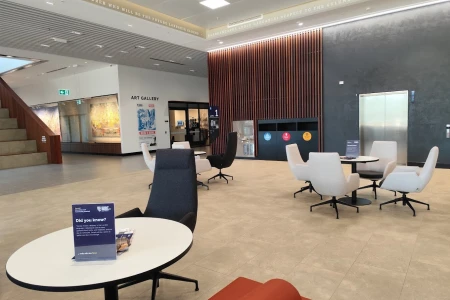
Room 16, Level 4
CDU Danala| Education and Community Precinct
54, Cavenagh Street,
Darwin, NT 0800
Google Maps Location
Related Events
Seen, Heard, Counted: The power and importance of the Census in 2026
Join us in the lead up to the census, and understand its importance for Australias future.
Read more about Seen, Heard, Counted: The power and importance of the Census in 2026
Last refugium of a critically endangered species: Three decades of conservation
The Banggai Crow (Corvus unicolor), is one of the world’s most threatened endemic species. The bird survives in an increasingly fragmented refugium within the Banggai Archipelago, Central Sulawesi.
Read more about Last refugium of a critically endangered species: Three decades of conservation
Marine science in the NT: From research and monitoring to stock assessment
In this seminar, the team will provide an overview of fisheries research in the Northern Territory, highlighting monitoring programs, data collection, and how these activities inform stock assessment and fisheries management
Read more about Marine science in the NT: From research and monitoring to stock assessment


