RIEL Seminar Series – Machine learning and Traditional Knowledge to map wetland change
| Presenter | Porni Mollick | |
|---|---|---|
| Date/Time |
to
|
|
| Contact person |
Research Institute for the Environment and Livelihoods
|
|
| Location | Yellow 1, Level 2, Room 48 at CDU Casuarina Campus, and online via Zoom (see below for Zoom link). All times are ACST. | |
| Open to | All International audience, CDU staff and students, International students, Public | |
Porni Mollick is a PhD candidate with the Research Institute for the Environment and Livelihoods (RIEL) at Charles Darwin University.
Wetlands are important ecosystems that support the environment, culture, and local communities. In northern Australia, especially in the Northern Territory, wetlands are mostly natural but face growing pressures from climate change and human activities.
In the seminar ‘Machine learning and Traditional Knowledge to map wetland change’, Porni will discuss a study that used satellite imagery and Indigenous Knowledge to assess wetland changes in the Daly River catchment between 2015 and 2024. Seven types of wetlands were mapped, revealing an overall increase of 36%, likely influenced by climatic drivers such as the El Niño–Southern Oscillation and the Indian Ocean Dipole. The work achieved high classification accuracy and demonstrates how integrating modern technology with Traditional Ecological Knowledge can enhance the protection and management of wetlands into the future.
Porni’s research focuses on climate change and water extraction impacts on wetlands in northern Australia. Porni holds an honours degree and three master degrees, including a Master of Philosophy in Environment, Remote Sensing, Geography and Earth Sciences. With nearly six years of experience, her research interests are remote sensing, geographic information systems, hydrology, landscape ecology, freshwater science, and climate change adaptation.
Related Events
The Diversification Myth
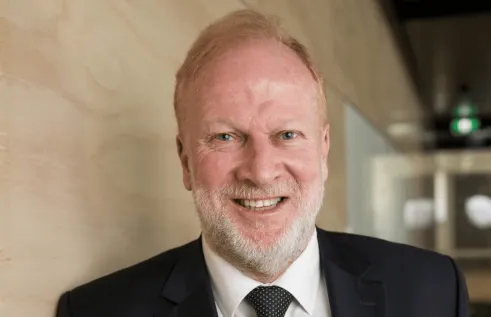
Free public lecture featuring finance experts led by Professor Tom Smith, will examine whether spreading investments across international markets genuinely protects global investors from risk.
Read more about The Diversification Myth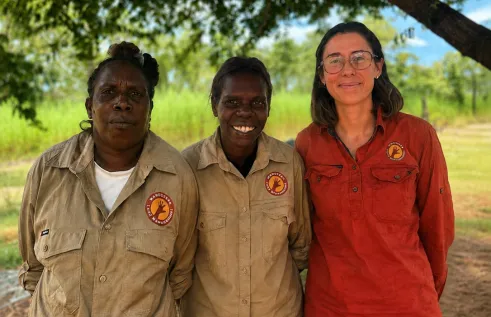
Monitoring to inform effective management decisions – Insights from Warddeken IPA
In this seminar, Cara, Suzanna, and Alexandra will present on an Indigenous-led monitoring governance approach used on Warddeken Country. This approach ensures monitoring is guided by Traditional Owners, scientifically robust, culturally grounded, and directly applied to management planning, implementation and evaluation.
Read more about Monitoring to inform effective management decisions – Insights from Warddeken IPA
Rising Tides, Melting Glaciers: The Ancestral Present of Dispossession in the (Italian) Alps and (Australian) Northwestern Coast
Join us for this seminar that explores current research on the ancestral present of two areas undergoing dramatic changes in their water-based political-ecologies: Carisolo in the Italian Alps and the Anson Bay coastlands of Northwestern Australia.
Read more about Rising Tides, Melting Glaciers: The Ancestral Present of Dispossession in the (Italian) Alps and (Australian) Northwestern Coast


