News Article
3D print training assists Australian Army in remote NT
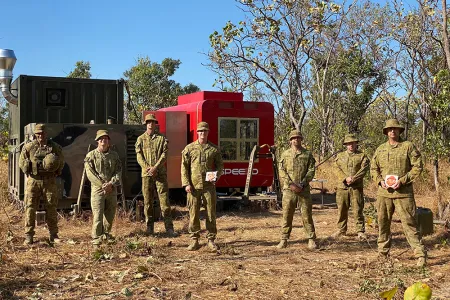
Charles Darwin University engineers have travelled to a remote area in the Northern Territory to train Australian Army soldiers in cutting-edge metal 3D printing technology.
The training is part of a $1.5million partnership between the Australian Army, CDU’s Advanced Manufacturing Alliance (AMA) and technology developer SPEE3D.
The 12-month pilot program includes training soldiers in 3D printing on the LightSPEE3D metal printer on Casuarina campus and trialling SPEE3D’s large format WarpSPEE3D 3D metal printer in remote locations of the Northern Territory.
Little over a week after arriving at Darwin’s Robertson Barracks, soldiers from the 1st Combat Service Support Battalion (1 CSSB) deployed the printer to Mount Bundey field training area, 120km south east of Darwin.
AMA engineer Matthew Harbidge said he worked with the soldiers during the tree-day trial in the operation and set-up of the printer.
“The aim of the exercise was to trial the transport, set-up and operation of the equipment in the field in various locations across uneven terrain,” Mr Harbidge said.
“We were able to easily transport and set-up up the printer to be operational and ready to print within about 30 minutes.”
This follow on from an initial 10-week training period with AMA engineers covering everything from the fundamentals of design, 3D modelling and printing, to testing and certification.
1 CSSB Commanding Officer, Lieutenant Colonel Kane Wright said this phase had seen the 3D printing capability deployed to the field, alongside vital military equipment, contributing to the mission during this training cycle
“The ability to print repair parts in an environment like this has the potential to significantly reduce our footprint and repair damaged equipment – on the spot – to get us back to our main priority,” Lieutenant Colonel Wright said.
The program aims to significantly increase parts available to the Army compared to what the regular supply chain can provide.
Related Articles

The good, the bad, and the ugly food: Why religious shoppers are buying bruised veggies
A recent study with Charles Darwin University examines how consumers’ religiosity influences the purchase of “ugly foods”, or foods that are aesthetically imperfect but nutritious.
Read more about The good, the bad, and the ugly food: Why religious shoppers are buying bruised veggies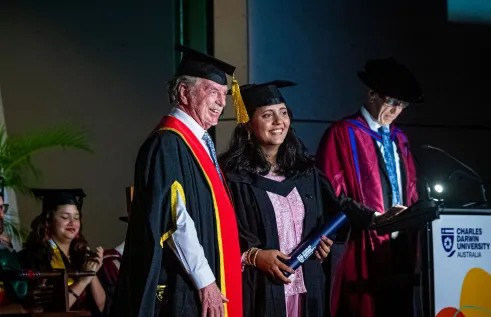
Student Council President celebrates graduation, prepares to pass the torch to new team
After serving as the Charles Darwin University (CDU) Student Council President for two years, Shishtata Bhandari has graduated and is preparing to hand over the reins to the council's next leader.
Read more about Student Council President celebrates graduation, prepares to pass the torch to new team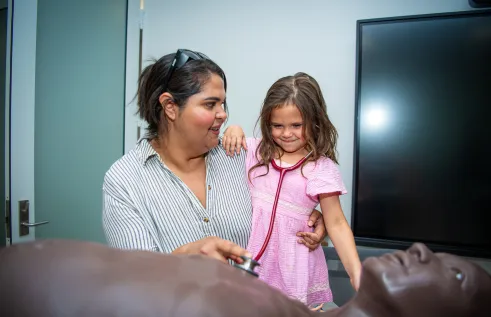
Sisters’ bequest makes ‘meaningful contribution’ to First Nations health programs
A bequest from sisters Alison Jackson and Nancy Kingsland is helping First Nations medical students at Charles Darwin University pursue their studies and prepare to serve their communities.
Read more about Sisters’ bequest makes ‘meaningful contribution’ to First Nations health programs


