News article
Malaria researcher awarded $1.25m national fellowship
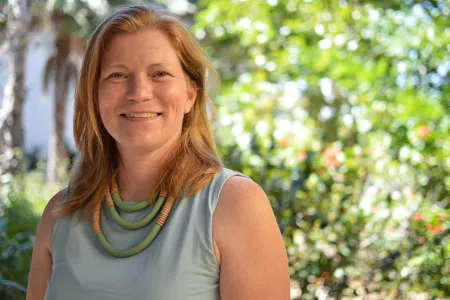
Menzies School of Health (Menzies) researcher Dr Kamala Thriemer has been awarded a prestigious $1.25 million CSL Centenary Fellowship to develop and optimise treatment programs against vivax malaria in South-east Asia and the Horn of Africa.
Vivax malaria is the second largest cause of malaria deaths and is difficult to treat as the parasite can hide in the liver and re-emerge months later. Studies have shown that as few as one in 10 patients successfully complete the long course of treatment.
The Plasmodium vivax strain of malaria represents a challenging foe and is responsible for more than 14 million cases of infection every year, many of them fatal, yet receives little attention.
Dr Thriemer, who is a graduate of the Medical University Vienna (MUV) in Austria, has been at Menzies for the past six years where she has led large clinical trials in malaria-endemic countries including Ethiopia, Bangladesh, Indonesia and Vietnam.
“P. vivax is hard to tackle because after the initial attack, it can hide in the liver and reappear weeks, even months later. A long period of treatment is required which patients often don’t complete, so they get sick again,” Dr Thriemer said.
“We have shown that shorter treatments than those that are currently used work well and we hope that it will be easier for people to complete their treatment,” she said.
Her research reveals that public health strategies to improve treatment outcomes must align with the geographic and economic conditions in any given nation. The five-year CSL Centenary Fellowship will enable Dr Thriemer to generate country-specific roadmaps to guide public health programs.
It will also assist Darwin’s growing reputation as a key location for tropical health research.
“Darwin is a tropical city, located much closer to Jakarta than Melbourne, which makes it a perfect home for tropical health research,” she said.
The CSL Centenary Fellowships aim to provide funding stability for leading Australian researchers through high-value, long-term support.
Related Articles

Federal funding for Country-based health and climate resilience
A new research collaboration to support and strengthen Country-based health and climate resilience has received funding through the National Health and Medical Research Council’s Centres of Research Excellence scheme.
Read more about Federal funding for Country-based health and climate resilience
New livestream brings remote Australian arid zone waterhole to the world
A new livestream from a remote waterhole in the Northern Territory is giving people around the world the opportunity to observe wildlife in real time.
Read more about New livestream brings remote Australian arid zone waterhole to the world
How ants are cashing in on the fight against money laundering
An AI model inspired by ants, bees, and birds could be the key to cracking down on blockchain-based money laundering, new research led by Charles Darwin University (CDU) has found.
Read more about How ants are cashing in on the fight against money laundering


