News
CDU Appoints Associate Vice-Chancellor East Arnhem region
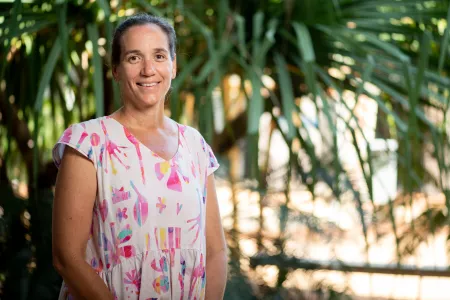
A Territorian with strong ties to the region has been appointed as Associate Vice-Chancellor East Arnhem Region to re-establish CDU’s presence in East Arnhem.
Alice Doyle, who most recently was the Superintendent Training and Indigenous Participation at Rio Tinto Gove Operations, will be taking up the role on March 28 and will be based in Nhulunbuy.
Ms Doyle, who has more than 20 years’ experience in education, oversaw the delivery of the learning and development needs of more than 300 employees at Rio Tinto for the past four years.
Ms Doyle said that she was honoured to start in the role of CDU Associate Vice-Chancellor East Arnhem Region.
“The recognition of the University to provide a reinvigorated service within this region is exciting and I’m looking forward to being part of the journey,” Ms Doyle said.
Ms Doyle has multiple qualifications, including a Graduate Diploma in Education, Personal Development and Health and Physical Education as well as a Diploma in Human Resource Management.
Ms Doyle has a deep understanding of human resources and international relations, VET systems, audit, ASQA Compliance, and workforce development and has lived in the region for the last four years.
“The region is looking forward to having a local tertiary institution that will promote learning pathways to the local community,” Ms Doyle said.
“As the industry in the region changes and grows, there are many prospects that CDU can support through education and research.”
Deputy Vice-Chancellor First Nations Leadership (DVCFNL) Professor Reuben Bolt said Ms Doyle brought with her a wealth of knowledge and skills across tertiary and secondary education, industry, and local government.
“This is a strategic role that will re-establish our presence in East Arnhem as we continue our journey to be the country’s most connected university by being courageous and making a difference in the Northern Territory, Australia and beyond,” Professor Bolt said.
“Ms Doyle has a nuanced understanding of the current industry and workforce needs of the East Arnhem region, and is very well placed to lead this regional engagement.”
Related Articles
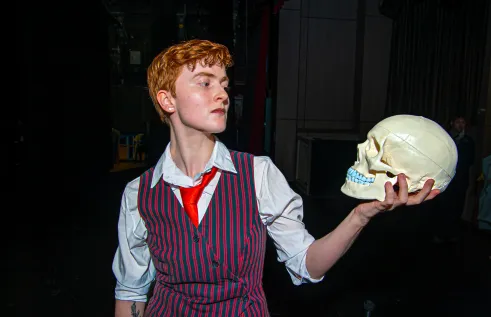
Hamlet gets a contemporary twist in Darwin
Shakespeare’s most famous tragedy will be brought into the modern world in a bold new production of Hamlet at Charles Darwin University Theatre this month.
Read more about Hamlet gets a contemporary twist in Darwin
The good, the bad, and the ugly food: Why religious shoppers are buying bruised veggies
A recent study with Charles Darwin University examines how consumers’ religiosity influences the purchase of “ugly foods”, or foods that are aesthetically imperfect but nutritious.
Read more about The good, the bad, and the ugly food: Why religious shoppers are buying bruised veggies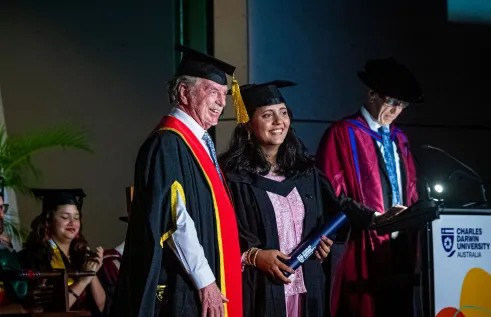
Student Council President celebrates graduation, prepares to pass the torch to new team
After serving as the Charles Darwin University (CDU) Student Council President for two years, Shishtata Bhandari has graduated and is preparing to hand over the reins to the council's next leader.
Read more about Student Council President celebrates graduation, prepares to pass the torch to new team


