News
CDU opens centre to push boundaries on drone research
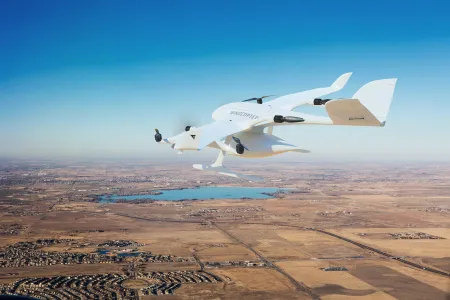
A new research and training centre for drones has been established for the first time in the Northern Territory at Charles Darwin University (CDU).
The North Australia Centre for Autonomous Systems (NACAS) will ensure the University can maintain leadership in transformative technologies, like drones, in the Northern Territory and the wider Asia Pacific region.
These machines and their associated artificial intelligence will play a key role in logistic supply chains, and the monitoring and surveillance for a broad range of industries and sectors relevant to Northern Australia.
These include border security, agriculture, fisheries, emergency and disaster planning, health care, resource extraction, and energy.
Centre Director Professor Hamish Campbell said demand for unmanned Autonomous System based services is set to grow exponentially over the coming decade.
“Charles Darwin University's strategic location and immediate proximity to uncluttered air space has made it a key partner for government and industry in the development of Australia’s emerging autonomous technology industry,” Professor Campbell said.
“We know that the emerging autonomous technologies is a key area for investment and growth in North Australia, and this centre is about ensuring CDU becomes a leader in autonomous technology research and training.”
“Having a physical location in Darwin, Katherine, and Alice Springs, will be an attractive offering for autonomous system manufactures wishing to relocate or create an arm in Northern Australia, which would attract these companies to Territory.”
CDU has already been working to integrate drones into logistical remote area supply chains of the Northern Territory and the associated research to accompany this.
The centre has already attracted interest and funds from national and international partners.
Last month, the Federal Government announced that NACAS was one of 12 projects that received a share in $12 million from the Emerging Aviation Technology Partnership program.
The funding will go towards a trial of drone service delivery for health-related items between health centres and remote communities in the West Arhem region.
CDU and Royal Melbourne Institute of Technology University also received $1.4 million from the CSIRO as part of the Next Generation Graduate Program to help train a workforce at Darwin’s new TestLabs 4.0 in emerging technologies such as applied AI, digital twins and threads, machine learning, robotics, cyber security, and modern manufacturing.
CDU will be training the next generation of workplace ready remote pilots to operate safely and effectively in the Northern Territory by soon offering AVI30419 Vocational Education Training Certificate III course in Aviation (remote pilot) for interested students.
Earlier this year, CDU announced it will house an advanced manufacturing and test flight facility CDU-RMIT Industry 4.0 TestLab for the development of uncrewed Autonmous Aircraft at Casuarina campus, as well as broader aerospace and defence industry parts.
The Centre is also engaging Aboriginal corporations and land councils to deliver on-site pilot training throughout the Northern Territory and develop novel programs to teach and distribute emerging technology information to these communities.
For more information head to www.nacas.net.
Related Articles

Federal funding for Country-based health and climate resilience
A new research collaboration to support and strengthen Country-based health and climate resilience has received funding through the National Health and Medical Research Council’s Centres of Research Excellence scheme.
Read more about Federal funding for Country-based health and climate resilience
New livestream brings remote Australian arid zone waterhole to the world
A new livestream from a remote waterhole in the Northern Territory is giving people around the world the opportunity to observe wildlife in real time.
Read more about New livestream brings remote Australian arid zone waterhole to the world
Leading scientist recognised for lifetime of dedication to Australian biodiversity and conservation
One of the nation’s most distinguished experts in Australian biodiversity and conservation will be celebrated in an upcoming Charles Darwin University graduation ceremony.
Read more about Leading scientist recognised for lifetime of dedication to Australian biodiversity and conservation


