CDU strengthens defence ties with Alliance
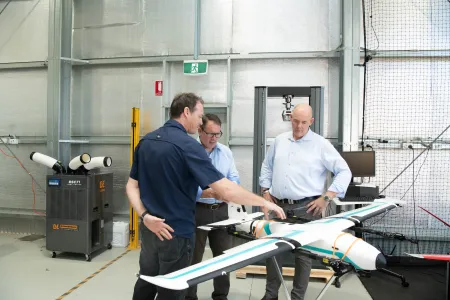
Charles Darwin University (CDU) will bring its strategic location and unique research capabilities to the table of an important organisation dedicated to advancing Australia’s defence innovation, science, and technology capabilities.
With support from the Northern Territory Government, CDU has become a member of the Queensland Defence Science Alliance (QDSA), a node of the Australian Defence Science and Universities Network (ADSUN), which brings together research institutes and industry to find solutions for defence problems.
The new collaboration between CDU and QDSA makes ADSUN a truly national network with member universities in every state and territory across Australia.
CDU will complement QDSA with knowledge and research in areas relevant to Northern Australia such as tropical health, remote area drone operations and advanced manufacturing, and cyber security.
QDSA’s key strengths currently include trusted autonomy, quantum technology, artificial intelligence, hypersonics, and space.
CDU Deputy Vice-Chancellor Research and Innovation Professor Steve Rogers said the membership to Australia’s key innovation network for the defence industry was an advantageous move for the University and the nation.
“We are excited to join forces with QDSA and its Queensland members to forge new opportunities for CDU and NT industry in supporting defence research.” Professor Rogers said.
“It's a logical step to join an established ADSUN node, and one that is in alignment with defence's aim for the Network to have representation Australia-wide.
“Defence has a key role to play in the NT, comprising nearly 10 per cent of the Territory economy, and Australia’s north in general has been recognised by the Federal Government as being strategically vital.
“Through joining QDSA, CDU will help open opportunities for the University and the wider local economy while also supporting our national security. When universities collaborate, it brings the best minds together to help solve problems and advance local industry.”
Federal Member for Solomon Luke Gosling OAM MP was thrilled for CDU to join the network.
“The expansion of the Australian Defence Science and Universities Network to include the Northern Territory is a win-win for Australian Defence Force, defence industry and the university research sector,” Mr Gosling said.
“CDU has a history of support for defence; including for training, health services and advanced research and development.
“As the Territory’s University, I have no doubt CDU will enrich this important national research network through our expertise on tropical health, remote area drone operations, advanced manufacturing and cyber security.
“Charles Darwin University joining the Queensland Defence Science Alliance and therefore the Australian Network, will see greater defence-focused collaboration for the benefit of our defence and national security.”
Related Articles

Federal funding for Country-based health and climate resilience
A new research collaboration to support and strengthen Country-based health and climate resilience has received funding through the National Health and Medical Research Council’s Centres of Research Excellence scheme.
Read more about Federal funding for Country-based health and climate resilience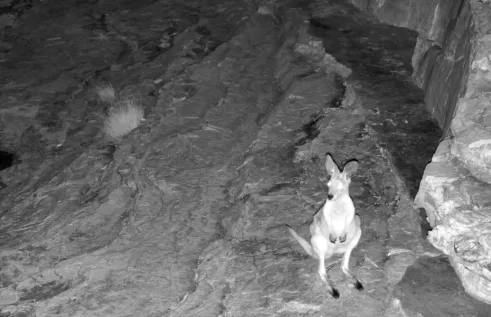
New livestream brings remote Australian arid zone waterhole to the world
A new livestream from a remote waterhole in the Northern Territory is giving people around the world the opportunity to observe wildlife in real time.
Read more about New livestream brings remote Australian arid zone waterhole to the world
Leading scientist recognised for lifetime of dedication to Australian biodiversity and conservation
One of the nation’s most distinguished experts in Australian biodiversity and conservation will be celebrated in an upcoming Charles Darwin University graduation ceremony.
Read more about Leading scientist recognised for lifetime of dedication to Australian biodiversity and conservation


