CDU students pitch sustainable solution to medical waste
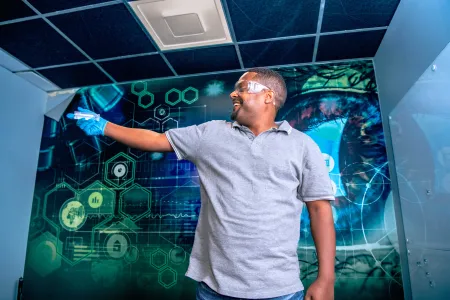
Charles Darwin University (CDU) participated in their first international Urban Innovation and Entrepreneurship Competition this week, with students pitching a sustainable solution to the growing problem of medical waste.
25 student teams from across eight universities in Portugal, Spain, South Africa, China, Malaysia and Australia competed for ¥300,000 (approx. $64,000 AUD) in hopes of securing capital to get their projects off the ground and into market.
Organised by the Alliance of Guangzhou International Sister-City Universities and hosted by Guangzhou University, the theme for the 2024 Competition was ‘Promoting Sustainable Urban Development’ - with particular emphasis on the United Nations 17 Sustainable Development Goals (UN SDGs)
Pitches ranged from a bridge health vibration sensing robot (Guangzhou University - China) bricks made from waste plastic and ash produced from plants (Durban University of Technology – South Africa), and sustainable approaches to fire resistant infrastructure (Western Sydney University – Australia).
CDUs MediWaste AI Project, led by CDU Faculty of Science and Technology PhD student Girum Gebremeskel Kanno, is designed to provide safe, smart, evidence-based and environmentally friendly medical waste management solutions.
“The effect of improper segregation and disposal of medical waste is profound and far-reaching,” Mr Kanno explained.
“Our mission is to create AI waste management software with smart access bins and an integrated app - creating an efficient system for tracking, collecting and disposing medical waste.
“Leveraging technology to promote sustainable practices not only addresses immediate health and environmental concerns but also contributes to the broader goals of sustainable urban development as outlined by the UN SDGs.”
Appointed new Alliance Executive Chair for the Guangzhou International Sister-City Universities network earlier this year, CDU Vice-Chancellor and President Professor Scott Bowman said it was a privilege to hear from so many students in the international community.
“Their innovative ideas will pave the way for our future,” he said.
“Although CDU didn’t take home a prize this year, being shortlisted as finalists in the University’s inaugural year of entering the Competition is testament to the calibre of our students and staff, no doubt.
“Their hard work and dedication deserve acknowledgement and greatly contributed to the competition. We truly appreciate their involvement."
Related Articles
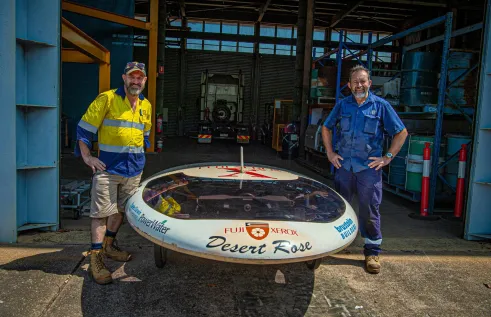
'Desert Rose' to be preserved
The legacy of a world record-breaking solar car, developed by and raced by Charles Darwin University students and staff, will be preserved and celebrated in the Northern Territory’s premier museum.
Read more about 'Desert Rose' to be preserved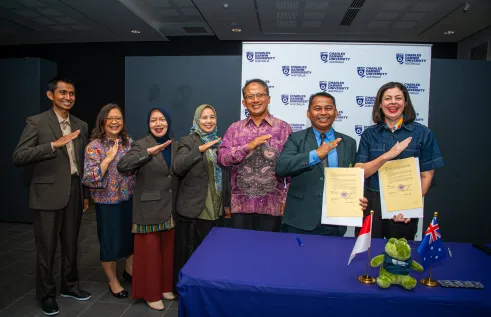
Partnership with Indonesian university to support education and research
A new partnership with one of East Java’s leading education institutions is aligning Charles Darwin University with priorities to strengthen Australia’s relationship with Indonesia.
Read more about Partnership with Indonesian university to support education and research
Darwin needs a BBL: Architecture student's vision for the Top End
A vertical promenade designed by a Charles Darwin University (CDU) architecture student and inspired by Singapore's Gardens by the Bay offers a glimpse into Darwin's future facelift.
Read more about Darwin needs a BBL: Architecture student's vision for the Top End


