News
Drought hub rollout progresses in the Territory and Western Australia
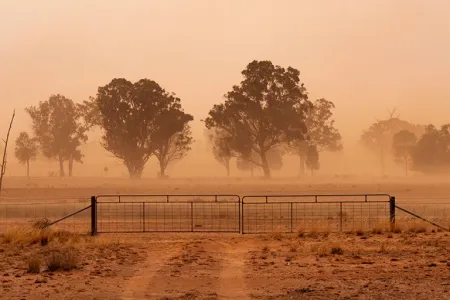
Partners of the Drought Resilience Adoption and Innovation Hub will join forces online today as plans for the hub’s rollout across the Northern Territory and Western Australia take shape.
Partners of The Northern Western Australia and Northern Territory (NWANT) Hub will join other Hubs nationwide as a part of the Federal Government’s Future Drought Fund Science to Practice Innovation Forum: ‘Building the Foundations of Drought Resilience’ held on 29 June to 1 July 2021.
The NWANT Hub, supported by Australian Government, will present during the forum on its plans to co-design and roll-out a drought innovation and adoption program aimed at boosting drought resilience and agriculture productivity across the regions.
Charles Darwin University (CDU) Director of Research and Innovation Dr Steve Rogers, NT Farmers Director Andrew Dalglesish, Martuwarra Fitzroy River Council Chair Dr Anne Poelina and Kimberly Pilbara Cattleman’s Association’s Emma White will speak at the online forum.
The NWANT Hub coordinating Group includes the Northern Territory Cattleman’s Association, Kimberley Pilbara Cattlemen’s Association, Northern Territory Farmers Association, Territory Natural Resource Management, the Rangelands NRM, Regional Development Australia NT and Charles Darwin University and the Western Australia and Northern Territory Governments.
The NWANT Hub will build upon research, extension and adoption projects and practices across Northern WA and NT and operate from partner locations including Darwin, Katherine, Alice Springs, Broome, Carnavon and Kalgoolie.
Since the Hub was announced in April a formal partnership agreement has been finalised between consortium of members.
The NWANT Hub has appointed an interim director, Jed Matz to deliver administrative and operational activities and provide interim support to the Hub until a competitive process can be undertaken to select a permanent director.
The Hub will connect communities and producers with innovative technologies and practices that will benefit the Northern Territory and Western Australia environment, economy and people.
Quotes attributable to Charles Darwin University Director of Research and Innovation Steve Rogers
“This is an important first step in getting hub partners together to deliver practical solutions and strategies to assist producers to better manage drought in our communities.
“A key priority of the hub will be prioritising future research priorities. It will be up to the hub to set the research agenda which will best support primary producers in the NT and WA.”
Quotes attributable to Rangelands NRM Chief Executive Officer Debra Tarbini-East
“Communities and industries of the semi-arid rangelands and wet-dry tropics of Western Australia and the Territory experience significant rainfall variability and face several barriers to improve drought resilience.”
“A wealth of knowledge exists in the community and in research relevant to drought resilience that has not been adequately shared and implemented, which is a key part of what this hub is aiming to address.”
Quotes attributable to Kimberley Pilbara Cattlemen’s Association’s Emma White
“Drought is an unpredictable driver of productivity in the cattle industry. Preparation for it, and resilience to it, offer real value to the Northern regional and remote economies.”
“Through the innovative tools techniques and practices for forage production pastoral producers will achieve greater efficiency and sustainability in the management of Northern Territory and Northern Western Australian rangelands, to both enhance their productive resilience and protect the ecological services they provide.”
Quotes attributable to NT Farmers Chief Executive Officer Paul Burke
“Effective landscape scale and science-based planning for the management and use of both ground and surface waters for existing production and future planned developments will be an important outcome delivered by the hub.
“By delivering improved crop varieties, growing systems and land uses that achieve greater water use efficiency and drought tolerance the hub will underpin diversification and maximise the sustainability and productivity farm businesses through future periods of climate variability, scarcity and drought.”
Related Articles
Federal funding for Country-based health and climate resilience
A new research collaboration to support and strengthen Country-based health and climate resilience has received funding through the National Health and Medical Research Council’s Centres of Research Excellence scheme.
Read more about Federal funding for Country-based health and climate resilience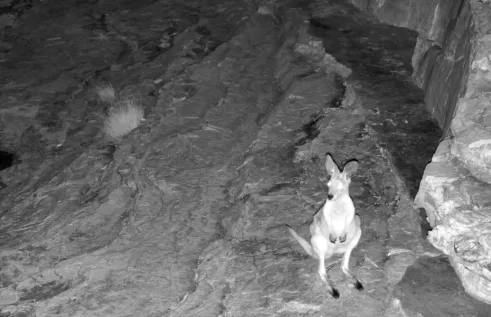
New livestream brings remote Australian arid zone waterhole to the world
A new livestream from a remote waterhole in the Northern Territory is giving people around the world the opportunity to observe wildlife in real time.
Read more about New livestream brings remote Australian arid zone waterhole to the world
How ants are cashing in on the fight against money laundering
An AI model inspired by ants, bees, and birds could be the key to cracking down on blockchain-based money laundering, new research led by Charles Darwin University (CDU) has found.
Read more about How ants are cashing in on the fight against money laundering


