News
Study tracks Rum Jungle Mine’s metal legacy through Finniss River food web
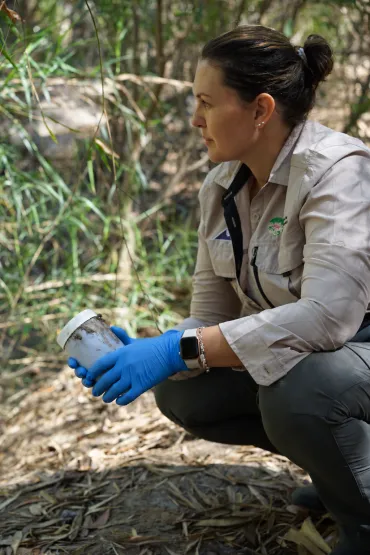
The environmental legacy of a uranium-copper mine continues to impact the ecosystem of a major Top End river system more than 50 years since the site was closed, a first-of-its-kind study led by Charles Darwin University (CDU) has found.
Located at the headwaters of the Finniss River, Rum Jungle Mine was Australia's first large-scale uranium mine and supplied materials for the US and British nuclear programs until the site closed in 1971.
While the Finniss River's water quality and aquatic organisms have been extensively monitored since the mine's closure, CDU PhD student Isabel Ely has become the first to examine metal accumulation across a complex river food web.
The study determined the mine's legacy by measuring copper, manganese, zinc, arsenic, lead, and cadmium across a range of organisms occupying different positions in the river's food web.
Ms Ely found organisms such as algae and freshwater mussels generally held the highest concentrations of metals, while fish contained comparatively low concentrations of arsenic, lead and cadmium.
"It is like tracking the metals' pathways to find where these elements were transferred, from the base of the food web to top predators, such as barramundi," Ms Ely said.
The study found that filamentous algae, Spirogyra, and detritus (decaying organic material) had particularly high metal concentrations, even though they had not previously been included in monitoring of the Finniss River.
Ms Ely said these findings mean that the algae, which is commonly found in the Territory's freshwater systems, and detritus could be useful indicators of contamination.
"This is important because algae and detritus help support the river’s food web, providing food for a range of organisms," she said.
"Finding elevated metal concentrations there shows that contamination remains present at the very foundation of that food web, serving as a reservoir. Animals such as freshwater mussels and prawns are the first receptors of contamination and exhibit higher concentrations than predatory fish — a pattern known as trophic dilution.
Monitoring a broader range of food web components, particularly Spirogyra and detritus, could help track whether metal exposure declines as rehabilitation progresses.
Ms Ely said further research should explore the impacts of metal accumulation on organisms' health, growth, and reproduction.
"Measuring accumulation tells us that exposure is occurring; understanding its biological consequences is the next step," she said.
Legacy of the Rum Jungle Mine: Bioaccumulation of metals and metalloids in the Finniss River food web was published in the Journal of Hazardous Materials Advances.
Aligned with the United Nations Sustainable Development Goals
Clean water and sanitation
Goal 6
Ensure availability and sustainable management of water and sanitation for all.
Life below water
Goal 14
Conserve and sustainably use the oceans, seas and marine resources for sustainable development.
Life on land
Goal 15
Protect, restore and promote sustainable use of terrestrial ecosystems, sustainably manage forests, combat desertification, and halt and reverse land degradation and halt biodiversity loss.
Related Articles
Federal funding for Country-based health and climate resilience
A new research collaboration to support and strengthen Country-based health and climate resilience has received funding through the National Health and Medical Research Council’s Centres of Research Excellence scheme.
Read more about Federal funding for Country-based health and climate resilience
New livestream brings remote Australian arid zone waterhole to the world
A new livestream from a remote waterhole in the Northern Territory is giving people around the world the opportunity to observe wildlife in real time.
Read more about New livestream brings remote Australian arid zone waterhole to the world
How ants are cashing in on the fight against money laundering
An AI model inspired by ants, bees, and birds could be the key to cracking down on blockchain-based money laundering, new research led by Charles Darwin University (CDU) has found.
Read more about How ants are cashing in on the fight against money laundering


