Global network of ocean robots endorsed by UNESCO
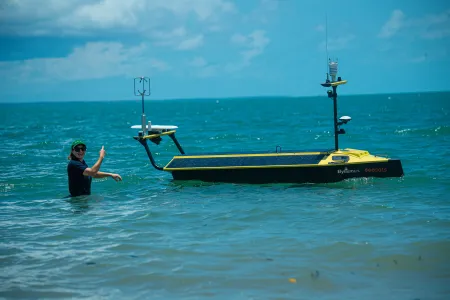
A fleet of ocean robots will sail the seas collecting data to improve weather and climate forecasting, maritime security awareness, survey wildlife and more after a global network of this technology was endorsed by UNESCO.
In April the proposal for a global network of uncrewed surface vehicles (USVs), an international collaboration led by Charles Darwin University (CDU) Research Fellow Dr Ruth Patterson, was presented to and later endorsed by the Global Ocean Observing System’s (GOOS) Observations Coordination Group – which is led by the Intergovernmental Oceanographic Commission of UNESCO and the World Meteorological Organisation.
The network, called the Surface Uncrewed Fleet or SUN Fleet, is now the 17th network of the GOOS.
Only two other global networks are led by individuals in Australia, one at the Bureau of Meteorology, and the other at the Integrated Marine Observing System.
Dr Patterson, an oceanographer who heads up Elysium EPL’s Marine Environmental Services, said the endorsement was the result of global collaboration among scientists, government and industry over the last four years.
“We are building a market for this new and currently booming industry of uncrewed surface vehicles,” Dr Patterson said.
“This network is about science and industry collaborating to build a capacity and capability for broader humanity. Science and industry need to come together and ensure data is precise, it’s coordinated, and we have the right instruments in the right locations.
“The data collected is tied to people’s livelihoods, agriculture, fisheries and food security, shipping and more. These observations will lead to better weather forecasts in our region and around the world.”
USVs are used around the globe for scientific ocean observation, but until now there hasn’t been a coordinated network which manages data collection and distribution from a range of diverse platforms.
The advantage of USVs is they are powered by renewable energy sources, able to traverse tens of thousands of kilometers unassisted, and navigate extreme environmental conditions which are typically under sampled because of logistics, costs and safety concerns.
Dr Patterson said the next steps include developing data standards and best practices, a governance structure, and securing sponsorship and funding.
The SUN Fleet project office has already been established by the University Corporation for Atmospheric Research at the Centre for Ocean Leadership in the USA.
“It’s in humanity’s best interests to be invested in this network and this technology,” Dr Patterson said.
“As weather events are becoming more extreme and there are cuts to scientific research, it’s more important than ever to have access to new, accurate and consistent data.
“At the same time, it’s also bolstering the blue economy, and the autonomous vehicle market for scientific ocean enterprise.”
The proposal and development of the network is a collaboration between more than forty universities and organisations around the world.
In the United States, National Oceanic and Atmospheric Administration (NOAA) oceanographer Dr Meghan Cronin, who is with NOAA’s Pacific Marine Environmental Laboratory and Chair of the Observing Air-Sea Interaction Strategy, said the network would have immense value in measuring oceanographic and atmospheric scientific observations.
“USVs will allow us to cost-effectively sample vast areas of the ocean where we simply don’t have enough data,” Dr Cronin said.
“They could be the answer to the question: How do we fill in the blanks?
“The true value of these observations for improving forecasts will come when their data from around the world can be fed into the operational models within minutes of being captured.”
More information about the network can be found at https://airseaobs.org/sun-fleet
Related Articles
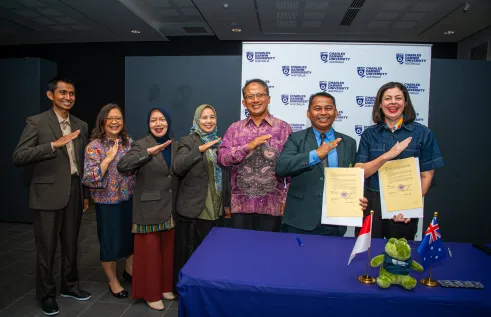
Partnership with Indonesian university to support education and research
A new partnership with one of East Java’s leading education institutions is aligning Charles Darwin University with priorities to strengthen Australia’s relationship with Indonesia.
Read more about Partnership with Indonesian university to support education and research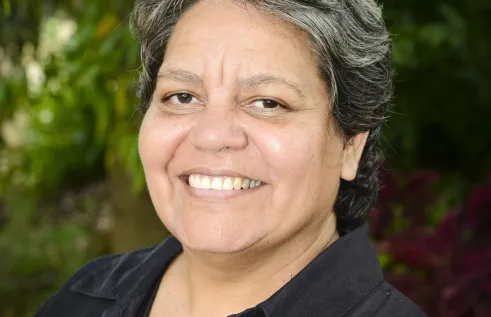
Federal funding for Country-based health and climate resilience
A new research collaboration to support and strengthen Country-based health and climate resilience has received funding through the National Health and Medical Research Council’s Centres of Research Excellence scheme.
Read more about Federal funding for Country-based health and climate resilience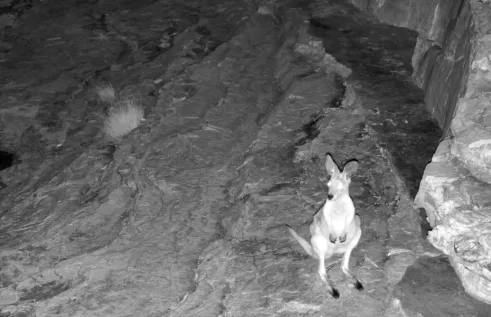
New livestream brings remote Australian arid zone waterhole to the world
A new livestream from a remote waterhole in the Northern Territory is giving people around the world the opportunity to observe wildlife in real time.
Read more about New livestream brings remote Australian arid zone waterhole to the world


