Global sewage study reveals condition of Darwin’s harbour
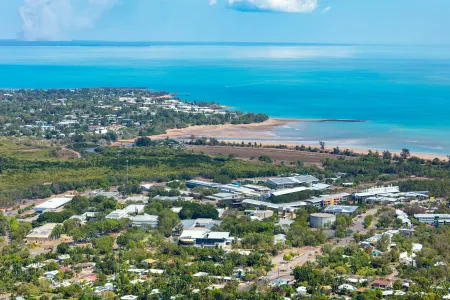
A global study of sewage contamination in harbours, with samples taken from 18 cities across five continents, has revealed that faecal contamination of Darwin Harbour from sewage is very low compared to the rest of the world.
The study involved a collaboration between 23 universities and institutes around the world, including Charles Darwin University’s (CDU) Research Institute of the Environment and Livelihoods (RIEL), who examined effluent and control water samples from all the sites, including Darwin Harbour.
Researchers tested the samples for human faecal bacteria, using an alternative method which identifies two human gut bacteria: Bacteroides (HF183) and Lachnospiraceae (Lachno3).
The typical method for detecting contaminated waterways is to test for the presence of Escherichia coli and Enterococcus bacteria. These bacteria however are not human specific and multiply in the environment, so are an indirect measure of faecal pollution.
Although the study found that more than half of the sampled sites had a clear signal of wastewater pollution, Darwin had cause to celebrate coming nearly last, with the Top End harbour recording one of the lowest concentrations of HF183 among all 18 cities.
The only other tropical city apart from Darwin was Rio De Janeiro which had the second highest level of human faecal markers.
The results weren’t surprising for study co-author RIEL Environmental Microbiologist Professor Karen Gibb, who said that low concentration of HF183 can be partly attributed to Darwin’s smaller population compared to the other cities.
The results also indicated the effectiveness of Darwin’s waste stabilisation ponds.
“Our research prior to this study has shown that the effluent in Darwin’s waste stabilisation ponds undergoes a major change from high levels of faecal bacteria as it enters the ponds, through to extremely low levels as the effluent moves through the multiple pond system,” Professor Gibb said.
“By the time it exits the ponds the bacteria present are largely environmental bacteria you would find in a nutrient-rich tropical pond.
“We have already been using these human faecal markers in our teaching and research, alongside the standard testing for Escherichia coli and Enterococcus bacteria.”
CDU PhD candidate Zarah Tinning conducted her honours project on Darwin’s drains and compared the faecal marker to the standard tests.
She showed that there was a big disconnect between the routine test results compared to the human markers. For example, the Dinah Beach Road Drain had very low levels of the standard bacteria, but a positive for a human faecal marker and in other places the standard tests gave very high readings but no faecal marker positives.
“The Nature paper has really provided a powerful argument for using more specific markers for faecal contamination, and it was great to know that the human markers apply world-wide,” Professor Gibb said.
“Our inclusion in this study has allowed us to see how we compare and only came about because once again, the scientists at the Power Water Corporation were extremely supportive and facilitated sampling.
“This has been the pattern for all of our research with them, including a new honours project where we seek to identify the sources of elevated bacteria in local recreational water bodies.”
Dr Karen Kennedy, who is the Senior Manager Performance Reporting and Improvement Water Services at Power and Water, welcomed the results and said it highlighted why it was important the organisation to collaborate with CDU.
“Power and Water is pleased to support these important study programs to provide assurance around the effectiveness of our waste stabilisation processes,” Dr Kennedy said.
The Leanyer Waste Stabilisation Ponds collect wastewater from 50,000 Darwin residents and treat an average of 15 million litres each day.
“Power and Water is committed to protecting and minimising harm to the environment in which we operate,” Dr Kennedy said.
“Through our participation in these studies, we can continue a program of continuous improvement in our processes and manage environmental risks in our daily operating environments.”
Universal microbial indicators provide surveillance of sewage contamination in harbours worldwide was published in the journal Nature Water.
Related Articles
Federal funding for Country-based health and climate resilience
A new research collaboration to support and strengthen Country-based health and climate resilience has received funding through the National Health and Medical Research Council’s Centres of Research Excellence scheme.
Read more about Federal funding for Country-based health and climate resilience
New livestream brings remote Australian arid zone waterhole to the world
A new livestream from a remote waterhole in the Northern Territory is giving people around the world the opportunity to observe wildlife in real time.
Read more about New livestream brings remote Australian arid zone waterhole to the world
Leading scientist recognised for lifetime of dedication to Australian biodiversity and conservation
One of the nation’s most distinguished experts in Australian biodiversity and conservation will be celebrated in an upcoming Charles Darwin University graduation ceremony.
Read more about Leading scientist recognised for lifetime of dedication to Australian biodiversity and conservation


