News
Growing energy efficiency divide making renters sweat
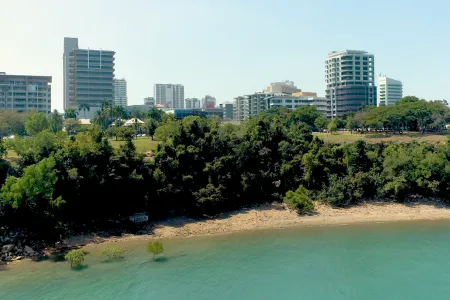
Households are motivated to reduce their energy consumption and help mitigate climate change, but unaffordable technologies and rental restrictions are preventing them from doing so, according to a recent Charles Darwin University (CDU) study.
Residential properties account for 26 per cent of global electricity consumption, and the sector is responsible for 17 per cent of global carbon dioxide emissions.
The study focused on energy practices in Darwin and Palmerston in the Northern Territory, with residents surveyed about their household electricity use and their thoughts on and access to energy efficient options.
Due to the tropical climate, air conditioning accounts for about 45 per cent of residential electricity use in the jurisdiction.
Results show 96 per cent of respondents owned and used air conditioning, reflecting the necessity of this technology in the region.
Among low-income households, around 84 per cent agreed or strongly agreed that renewable energy was essential to combat climate change, but more than 50 per cent of this demographic disagreed or strongly disagreed to pay more for renewable energy.
Middle-income households had similar trends, but more than 80 per cent of high-income household respondents agreed renewable energy was essential, and their willingness to pay for this technology was about 68 per cent.
Lead author Riasad Amin, who is a PhD candidate with CDU’s Northern Institute, said of significance 34 per cent of respondents owned their homes, while the remainder rented.
“Renters typically have a more limited scope to install efficiency upgrades, modify cooling systems, or invest in residential energy technologies,” Mr Amin said.
“In Darwin's tropical climate, where cooling demand is high, these tenure-related differences shape the range of options available to households for managing their energy use.”
The results show 47 per cent of renters were willing to pay more for renewable energy, while 70 per cent of homeowners were willing to pay more for renewable energy.
Of the seven specific energy-saving practices examined, renters were more likely to turn off appliances, but homeowners were more likely to engage in the other six practices.
These include washing clothes in cold water, using high-efficiency appliances, and setting air conditioning between 24C to 26C.
“Renters and lower-income households face persistent barriers to accessing energy-efficient appliances and undertaking dwelling-level upgrades,” Mr Amin said.
“This pattern is consistent with international evidence demonstrating that landlord-tenant split incentives, limited capital access, and weaker regulatory standards in rental housing systematically constrain energy-efficiency investment.
“From a policy perspective, programs that emphasise cost savings alone may overlook important motivational drivers, whereas approaches based only on moral responsibility can disadvantage households with limited capacity to act.
“International evidence indicates that energy-efficiency programs are most effective when they combine environmental responsibility with tangible co-benefits, such as improved comfort, more stable energy costs, and greater household control over energy use.”
The efficiency divide: Housing constraints on energy-saving practices in Darwin, Australia was published in the journal Energy Research & Social Science.
Aligned with the United Nations Sustainable Development Goals
Affordable and clean energy
Goal 7
Ensure access to affordable, reliable, sustainable and modern energy for all.
Sustainable cities and communities
Goal 11
Make cities and human settlements inclusive, safe, resilient and sustainable.
Climate action
Goal 13
Take urgent action to combat climate change and its impacts.
Related Articles
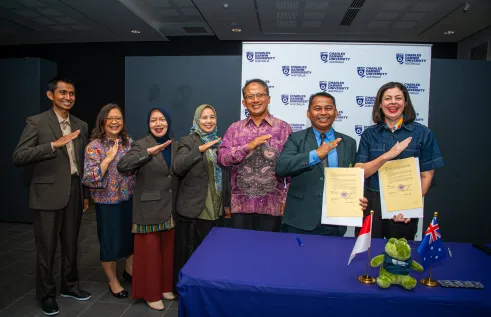
Partnership with Indonesian university to support education and research
A new partnership with one of East Java’s leading education institutions is aligning Charles Darwin University with priorities to strengthen Australia’s relationship with Indonesia.
Read more about Partnership with Indonesian university to support education and research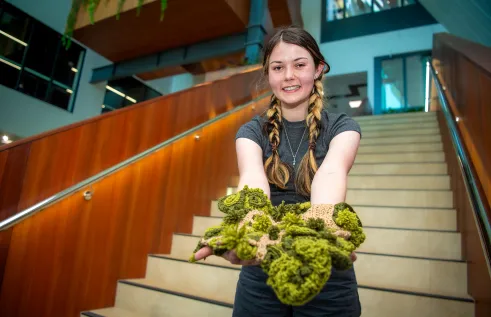
Crocheted landscape takes the gold in architecture competition
When tasked to defy growing reliance on artificial intelligence and create a landscape model without digital tools, Charles Darwin University (CDU) Bachelor of Architectural Design student Jorja Handebo turned to her hobby of the past five years: crochet.
Read more about Crocheted landscape takes the gold in architecture competition
First Nations Training and Teacher Education Hub celebrates first major milestone
As Charles Darwin University's (CDU) First Nations Training and Teacher Education Hub draws closer to the end of its first year, one of its greatest milestones to date was conferring its first six graduates.
Read more about First Nations Training and Teacher Education Hub celebrates first major milestone


