News
Indigenous researchers awarded new ARC grants
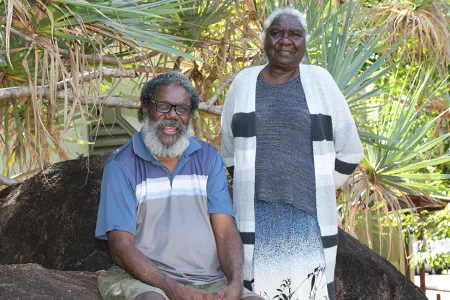
Indigenous researchers at Charles Darwin University (CDU) are set to re-envision their research fields thanks to two new projects in Indigenous archaeology and digital Yolŋu living maps, funded by the Australian Research Council (ARC).
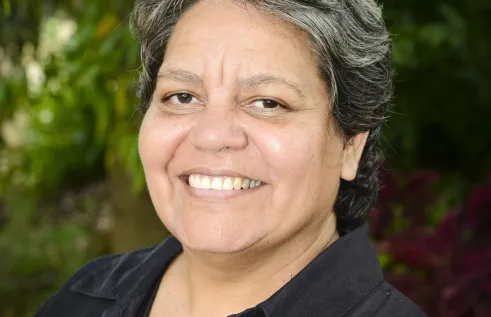
Lead researchers for the two projects, Wiradjuri academic Dr Kellie Pollard and Yolŋu academic Gawura Wanambi from the College of Indigenous Futures, Education and the Arts, have both been awarded funding for their respective projects as a part of the prestigious 2022 ARC Discovery Indigenous grants.
Dr Pollard will lead a joint CDU and Flinders University Indigenist archaeology project investigating how Indigenous philosophies of knowing, being and doing archaeology in Australia will honour Indigenous worldviews in research.
Dr Pollard’s CDU colleague Dr Nicolas Bullot will make critical contributions to the reshaping of Indigenous archaeology drawing from Western philosophy and digital media as a part of the ‘Indigenist Archaeology: New Ways of Knowing the Past and Present’ project.
Dr Pollard’s team will develop a new Indigenist epistemological model for archaeological practice in Australia that more accurately reflects the ontologies of First Nations people and their history and heritage.
“Based on case studies undertaken with six Aboriginal communities in the Northern Territory and South Australia, we will use Aboriginal conceptualisations of rigour, time, space, relationality, colour, presence, absence, materiality and spirituality to rethink current archaeological theory and practice in Australia,” Dr Pollard said.
Dr Pollard’s Flinders University colleague on the Award Professor Claire Smith said the project offers a generational change in Australian archaeology.
“This project will shape Indigenous archaeology so that it reflects Indigenous ways of seeing the past and present, rather than it being interpreted almost exclusively through a European or Western epistemological framework,” Ms Smith said.
“Australian archaeology will never be the same.”
The second project will see a team of Northern Institute research colleagues including Yolŋu academic Gawura Wanambi, Professor Jennifer Deger, Professor Michael Christie, Dr Michaela Spencer, Paul Gurrumuruwuy Wunungmurra, Joy Bulkanhawuy and Benjamin Ward bring traditional owners and managers together with Yolŋu digital media experts, rangers, and artists.
The research project, ‘Caring for Cosmologies: Making Living Maps for West Miyarrka’ was also awarded funding under the ARC Indigenous grant round, which will develop a new genre of digital mapping, one that draws on unique Yolŋu knowledge practices, and will radically expand the category of the map as it is traditionally understood in Western knowledge systems.
“The project aims to expand Indigenous research capacities and digital expertise, access to novel resources for a new generation of Indigenous leaders,” Professor Deger said.
“We aim to create maps that care for Yolŋu cosmologies, for deep knowledge, connections, and responsibilities to country.
“By taking its bearings from country itself, the mapping can help us chart a path to the future in the face of ongoing challenges to Yolŋu people and their lands.”
Yolŋu project leader Gawura Wanambi said Yolŋu had complex cultural mapping systems which showed ways to look after country.
“These maps show us paths and patterns about where to go in life, what steps to take next, how everything is connected and how everything makes sense,” Mr Wanambi said.
“There are many, many kinds of Yolŋu maps - the time has come to bring them to the surface, to make them visible. Not just dry records of place names on paper. Living maps, maps for the future.”
Related Articles
Federal funding for Country-based health and climate resilience
A new research collaboration to support and strengthen Country-based health and climate resilience has received funding through the National Health and Medical Research Council’s Centres of Research Excellence scheme.
Read more about Federal funding for Country-based health and climate resilience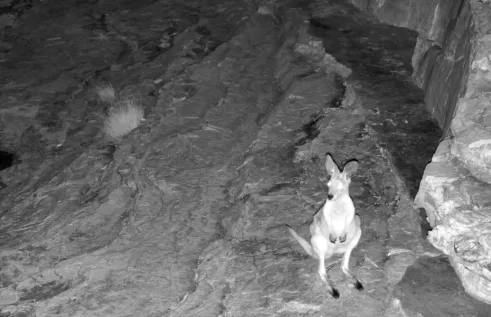
New livestream brings remote Australian arid zone waterhole to the world
A new livestream from a remote waterhole in the Northern Territory is giving people around the world the opportunity to observe wildlife in real time.
Read more about New livestream brings remote Australian arid zone waterhole to the world
How ants are cashing in on the fight against money laundering
An AI model inspired by ants, bees, and birds could be the key to cracking down on blockchain-based money laundering, new research led by Charles Darwin University (CDU) has found.
Read more about How ants are cashing in on the fight against money laundering


