News
Inspiring NT school students towards science study and career pathways
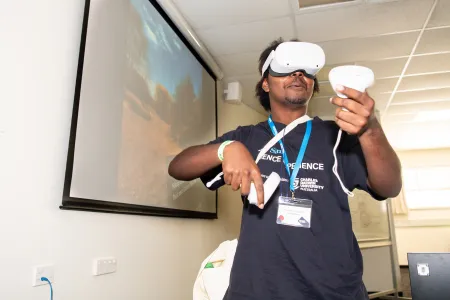
About 100 Northern Territory Year 9 students have spent three days participating in various STEM-related activities and workshops at Charles Darwin University (CDU)’s Casuarina Campus as part of the Santos Science Experience from 21-23 September.
The activities spanned medical laboratory science, exercise and sports science, NT medical program, engineering, aquaculture, health science, trades, oil and gas and virtual reality technology.
The annual program is designed to inspire school students to consider study and career pathways and familiarise them with the courses and facilities available at CDU.
This year’s participating students were from 15 schools in the Top End, Alice Springs, Tiwi Islands, Elcho Island and Katherine.
CDU has been hosting the Santos Science Experience for Northern Territory students annually since 2006 and has seen thousands of school students take part in engaging, hands-on activities and seminars at the University.
Students heard from CDU lecturers and teaching staff at the College of Health and Human Sciences and College of Engineering, IT and Environment, as well as interacted with researchers from the Research Institute for Environments and Livelihoods.
Jaime McCartney, Future Student Engagement Officer and coordinator of the Santos Science Experience at CDU, said the program would offer school students a glimpse into tertiary education and future careers in STEM.
“Through the wide variety of workshops and activities, students will get a big picture of what it is like to be studying a STEM course at CDU and pursuing a career in the field,” Ms McCartney said.
“Feedback has been overwhelmingly positive from our previous years’ participants, and we hope we can encourage more students to explore the pathways available to achieve their potential.”
Related Articles
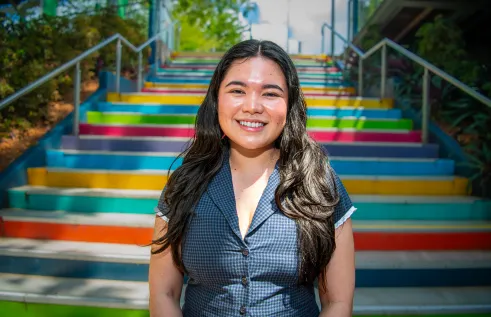
Darwin needs a BBL: Architecture student's vision for the Top End
A vertical promenade designed by a Charles Darwin University (CDU) architecture student and inspired by Singapore's Gardens by the Bay offers a glimpse into Darwin's future facelift.
Read more about Darwin needs a BBL: Architecture student's vision for the Top End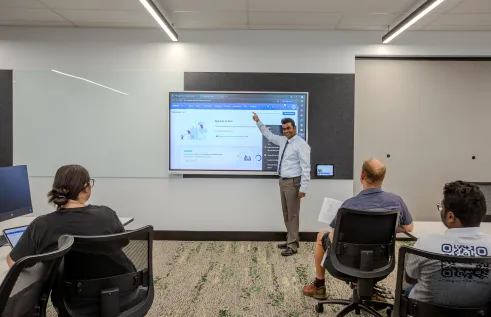
Trainer’s passion to help students succeed recognised
While Veeramani Ramasami used his studies to launch an early career as an accountant and financial Manager, it was the encounter with his first accounting teacher that inspired him on a different path into education.
Read more about Trainer’s passion to help students succeed recognised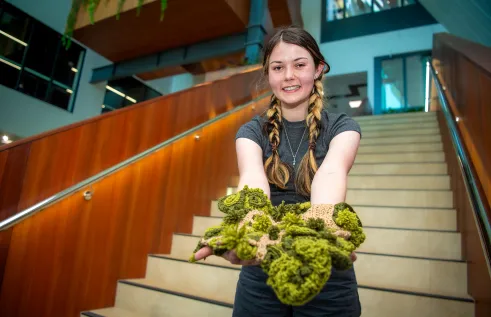
Crocheted landscape takes the gold in architecture competition
When tasked to defy growing reliance on artificial intelligence and create a landscape model without digital tools, Charles Darwin University (CDU) Bachelor of Architectural Design student Jorja Handebo turned to her hobby of the past five years: crochet.
Read more about Crocheted landscape takes the gold in architecture competition


