Keep calm and carry on: Can Australian nurses really be ready for anything?
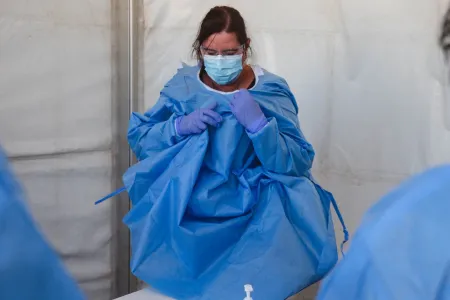
Australian nurses have responded to hundreds of disaster events over the last six years, but new research led by Charles Darwin University (CDU) suggests they still aren’t ready for the impact of catastrophe.
Almost one disaster event every 10 days has occurred in Australia since 2019.
A disaster is considered to be an event that disrupts human populations through natural or man-made disasters, or communicable disease outbreaks.
Study lead author Angela Sheedy, who is the Health Science Course Coordinator at CDU, said it became clear during the pandemic that nurses were a reactive workforce during that public health emergency – rather than proactive – despite being the largest cohort of healthcare professionals to deal with the aftermath of disaster.
Ms Sheedy pointed to the Hunter Valley bus crash, Bondi Junction shopping centre stabbing, and polyfluorinated alkyl substances (PFAS) contamination as other examples of recent disasters.
“Australian-trained nurses are amongst the best in the world but we are experiencing disaster events more frequently, and this directly impacts nurses working in the acute care and emergency setting,” Ms Sheedy said.
“Better-prepared nurses mean better outcomes for communities in disaster responses.”
But the diversity of modern disaster events thanks to climate change, radicalisation and terrorism, and public health challenges makes being prepared for anything a complicated undertaking.
Ms Sheedy said disaster response training was not currently mandatory for bachelor-level nurses and said this was leaving graduates without the resilience to adapt to many real-world scenarios.
“The inclusion of disaster responses with an all-hazards approach needs to be included in the Australian curriculum, but this takes time,” she said.
“We need to start thinking and planning realistic strategies to prepare our health workforce for disaster responses.
“Providing our nurses with access to all-hazards education and training aligns with the world today.”
Related Articles
Federal funding for Country-based health and climate resilience
A new research collaboration to support and strengthen Country-based health and climate resilience has received funding through the National Health and Medical Research Council’s Centres of Research Excellence scheme.
Read more about Federal funding for Country-based health and climate resilience
New livestream brings remote Australian arid zone waterhole to the world
A new livestream from a remote waterhole in the Northern Territory is giving people around the world the opportunity to observe wildlife in real time.
Read more about New livestream brings remote Australian arid zone waterhole to the world
How ants are cashing in on the fight against money laundering
An AI model inspired by ants, bees, and birds could be the key to cracking down on blockchain-based money laundering, new research led by Charles Darwin University (CDU) has found.
Read more about How ants are cashing in on the fight against money laundering


