NEWS ARTICLE
Lunchtime talk to explore historic peacekeeping mission
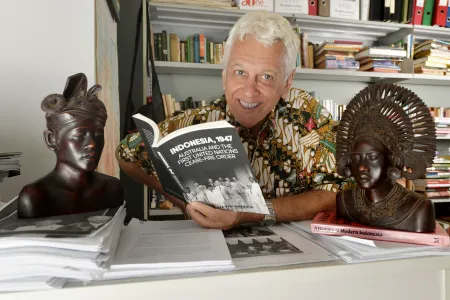
Charles Darwin University (CDU) historian Dr Steven Farram will reveal the story behind a little-known part of Australia’s military and diplomatic history with Indonesia at a lunchtime talk at the CDU Art Gallery on Thursday, 20 February.
Dr Farram said the talk would be based on research findings in his latest book, “Indonesia, 1947: Australia and the first United Nations cease-fire order”.
“While Australia’s contribution to Indonesia’s independence struggle in the late 1940s is relatively well-known, my book explores part of the story that has barely been touched upon,” he said.
“The mix of internal Indonesian power plays, tensions with the Dutch, and broader Cold War politics provided a rich backdrop for a fascinating story.”
The Indonesian struggle for independence took place in the aftermath of WWII that was still fresh in the minds of Australians, and in the early years of the United Nations (UN), which was learning what to do on the run.
“A lot of ground was broken in 1947 and Australia was in the thick of it,” Dr Farram said.
“The UN Security Council had just issued its first ceasefire order and Australia was called on to provide military observers to monitor proceedings. They could be considered the world’s first peacekeepers.”
Dr Farram said the involvement of Royal Australian Air Force Group Captain Charles Eaton as Australia’s consul in the UN Consular Commission was viewed as interference in Dutch internal affairs. “But we stood up for the Indonesians and quickly gained a reputation as being a good friend,” he said.
“The bombing of Darwin (during WWII) and the fear of a Japanese invasion was the impetus for Australian efforts to ensure peace to our north. We wanted peace in our region and a level of security among our neighbours that would facilitate trade.”
Dr Farram is a Senior Lecturer in North Australian and Regional Studies.
The talk will take place at the CDU Art Gallery, Level 1, Building Orange 12, University Drive South, Casuarina campus at noon on Thursday, 20 February and is free and open to the public.
Related Articles
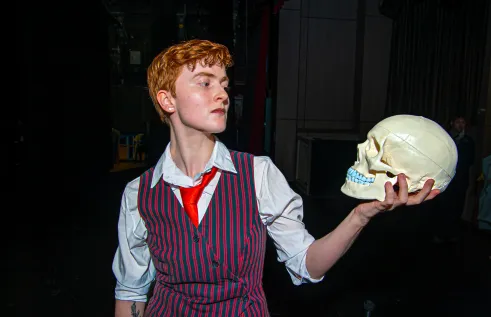
Hamlet gets a contemporary twist in Darwin
Shakespeare’s most famous tragedy will be brought into the modern world in a bold new production of Hamlet at Charles Darwin University Theatre this month.
Read more about Hamlet gets a contemporary twist in Darwin
The good, the bad, and the ugly food: Why religious shoppers are buying bruised veggies
A recent study with Charles Darwin University examines how consumers’ religiosity influences the purchase of “ugly foods”, or foods that are aesthetically imperfect but nutritious.
Read more about The good, the bad, and the ugly food: Why religious shoppers are buying bruised veggies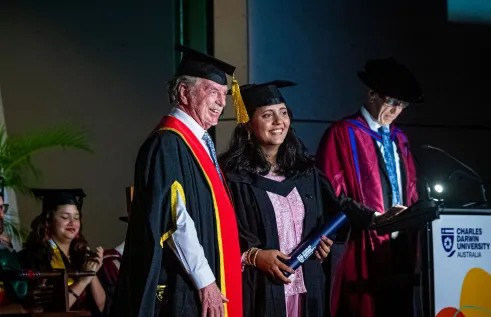
Student Council President celebrates graduation, prepares to pass the torch to new team
After serving as the Charles Darwin University (CDU) Student Council President for two years, Shishtata Bhandari has graduated and is preparing to hand over the reins to the council's next leader.
Read more about Student Council President celebrates graduation, prepares to pass the torch to new team


