News
MOU to strengthen connections with key North Coast American organisations
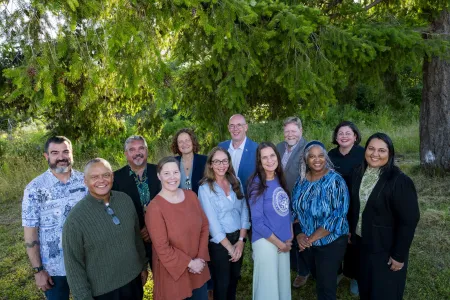
A new Memorandum of Understanding (MOU) between Charles Darwin University (CDU) and three American North Coast organisations will support collaboration and cooperation across learning, teaching and research.
The partnership between CDU and Blue Lake Rancheria, Cal Poly Humboldt, and College of the Redwoods is the result of productive engagements over the course of 12 months and was signed during a week-long visit to the North Coast area by a delegation from CDU.
The agreement calls for ongoing collaboration on projects that support students and staff to study, research and work internationally, as well as the exchange of information and ideas among First Nations communities.
CDU Vice-Chancellor Professor Scott Bowman said this partnership would help to support the organisation’s shared interests and expertise.
“We are very proud to partner with these organisations, who like CDU are passionate about working with First Nations communities to increase knowledge and work towards environmental sustainability,” Professor Bowman said.
“We look forward to building this partnership and amongst other things we hope to establish joint research and researcher exchange opportunities and collaborate on conferences, workshops and symposium opportunities.”
Like CDU, both Cal Poly Humboldt and the College of the Redwoods offer students a unique study experience in some of the most rural and remote locations.
Blue Lake Rancheria, a Native American tribe that sits within the territory of the Wiyot people, offers a unique insight into the intersections between tribal knowledge and entrepreneurship.
The organisations will work together on shared interests and areas of expertise including traditional Indigenous knowledges, tribal governance and economic development, wildfire management, environmental sustainability, renewable energy, rural healthcare, and rural education at all levels.
During their trip, the CDU delegation met with experts and visited sites throughout the region with a focus on identifying specific initial projects to pursue as part of the partnership.
Related Articles
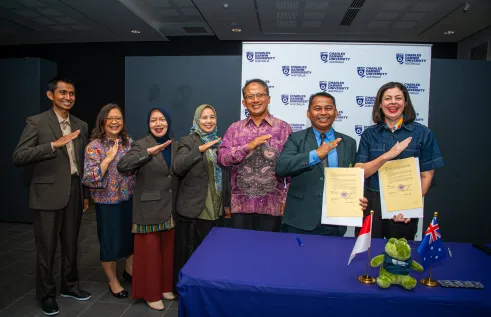
Partnership with Indonesian university to support education and research
A new partnership with one of East Java’s leading education institutions is aligning Charles Darwin University with priorities to strengthen Australia’s relationship with Indonesia.
Read more about Partnership with Indonesian university to support education and research
Darwin needs a BBL: Architecture student's vision for the Top End
A vertical promenade designed by a Charles Darwin University (CDU) architecture student and inspired by Singapore's Gardens by the Bay offers a glimpse into Darwin's future facelift.
Read more about Darwin needs a BBL: Architecture student's vision for the Top End
CDU improves standing in Times Higher Education rankings
Charles Darwin University (CDU) has improved its standing across all five categories in the 2027 Time Higher Education World University Rankings.
Read more about CDU improves standing in Times Higher Education rankings


