News Article
National Geographic grant to help uncover blue carbon
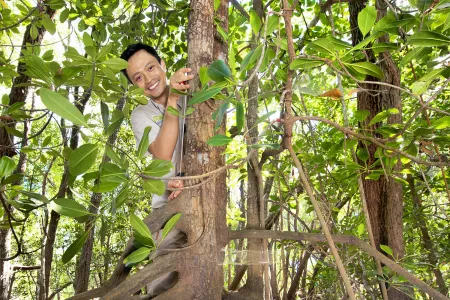
A Charles Darwin University student investigating the impact of blue carbon emissions generated by the conversion of mangrove forests to oil palm plantations has won a National Geographic Society Research and Exploration grant.
Research Institute for the Environment and Livelihoods PhD candidate Sigit D. Sasmito has received the US $30,000 grant to support his research in north Sumatra, Indonesia.
“Mangroves lock up vast amounts of carbon dioxide from the atmosphere in their soils and what happens to this carbon following deforestation or land use change remains unknown,” Sigit said.
“The aim of this project is to unravel this mystery by measuring the greenhouse gas emissions driven by mangrove conversion to oil palm in north Sumatra.”
Indonesia supports 22% of the globe’s mangrove forests and has one of the highest rates of mangrove deforestation. Previous research has estimated that close to 70,000 hectares of mangroves were deforested between 2000-2012, of which 15% were converted to oil palm and mostly occurred along northern coasts of Sumatra.
“My PhD research will give us an idea of how many tonnes of annual greenhouse gas emissions are generated per hectare when mangroves are cleared and converted to oil palm,” Sigit said.
His research will provide essential data to develop climate change mitigation strategies for Indonesia, one of the developing countries that holds a significant portion of the world’s carbon emissions from land use sector.
“These estimates will guide policy makers and land managers as they will provide more emissions calculations from this land use change across Indonesia to meet Indonesia’s Nationally Determined Contributions under the Paris Agreement of 2015,” he said.
This project is a collaboration between CDU, the University of North Sumatra, Southern Cross University, the Center for International Forestry Research, and IPB University.
Related Articles
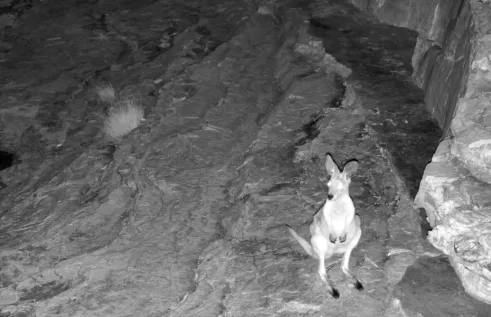
New livestream brings remote Australian arid zone waterhole to the world
A new livestream from a remote waterhole in the Northern Territory is giving people around the world the opportunity to observe wildlife in real time.
Read more about New livestream brings remote Australian arid zone waterhole to the world
Leading scientist recognised for lifetime of dedication to Australian biodiversity and conservation
One of the nation’s most distinguished experts in Australian biodiversity and conservation will be celebrated in an upcoming Charles Darwin University graduation ceremony.
Read more about Leading scientist recognised for lifetime of dedication to Australian biodiversity and conservation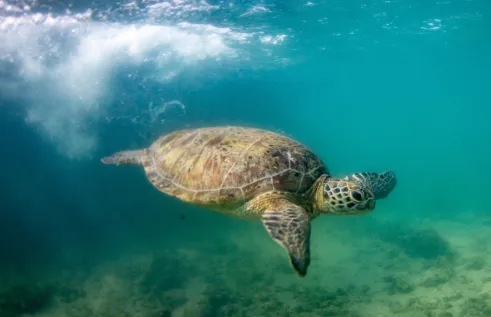
First Nations ranger knowledge reveals the threats facing NT’s green turtles
First Nations ranger groups working in protected areas such as national or marine parks identified illegal commercial fishing as a major concern for the Northern Territory’s green turtle populations, a study led by Charles Darwin University (CDU) and James Cook University (JCU) has found.
Read more about First Nations ranger knowledge reveals the threats facing NT’s green turtles


