News
New partnership seeks to improve food security in Timor-Leste
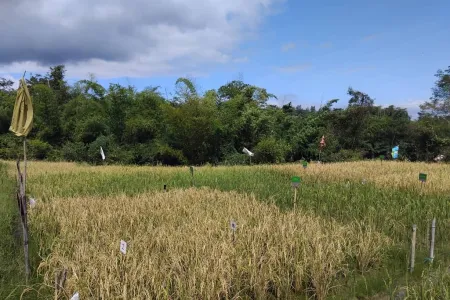
Timor-Leste is taking steps to achieve greater food security for its people with a research partnership with Charles Darwin University (CDU) researchers to increase on-farm labour productivity.
The project will help to guide development initiatives to improve the low agricultural productivity in Timor-Leste.
Timor-Leste’s staples are maize, sweet potatoes and rice. According to Development Asia, Timor-Leste imports 60 per cent of its food including 45 per cent of its rice to help feed its population.
CDU Project Researcher and lead Dr Leigh Vial said farming had always been a difficult task for Timor-Leste’s farmers.
“Farming is a laborious task with few modern tools and there is often limited availability or knowledge of basic inputs to increase yield,” Dr Vial said.
“On-farm labour productivity urgently needs to be improved, as young people are leaving farms for better opportunities in other Timorese towns or overseas, leaving land vacant rather than farmed, as the rewards for a day’s labour are better elsewhere.”
“Labour may well be Timorese agriculture’s most precious resource, and increasing on-farm labour productivity has already been explored elsewhere in Southeast Asia so this project can take guidance from that path,” he said.
The four-year project will work in three zones in Timor-Leste— inland irrigable watersheds, upland high altitude and southern rainfed. The objective of the project is to increase food yield with similar labour input or reduce the labour input for the same yield or a combination of both.
“This project will look at many factors such as searching for the right fertiliser to improve yields and ways to reduce time — particularly female and children’s time — on land preparation, seeding, weeding and harvest,” Dr Vial said.
“Rice variety availability will be explored as well as looking at ways to productively grow vital wet season vegetables to fill nutrition gaps.”
ACIAR Country Manager, Timor-Leste, Mr Luis de Almeida, said the project aligns very well with ACIAR’s support in Timor-Leste for long-term research capacity and partnership development.
“In Timor-Leste, ACIAR looks at ways to support and improve the country's ability to generate reliable income from agriculture, thereby improving the living conditions and livelihood opportunities of families,” Mr de Almeida said.
“This project builds on an ongoing collaboration between ACIAR and Timor-Leste in sustainable cropping systems research.
This larger project introduces the full project team of Dr Penny Wurm, Professor Stephen Xu and Professor Beth Penrose from CDU and University of Western Sydney Professor Andrew McWilliam to work already undertaken in conjunction with local Timorese farmers on initial on-farm improvements.
Dr Vial said there were positive results from the trials in the preceding Small Research Activity (SRA).
“University of Timor-Leste student research, and research of our own, showed that provided the limiting nutrients are supplied, even a very low rate of fertiliser often boosts yields a lot and reward the farmers’ effort,” Dr Vial said.
“After years of continuous cultivation, monitoring soil nutrient levels and supplying the limiting nutrients is essential to maintain acceptable yields and soil health.”
The project has received $2.95 million of funding from the Australian Centre for International Agricultural Research (ACIAR).
Related Articles
Federal funding for Country-based health and climate resilience
A new research collaboration to support and strengthen Country-based health and climate resilience has received funding through the National Health and Medical Research Council’s Centres of Research Excellence scheme.
Read more about Federal funding for Country-based health and climate resilience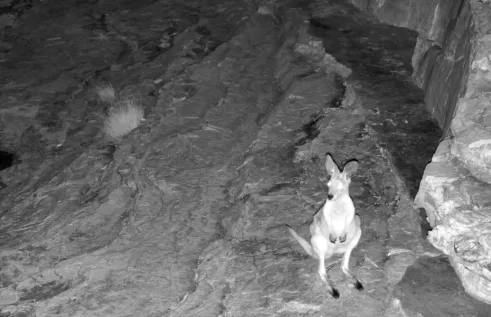
New livestream brings remote Australian arid zone waterhole to the world
A new livestream from a remote waterhole in the Northern Territory is giving people around the world the opportunity to observe wildlife in real time.
Read more about New livestream brings remote Australian arid zone waterhole to the world
Leading scientist recognised for lifetime of dedication to Australian biodiversity and conservation
One of the nation’s most distinguished experts in Australian biodiversity and conservation will be celebrated in an upcoming Charles Darwin University graduation ceremony.
Read more about Leading scientist recognised for lifetime of dedication to Australian biodiversity and conservation


