News article
Researcher: play therapy helps heal trauma

Charles Darwin University (CDU) PhD candidate, Dr Joanne Wicks has been working with children, parents and teachers to explore the benefits of intensive Child Centred Play Therapy (CCPT).
Dr Wicks is a registered play therapist supervisor and counsellor supervisor who co-developed three postgraduate courses in play therapy at CDU.
Recently, she received the United States Association for Play Therapy 2019 Student Research Award.
Dr Wicks’ PhD project provides a therapy model for children who have experienced adversity in Indigenous and non-Indigenous communities. Her research focuses on CCPT, which gives children opportunities to direct their own play and to explore and address their own challenges.
“Therapeutic services offered in remote communities typically follow a traditional delivery of therapy, meeting once a week or less as remoteness increases,” Dr Wicks said.
“Working with children has taught me that they are not mini adults and that children are capable of working through their problems a lot quicker than adults.”
Started in 2015, Dr Wicks’ project provided more than 400 CCPT sessions in 20 days, at Palmerston primary school and Papunya community, 240 km northwest of Alice Springs. The project also incorporated working with parents and teachers to provide therapeutic play skills training.
After seeing some children for therapy weekly and other children a few times a week, Dr Wicks said she found that children at each session demonstrated similar progress. Later she was involved in one of the first projects by international play therapy specialist, Dr Rochelle Ritzi, which researched the effect of intensive therapy.
Results indicated that many of the emotional and behavioural difficulties reported by parents and teachers diminished after the program. Dr Wicks said she hoped her findings would help address the lack of services and service consistency in remote communities and give children the best chance of sustained improvement.
“The results suggest that CCPT may be an appropriate intervention for children with a history of adversity,” Dr Wicks said.
“Pupunya community has invited the intensive CCPT model into their community with the hope that it might be helpful for their children, families and community.”
Dr Wicks will receive her PhD at a CDU graduation ceremony on 18 October at the Darwin Convention Centre.
Related Articles
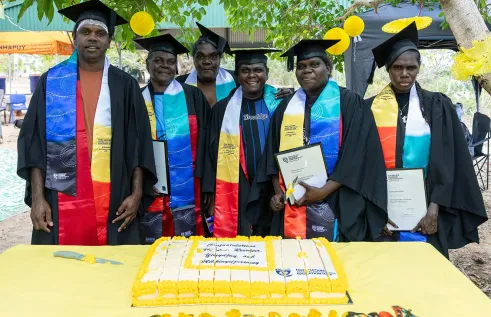
First Nations Training and Teacher Education Hub celebrates first major milestone
As Charles Darwin University's (CDU) First Nations Training and Teacher Education Hub draws closer to the end of its first year, one of its greatest milestones to date was conferring its first six graduates.
Read more about First Nations Training and Teacher Education Hub celebrates first major milestone
Federal funding for Country-based health and climate resilience
A new research collaboration to support and strengthen Country-based health and climate resilience has received funding through the National Health and Medical Research Council’s Centres of Research Excellence scheme.
Read more about Federal funding for Country-based health and climate resilience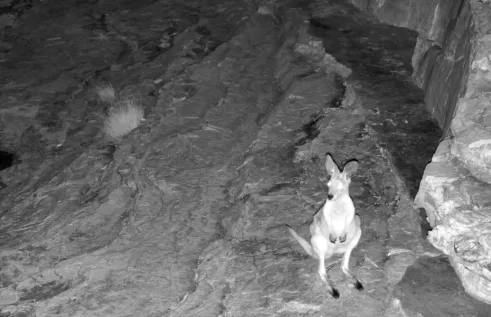
New livestream brings remote Australian arid zone waterhole to the world
A new livestream from a remote waterhole in the Northern Territory is giving people around the world the opportunity to observe wildlife in real time.
Read more about New livestream brings remote Australian arid zone waterhole to the world


