Stronger together: Bilby conservation efforts enhanced by Indigenous knowledge
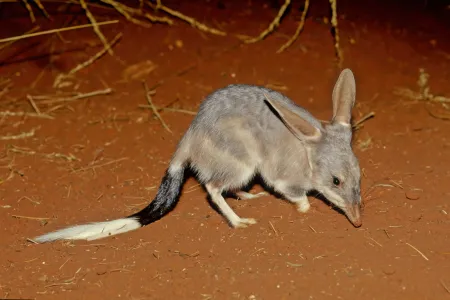
One of the nation's most iconic and at-risk critters could benefit by combining Indigenous knowledge with western survey methods, according to a new study led by Charles Darwin University (CDU) in collaboration with the North Tanami Rangers and Traditional Owners from the community of Lajamanu.
The study used two different methods to collect bilby scat for genetic analysis – standardised scientific surveys and tracking techniques based on Indigenous knowledge. This approach provided new insights into bilby population numbers.
Bilbies once occupied much of arid and semi-arid Australia but have disappeared from about three quarters of their historic range. Today they are found only in parts of the Northern Territory, Western Australia, and Queensland.
Surveying remote habitats is crucial for conversation efforts, but it can be expensive and challenging.
Study lead author Hayley Geyle from CDU’s Research Institute for the Environment and Livelihoods and Northern Institute said engagement with Indigenous groups could help overcome these challenges while ensuring research is collaborative and inclusive.
Ms Geyle said conservation was not just about counting animals – it’s about relationships, between people, species, and landscapes.
“Indigenous people have long-standing connections to bilbies and their habitats, and their knowledge systems hold critical insights for conservation.
“By valuing and integrating this knowledge, we can improve species monitoring while also supporting communities and cultural priorities.”
Lead Ranger for the North Tanami Rangers Helen Wilson said Elders played a critical role in teaching the next generation how to track the elusive animals.
“We go out on country with the Elders, walk around and look for signs of bilby like diggings, scats, tracks and burrows,” Ms Wilson said.
“Bilbies keep Country healthy by turning over soil, so it’s important to keep them alive and on their Country.
“They are culturally important – they play a role in songs and their tails are used in headdresses.”
Ms Geyle said the results showed combining the two methods more accurately estimated bilby abundance than using either technique individually, meaning an integrated approach was not just more inclusive, but also more precise.
“In other words, combining both ways of knowing leads to more effective conservation strategies and ensures that Indigenous people remain central to decision-making about their lands and species that inhabit them,” Ms Geyle said.
Although the study’s monitoring approach is best suited to species that leave identifiable tracks and landscapes with soft, sandy substrates, Ms Geyle said the principles of collaboration could and should be used when studying any species.
“Genuine collaboration that values Indigenous knowledge can improve conservation outcomes across many landscapes and for many threatened species,” she said.
Integrating systematic and targeted scat collection approaches to estimate the abundance of a culturally significant threatened species on Indigenous lands has been published in Conservation Science and Practice.
Related Articles
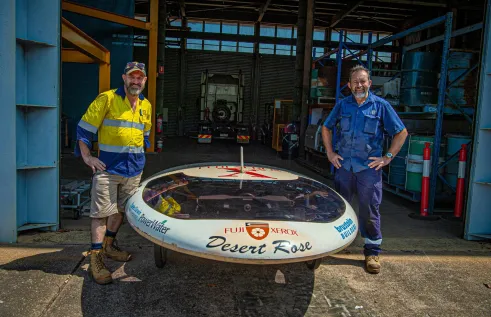
'Desert Rose' to be preserved
The legacy of a world record-breaking solar car, developed by and raced by Charles Darwin University students and staff, will be preserved and celebrated in the Northern Territory’s premier museum.
Read more about 'Desert Rose' to be preserved
Federal funding for Country-based health and climate resilience
A new research collaboration to support and strengthen Country-based health and climate resilience has received funding through the National Health and Medical Research Council’s Centres of Research Excellence scheme.
Read more about Federal funding for Country-based health and climate resilience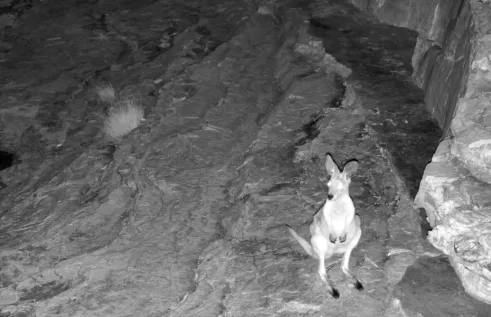
New livestream brings remote Australian arid zone waterhole to the world
A new livestream from a remote waterhole in the Northern Territory is giving people around the world the opportunity to observe wildlife in real time.
Read more about New livestream brings remote Australian arid zone waterhole to the world


