Volunteers protected Darwin wildlife for 50+ years, but new research suggests it’s time to stop winging conservation efforts
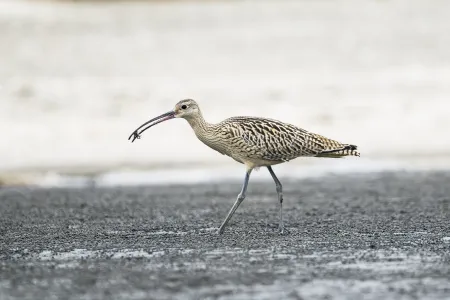
Volunteers have shouldered the burden of shorebird conservation in the Top End for more than half a century, but new research from Charles Darwin University (CDU) suggests it’s time for the government to take responsibility for all of the Northern Territory’s residents – including those with wings.
The Federal Environment Protection Biodiversity Conservation Act 1999 protects 14 shorebird species in protected by the federal Environment Protection Biodiversity Conservation Act 1999 – two of which are considered critically endangered, four are endangered, and eight are vulnerable.
Habitat degradation is the leading cause of population decline among these species, with 65 per cent of the tidal flats favoured by shorebirds lost over the last 50 years due to rapid changes in land use.
But study lead author Dr Amanda Lilleyman, a CDU Adjunct Professor, said 69 per cent of the activities and actions taken in relation to shorebird conservation in Darwin since 1972 have been community-led or research-based.
Much of these activities included volunteer monitoring programs as well as community-led education and engagement events funded through small grants.
Dr Lilleyman said her research indicated the high volume of volunteer-led activity meant there were expectations for volunteers to continue leading efforts to protect shorebird populations, as opposed to appropriate stakeholders.
She held concerns this could lead to volunteer burnout among the birds’ greatest champions.
“Australia has signed international agreements to protect shorebirds and their habitats, but the onus has historically been on volunteers to lead the charge through things like citizen science and community events,” she said.
“Even though volunteers work hard to raise awareness of the plights of shorebirds, the reality is that we will continue to see declining populations if something does not change.”
Dr Lilleyman, who is also a committee member for the voluntary BirdLife Top End committee, co-authored the Darwin Harbour Migratory Shorebird Site Action Plan to complement her research alongside fellow committee member Gavin O’Brien.
She said the plan was a blueprint for shorebird management in Darwin Harbour.
This research contributes to Goals 15 and 16 of the United Nations Sustainable Development Goals, which relate to life on land and peace, justice, and strong institutions.
Related Articles
Federal funding for Country-based health and climate resilience
A new research collaboration to support and strengthen Country-based health and climate resilience has received funding through the National Health and Medical Research Council’s Centres of Research Excellence scheme.
Read more about Federal funding for Country-based health and climate resilience
New livestream brings remote Australian arid zone waterhole to the world
A new livestream from a remote waterhole in the Northern Territory is giving people around the world the opportunity to observe wildlife in real time.
Read more about New livestream brings remote Australian arid zone waterhole to the world
Leading scientist recognised for lifetime of dedication to Australian biodiversity and conservation
One of the nation’s most distinguished experts in Australian biodiversity and conservation will be celebrated in an upcoming Charles Darwin University graduation ceremony.
Read more about Leading scientist recognised for lifetime of dedication to Australian biodiversity and conservation


