Where rubber meets the road: Old tyres are key to building tougher roads
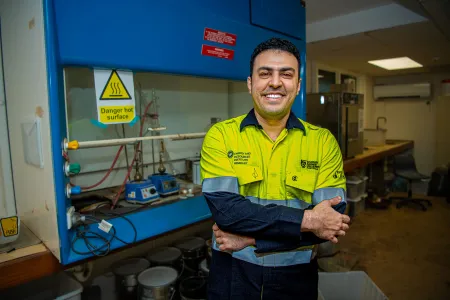
Almost half of the Northern Territory’s worn-out tyres end up in landfills – with the rest exported interstate for recycling – but a study led by Charles Darwin University (CDU) is repurposing the discarded rubber to build stronger, sustainable roads that meet the NT’s unique needs.
The research explores the performance of roads built from bitumen and asphalt modified with shredded tyre waste from trucks and passenger vehicles as well as recycled plastics.
CDU PhD candidate and study lead author Ramin Shahbazi said the materials used for roads in cooler climates were not always suitable in places such as the NT due to the extreme heat and UV conditions.
“The hot weather up here means the long-term effects of ageing roads cause different chemical reactions within the pavement, which makes the road harder or more brittle and leads to damaged roads,” Mr Shahbazi said.
“We’re working to match the performance of regular pavement materials by using recycled materials, but I think there’s potential we could surpass that performance.”
Mr Shahbazi said using recycled materials would also provide a more-cost efficient option for road development and maintenance.
“Paying for an expensive polymer just to meet the traffic and weather conditions of Territory roads is like adding an environmental cost to the infrastructure’s overall price tag,” he said.
Mr Shahbazi said he hoped the project’s success would pave the way to standardised use of recyclables in infrastructure and prompt investment in recycling facilities in the NT.
According to Tyre Stewardship Australia’s 2023-24 annual report, 500,000 tonnes of tyres reach their end-of-life stage across the country each year.
“Investing in the specific recycling facilities for these materials will then contribute to the circular economy in the Territory,” he said.
The project is part of a partnership between CDU and the NT Government’s Department of Logistics and Infrastructure.
Rubber and plastic waste-modified asphalt binders and mixtures: Performance against environmentally induced distresses was published in the Journal of Traffic and Transportation Engineering.
Related Articles

Federal funding for Country-based health and climate resilience
A new research collaboration to support and strengthen Country-based health and climate resilience has received funding through the National Health and Medical Research Council’s Centres of Research Excellence scheme.
Read more about Federal funding for Country-based health and climate resilience
New livestream brings remote Australian arid zone waterhole to the world
A new livestream from a remote waterhole in the Northern Territory is giving people around the world the opportunity to observe wildlife in real time.
Read more about New livestream brings remote Australian arid zone waterhole to the world
Leading scientist recognised for lifetime of dedication to Australian biodiversity and conservation
One of the nation’s most distinguished experts in Australian biodiversity and conservation will be celebrated in an upcoming Charles Darwin University graduation ceremony.
Read more about Leading scientist recognised for lifetime of dedication to Australian biodiversity and conservation


