Northern Institute
Clean Energy, New Waste: Exploring a Just and Circular Transition
| Presenter | Multiple Presenters | |
|---|---|---|
| Date/Time |
to
|
|
| Contact person |
Northern Institute
|
|
| Location | Online via Teams only | |
| Open to | Public | |
About the event
As the global race toward renewable energy accelerates, a silent challenge is piling up in the background. The rapid deployment of solar panels, wind turbines, and batteries is creating entirely new, massive waste streams that must be managed throughout their lifecycle.
How can we ensure the transition to a clean energy future doesn't come at a cost to the environment and local communities?
Join us for this special Social Sciences Week webinar as we bring together a world-class panel of international scholars from Australia, Canada, the United States, and Africa. Spanning the fields of discard studies, geography, environmental science, and energy policy, our speakers will dive deep into how different corners of the globe are navigating these emerging waste challenges.
While the energy transition is often treated as a purely technological problem, this event highlights why social science is the missing piece of the puzzle. Discover how circular economy principles, social equity, and justice-oriented approaches can shape effective, human-centric solutions for a truly clean future.
Have a question for our global panel?
We want this to be an open, public conversation. You can submit your questions for the speakers in advance to help shape our discussion.
Who should attend?
This public webinar is designed for a broad, interdisciplinary audience—including academic researchers, students, government and policy stakeholders, NGO practitioners, industry professionals, and any member of the public curious about the future of our planet. The webinar will feature a moderated Q&A session.
About the presenters
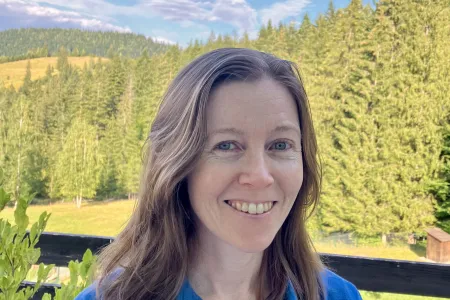
Vanessa Lea is an MRes candidate in Environmental Management at CDU. Her research examines the lifecycles of off-grid solar products in rural Madagascar (e.g. solar lamps, solar home systems), focusing on product durability, repair, reuse, and end-of-life management, and their implications for a just and sustainable energy transition.
Benjamin Sovacool, PhD, is Professor of Earth and Environment at Boston University in the United States, where he is the Founding Director of the Institute for Global Sustainability. He is also Professor of Energy Policy at the Bennett Institute for Innovation & Policy Acceleration at the University of Sussex Business School. He is a Fellow of the Royal Society for Arts, Manufactures and Commerce, a Fellow of the Academy of Social Sciences, and a Fellow in the Academy of Europe (Academia Europaea). Professor Sovacool works as a researcher and consultant on issues pertaining to energy policy, energy justice, energy security, climate change mitigation, and climate change adaptation.
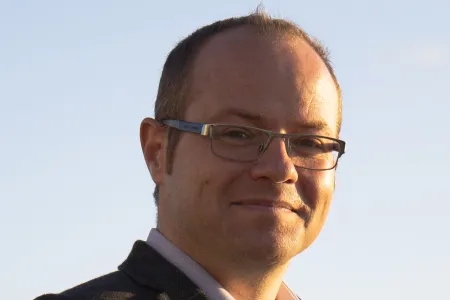
More specifically, his research focuses on renewable energy and energy efficiency, the politics of large-scale energy infrastructure, the ethics and morality of energy decisions, designing public policy to improve energy security and access to electricity, and building adaptive capacity to the consequences of climate change. He is a globally renowned scholar who has devoted two decades of his career to improving energy access, climate justice, resilience, and decarbonization pathways in Asia, Africa, Europe, and North America.
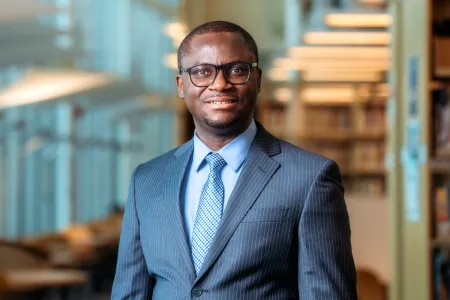
Anderson Assuah is an associate professor in the Aboriginal and Northern Studies program at the University College of the North, Canada. His research focuses on solid waste management, sustainability, environmental governance, Indigenous environmental knowledge, and climate change. He leads the University of the Arctic (UArctic) Thematic Network on Solid Waste Management in the Arctic.
Matthew Kearnes is Professor of Environment and Society, School of Humanities and Languages, UNSW. He is an internationally recognised leader in research on the social dimensions of technological and environmental change, with his research situated at the intersection of Science and Technology Studies (STS) & human geography. His ongoing research focuses on the public and social dimensions of processes of environmental transition across climate, waste management and circular economy spaces. His research is supported by the Australian Research Council and the National Environmental Science Program/Sustainable Communities and Waste Hub.
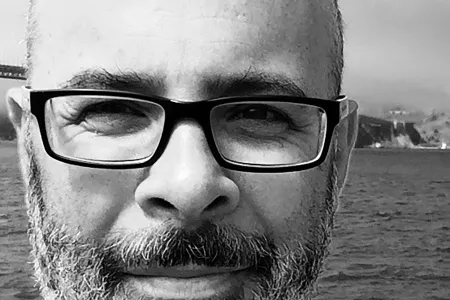
His most recent books include the co-edited volumes Remaking Participation: Science, Environment and Emergent Publics (with Jason Chilvers, Routledge, 2016) & Thinking with Soils: Material Politics and Social Theory (with Juan Francisco Salazar, Céline Granjou, Anna Krzywoszynska & Manuel Tironi, Bloomsbury, 2020). Matthew is an editor of Science, Technology and Human Values (Sage), an associate editor for Science as Culture (Taylor & Francis).
Dr Deepika Mathur is a Senior Research Fellow at the Northern Institute, based at the Alice Springs campus. Her research focuses on identifying pathways to improve sustainability in regional, remote, and very remote communities through more effective waste management practices. In particular, she has undertaken extensive research on end-of-life solar panels, construction waste and disaster-related waste across regional and remote Australia. Dr Mathur has led multi-stakeholder research projects funded by the Australian and Northern Territory governments and industry.
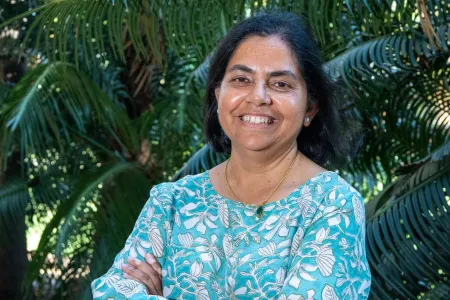
Her work has been published in peer-reviewed journals, The Conversation, and industry publications. She regularly presents her research at academic and industry conferences in Australia and internationally, helping to bridge the gap between research, policy, and practice.
Registration for the event
This seminar will be online only. Please note time differences if you are joining in from outside of Darwin, NT.
| Location/Regions of our Panellists | Time Zones |
| Darwin/Alice Springs, Australia | Friday 10:00 - 11:30 am (ACST) |
| Sydney, Australia | Friday 10:30 am - 12:00pm (AEST) |
| The Pas, Canada | Thursday 7:30 pm - 9:00 pm (CDT) |
| Fort-Dauphin, Madagascar | Friday 3:30 am - 5:00 am (EAT) |
| Boston, USA | Thursday 8:30 pm - 10:00 pm (EDT) |
Online registration: Register here
Once you register, you will receive an individual link from Microsoft Teams.
Related Events
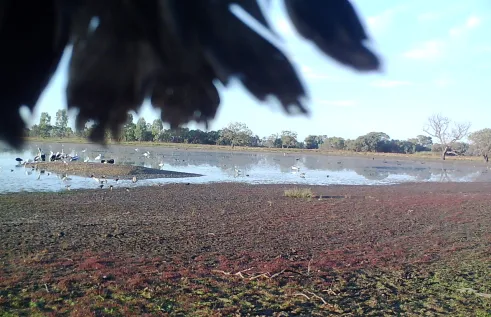
Sensing an Inland Wetland: Glitches, Patches and Mosaics
Join us for this seminar investigating multimodal sensing for wetland environments gathered data over a four month period at a wetland in the western reaches of the Murrumbidgee river. Learn about approaches to structuring, presenting and narrating this data.
Read more about Sensing an Inland Wetland: Glitches, Patches and Mosaics
Your future in Medicine: Explore the CDU Menzies Medical Program
Discover how CDU is preparing future doctors to support communities across the Northern Territory and beyond.
Read more about Your future in Medicine: Explore the CDU Menzies Medical Program
Mangroves and the rising tide
Madeline will discuss how long-term monitoring of mangrove surface elevation provides critical insight into the long-term persistence of mangroves and the ecosystem services they provide under rising sea levels.
Read more about Mangroves and the rising tide


