Northern Institute
NT Population Research, Insights and Policy Directions
| Presenter | Sigurd Dyrting, David Karácsonyi, Dr. Kazumasa Hanaoka, Flavio Jong , Dr. Alyson Wright and Andrew Taylor | |
|---|---|---|
| Date/Time |
to
|
|
| Contact person |
Northern Institute
|
|
| Location |
Room 32, Level 4, Danala Education and Community Precinct 54 Cavenagh Street, Darwin City, NT, 0800 |
|
| Open to | Public | |

This seminar has been prepared in collaboration with Northern Territory Government's Department of Treasury and Finance and is open and free for the public to attend.
The Demography and Growth Planning team at Charles Darwin University’s Northern Institute works with the Department of Treasury and Finance to independently explore and analyze the Northern Territory’s population trends, changes, and features. Through this long-standing collaboration, we deliver independent research, build local expertise, and bring Territory population insights to the national stage.
Each year, we share a glimpse of this work in our annual seminar, a showcase of research shaping how we understand and plan for the Territory’s future. We thank the Department of Treasury and Finance for their ongoing support of independent demographic research at CDU and look forward to seeing you at the seminar.
Learn more about us: Demography and growth planning | Charles Darwin University
Program:
- Welcome, Introduction, and Inside the work of the Demography and Growth Planning team -
Dr Andrew Taylor (Associate Professor, Northern Institute, CDU). - A new population projections model for the NT in R -
Flavio Jong (Principal Analyst, Economic Analysis, Department of Treasury and Finance). - Tracking Indigenous Life Expectancy and Life Disparity in the Northern Territory -
Dr Sigurd Dyrting (Research Fellow, Northern Institute, CDU). - Insights into regional population estimation for the Northern Territory -
Dr Alyson Wright (Principal Epidemiologist, Health Statistics and Informatics, Northern Territory Health) and Dr Sigurd Dyrting (Research Fellow, Northern Institute, CDU). - Mobile Phone Big Data Analysis and the COVID-19 Pandemic - Dr Kazumasa Hanaoka (Professor, Department of Geography, Ritsumeikan University, Japan).
- Is the Northern Territory at the edge of (un)inhabitability? Conceptualising vulnerability to heat across remote towns amid climate change - Dr David Karácsonyi (Geographer, Northern Institute, CDU).
Presenters:
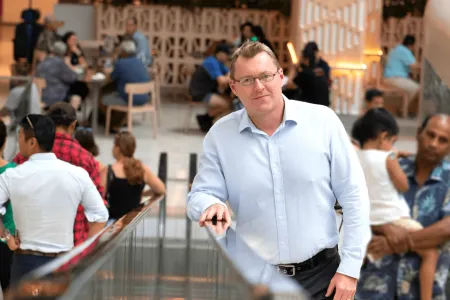
Associate Professor Dr Andrew Taylor
Inside the work of the Demography and Growth Planning team
Mini bio: Associate Professor Andrew Taylor is an applied population researcher at CDU's Northern Institute.
He worked for a decade at the Australian Bureau of Statistics, starting as a graduate in the Darwin office, and joined CDU in 2004 as a researcher.

Dr Sigurd Dyrting
Tracking Indigenous Life Expectancy and Life Disparity
Life expectancy measures the average length of life, but in any population, there is considerable variation in age at death. Some people die before their life expectancy age, and some people die after. In this talk, I discuss one measure of life span variation, life disparity, and show how it is related to a population's capacity to increase the average length of life. I use a unique mortality dataset spanning 50 years to illustrate historic changes in life expectancy and life expectancy disparity for Indigenous Territorians.
Mini bio: Dr Sigurd Dyrting is a Northern Institute (CDU) demographer specialising in applying mathematical, statistical, and computational methods to demographic problems. His research includes estimation techniques for small populations, emphasising preparing inputs that practitioners use for demographic analysis and population projections.

Dr David Karácsonyi
Is the Northern Territory at the edge of (un)inhabitability? Conceptualising vulnerability to heat across remote towns amid climate change
Climate change projections indicate the number of extremely hot days is increasing substantially in many parts of Australia. Remote settlements in the Northern Territory, already characterised as being at the ‘edge’ of viable human habitation, have fragile demographic and social conditions, limited adaptive capacity, and under-resourced public services. Understanding spatial variations in heat-related vulnerability is crucial for shaping policy, guiding economic and social responses, and supporting long-term planning for essential services.
Using a three-dimensional model of warming, ageing, and population decline, we demonstrate that vulnerability does not simply increase with remoteness but instead reflects the socio-economic and population diversity of these regions. While population ageing is widely recognised as a major challenge, Indigenous communities face heightened contextual vulnerability due to socio-economic disadvantage, which limits their coping and adaptive capacity. Our findings underscore the need for place-based strategies to address the intersecting demographic and climatic vulnerabilities shaping the remote towns and communities in the face of increases in extremely hot days.
Mini bio: Dr David Karacsonyi is a Northern Institute (CDU) and Flinders University researcher focusing on the human geography of remote and peripheral areas. His most recent works are related to the understanding of the human–geography nexus behind the existence of sparsely populated regions such as the Australian ‘Outback’.
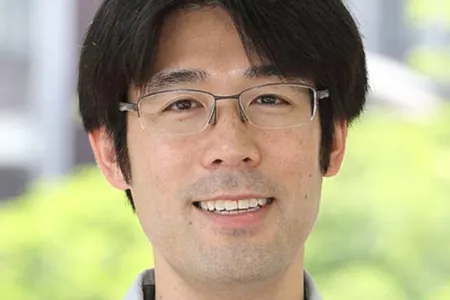
Dr. Kazumasa Hanaoka
Mobile Phone Big Data Analysis and the COVID-19 Pandemic
During the COVID-19 pandemic, many countries, including Japan, imposed lockdowns several times, leading to significant changes in people's spatial behaviour. Spatial big data from mobile phones has emerged as a valuable tool for tracking these patterns. Using one of the largest datasets available in Japan, we propose methods to calculate the rates of outings and the geographical distributions, and inflows from outside the city during the pandemic at the 250-metre grid cell level in Kyoto City.
We found that: first, the rate of 'staying at home' did not return to its previous level and remained about 5 percentage points higher. Second, people moved around the city broadly, but avoided visiting the city centre where they could not maintain social distance and where shops were closed by government requests. Third, after the lifting, the number of visitors from outside the city has recovered rapidly in the city centre and tourist areas, but not in residential and neighbourhood commercial areas.
Mini bio: Dr Kazumasa Hanaoka is a professor in the Department of Geography, Ritsumeikan University, Japan. His research activities cover a range of topics related to spatial microsimulation modelling, spatio-temporal analysis using mobile phone data, and census data analysis on the migration of foreign residents. He is the former director of the Institute of Disaster Mitigation for Urban Cultural Heritage, Ritsumeikan University.
Flavio Jong
Modernising the Northern Territory Government Demographic Projections Model
Over the past year, the Department of Treasury and Finance has been undertaking work to modernise its cohort-component demographic projection model for the Northern Territory using R. This work has been a collaborative effort with support from the Demography and Growth Planning team at Charles Darwin University's Northern Institute and the Australian National University School of Demography. This presentation will provide a brief overview of the aims of the modernisation project, interesting challenges and findings, and opportunities for future development.
Mini bio: Flavio Jong is an Assistant Director at the Northern Territory Department of Treasury and Finance, working in the areas of economic data analysis, model development and forecasting.
Dr Alyson Wright
Insights into regional population estimation for the Northern Territory
Regional demographic insights are critical for understanding population change and supporting effective planning of health care services across the Northern Territory. Obtaining reliable estimates for smaller geographic areas is especially important, yet challenging, due to data limitations and the unique demographic patterns of the NT. We explore these issues in this presentation, and demonstrate a use case by examining total fertility rates.
Mini bio: Dr Alyson Wright is a Principal Epidemiologist with the Public Health Division of NT Health, leading the Epidemiology team in Health Statistics and Informatics. Her research interests include Aboriginal health, health inequalities, and chronic disease epidemiology.
Registration
This event is in person only and will not be recorded. Please RSVP to attend the event.
Getting there
Room 32, Level 4,
Danala Education and Community Precinct
54 Cavenagh Street, Darwin City, NT, 0800
Google Maps Location
Access: If you have any additional access or support requirements, please contact us. Level 1 is street level and has bathrooms, CDU student services and security available on this floor. Please note that there will be directional signs on the event day and that the underground car parking is not available yet so please use the surrounding street parking.
Related Events

Seen, Heard, Counted: The power and importance of the Census in 2026
Join us in the lead up to the census, and understand its importance for Australias future.
Read more about Seen, Heard, Counted: The power and importance of the Census in 2026
Last refugium of a critically endangered species: Three decades of conservation
The Banggai Crow (Corvus unicolor), is one of the world’s most threatened endemic species. The bird survives in an increasingly fragmented refugium within the Banggai Archipelago, Central Sulawesi.
Read more about Last refugium of a critically endangered species: Three decades of conservation
What does it mean to be an academic today?
Hear from a panel of individuals from a range of backgrounds and career stages. Key topics to be covered include:
- The academic career in today’s context and the different types of academic roles
- The emergence of the impactful researcher
- From industry to academia and vice versa
- Being strategic: understanding external forces at play, including regulation and policy directions from government
- The importance of consistency and resilience


