Northern Institute
Understanding and Mitigating Saltwater Crocodile Attacks on Humans in Indonesia
| Presenter | Brandon Sideleau | |
|---|---|---|
| Date/Time |
to
|
|
| Contact person |
Northern Institute
|
|
| Location |
Room 4.16, Level 4, CDU Danala Education and Community Precinct, 54 Cavenaugh Street, Darwin. |
|
| Open to | Public | |
About the seminar:
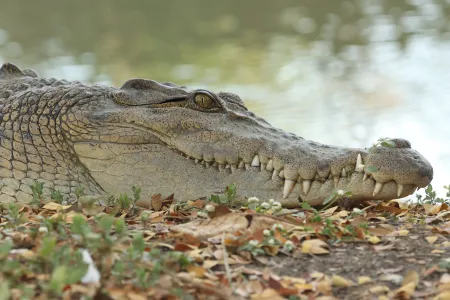
Indonesia reports more saltwater crocodile (Crocodylus porosus) attacks than any other country, yet national-scale analyses remain scarce. We compiled 1,217 attack records from 2016–2025, resulting in 588 fatalities. Nearly half of all incidents were concentrated in just five provinces — Riau, East Kalimantan, East Nusa Tenggara, Bangka-Belitung, and North Maluku — and both fatal and non-fatal attacks increased significantly over the decade, with marked escalation in several provinces. Victims were predominantly male, with adults aged 31–50 comprising the largest proportion. Fishing was the leading activity class associated with attacks nationally, followed by domestic and subsistence water use, including bathing and washing. However, provincial-level patterns diverged considerably: in Kalimantan and Sumatra, domestic and subsistence water use was significantly overrepresented, likely reflecting greater freshwater habitat availability and the consequent exposure of residents during freshwater-dependent activities. These findings underscore that effective mitigation cannot be approached uniformly. Province-specific strategies will be essential, informed by both ecological factors — such as crocodile population status and habitat availability — and socio-economic context, including W.A.S.H. infrastructure, primary livelihood types, and local cultural practices.
About the Presenter:
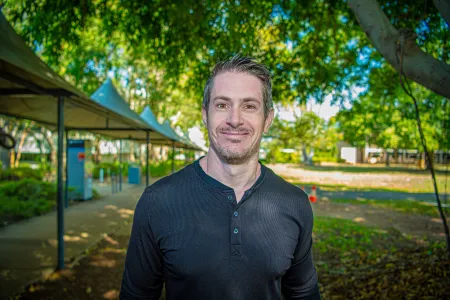
Brandon Sideleau is a PhD candidate at Charles Darwin University researching saltwater crocodile (Crocodylus porosus) attacks on humans across their entire range, with a focus on attack hotspots, victim demographics, contributing factors, and mitigation strategies. A member of the IUCN-SSC Crocodile Specialist Group since 2012, Brandon created CrocAttack, the worldwide crocodilian attack database formerly known as CrocBITE, in 2010. He has worked on human-crocodile conflict projects in Indonesia, Papua New Guinea, and Timor-Leste, and delivered a TEDx talk on saltwater crocodile attacks at Charles Darwin University in 2025.
Registration for the event:
In-person: RSVP here
Please RSVP here to attend in person—limited seating.
Online registration: Register here
Once you register, you will receive an individual link from Microsoft Teams
Getting there:
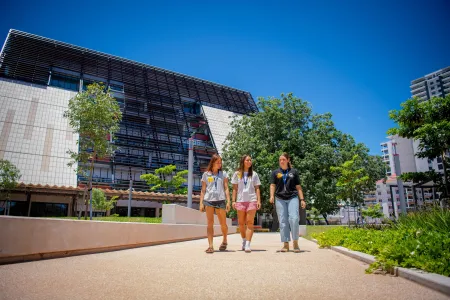
Room 4.16, Level 4,
CDU Danala Education and Community Precinct,
54 Cavenaugh Street,
Darwin.
Related Events
Last refugium of a critically endangered species: Three decades of conservation
The Banggai Crow (Corvus unicolor), is one of the world’s most threatened endemic species. The bird survives in an increasingly fragmented refugium within the Banggai Archipelago, Central Sulawesi.
Read more about Last refugium of a critically endangered species: Three decades of conservation
Marine science in the NT: From research and monitoring to stock assessment
In this seminar, the team will provide an overview of fisheries research in the Northern Territory, highlighting monitoring programs, data collection, and how these activities inform stock assessment and fisheries management
Read more about Marine science in the NT: From research and monitoring to stock assessment
Time for research
This workshop shows you how to guarantee you spend high quality time on your research outputs. It covers prioritising, goal setting and managing competing demands in a university context. If you want to increase your research output without compromising your work/life balance, then this workshop is for you.
Read more about Time for research


