Northern Institute
Understanding pathways to strong learning in two systems: Yolngu and Balanda
| Presenter | Helen Nyomba Gandaŋu, Yenhu Gaylene Gurruwiwi, Dr Emily Armstrong and Associate Professor Anne Lowell | |
|---|---|---|
| Date/Time |
to
|
|
| Contact person |
Northern Institute
|
|
| Location |
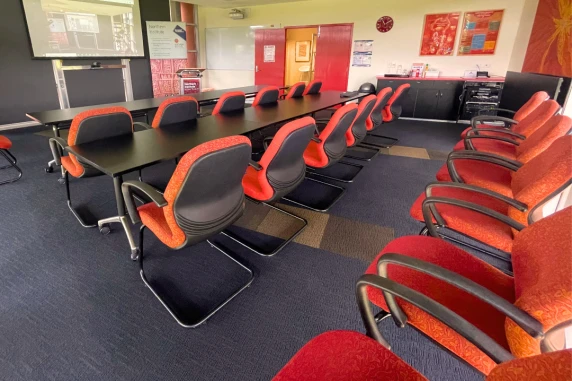
Online via Zoom & In-person at: Northern Institute's Savanna Room (CDU Casuarina Campus, Yellow 1.2.48) |
|
| Open to | Public | |
Dharaŋanamirriyam marrtji ḏälkum dhukarr marŋgikunharaw märrmaw’ romgu: Yolŋuw ga Balandaw
Understanding pathways to strong learning in two systems: Yolŋu and Balanda
Sharing the LearningPathways YolŋuBalanda app
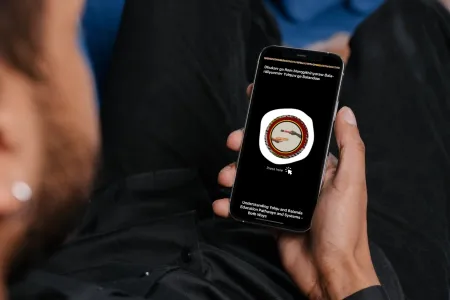
In this project, funded by an AIATSIS Research Exchange grant, the large and diverse project team engaged in intensive collaborative planning and action, supporting the continuous sharing of knowledge between Yolŋu and Balanda (non-Indigenous) researchers, participants and systems. Together, we developed educational resources, workshops and other knowledge sharing activities in the local community. In this presentation, we will share some of the project resources, including:
- Yolŋu Yothuw Dhukarr – the developmental pathway of a Yolŋu child and ways that families support their development in English and Djambarrpuyŋu;
- Balandaw dhäruk ga Yolŋukurr mayali - Guŋga’yun ga Yolŋuny dharaŋanamirriyam Balandaw gurraŋay dhäruk– a dictionary of English terms used in workplaces, meetings and research that Yolŋu wanted explained in their own language;
- Australian education system explainer - an explanation of the Australian education pathway in Djambarrpuyŋu;
- Buŋgul (ceremony) as a Yolŋu classroom – a collection of six videos illustrating some rich learning environments in which Yolŋu children are immersed.
We will discuss the collaborative process of development, trial and evaluation of project activities and resources as well as opportunities and challenges in continuing to increase shared understanding – both ways.
These resources are now freely available through the project app LearningPathways YolŋuBalanda and the Growing up Yolŋu website www.growingupyolngu.com.au.
Presenters
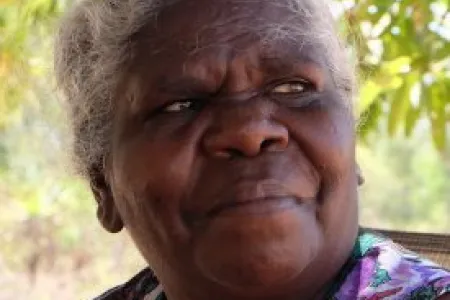
Helen Nyomba Gandaŋu is a Yolŋu elder from the Golpa clan who lives in Galiwin’ku. She has worked in a wide range of leadership roles in research, community education, and law and justice organisations. Nyomba currently supports organisations to measure and evaluate their community development initiatives. She further helps make the invisible visible by helping Balanda (non-Aboriginal people) understand the changes to look for that are making Yolŋu strong in their education, language and culture.
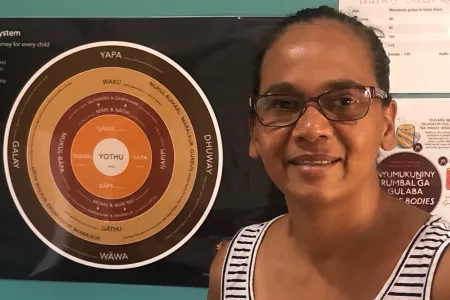
Yenhu Gaylene Gurruwiwi is a Yolŋu woman from the Gaḻpu clan. She has co-founded and worked as a senior leader at Galiwin’ku Women’s Space and in the Connected Beginnings Program. She is also a Yolŋu research consultant with the Northern Institute, CDU. Yenhu lives in Galiwin’ku with her children, granddaughter, and close extended family.
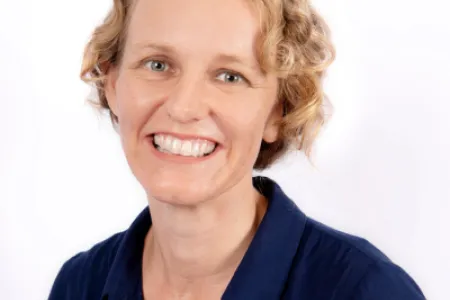
Emily Armstrong is a non-Indigenous speech pathologist and researcher who works collaboratively with First Nations colleagues. She completed her PhD studying intercultural communication and is now a research fellow at Charles Darwin University, Molly Wardaguga Institute for First Nations Birth Rights. Emily works with Yolŋu in Galiwin'ku, currently lives in Darwin, and has a close family in Tamworth NSW.
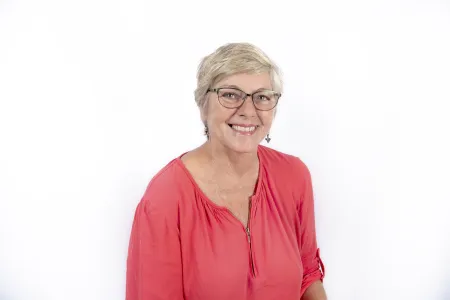
Anne Lowell is a non-Indigenous researcher who has worked on collaborative projects with remote communities in the NT, primarily in Northeast Arnhem Land, for more than thirty years. This work has included research and community education projects in the fields of intercultural communication, early childhood development, education and health. She is committed to progressing culturally responsive policy and practice that centre Indigenous knowledges and priorities in research and service delivery.
Registration
In-person: Please RSVP to attend in person.
Online: Once you register, you will receive an individual link from Zoom no-reply@zoom.us.
Each seminar is recorded and linked to our Seminars page.
Getting there
Savanna Room @ Northern Institute
CDU Casuarina Campus
Yellow Building 1, Level 2, Room 48
Google Maps location or How to get to Savanna Room.
Access: If you have any additional access or support requirements, please contact us. The Savanna Room is accessible using a lift or one flight of stairs through an automatic door. There is a wheelchair-accessible bathroom on Level 2 and a baby change room on Level 1 (ground floor).
Related Events
Last refugium of a critically endangered species: Three decades of conservation
The Banggai Crow (Corvus unicolor), is one of the world’s most threatened endemic species. The bird survives in an increasingly fragmented refugium within the Banggai Archipelago, Central Sulawesi.
Read more about Last refugium of a critically endangered species: Three decades of conservation
What does it mean to be an academic today?
Hear from a panel of individuals from a range of backgrounds and career stages. Key topics to be covered include:
- The academic career in today’s context and the different types of academic roles
- The emergence of the impactful researcher
- From industry to academia and vice versa
- Being strategic: understanding external forces at play, including regulation and policy directions from government
- The importance of consistency and resilience
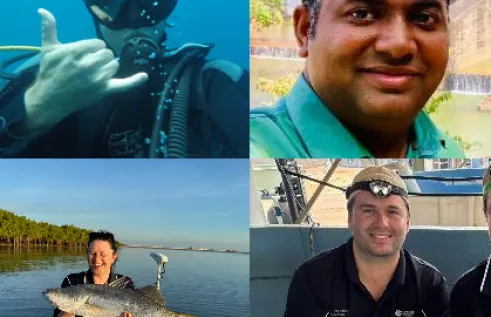
Marine science in the NT: From research and monitoring to stock assessment
In this seminar, the team will provide an overview of fisheries research in the Northern Territory, highlighting monitoring programs, data collection, and how these activities inform stock assessment and fisheries management
Read more about Marine science in the NT: From research and monitoring to stock assessment


