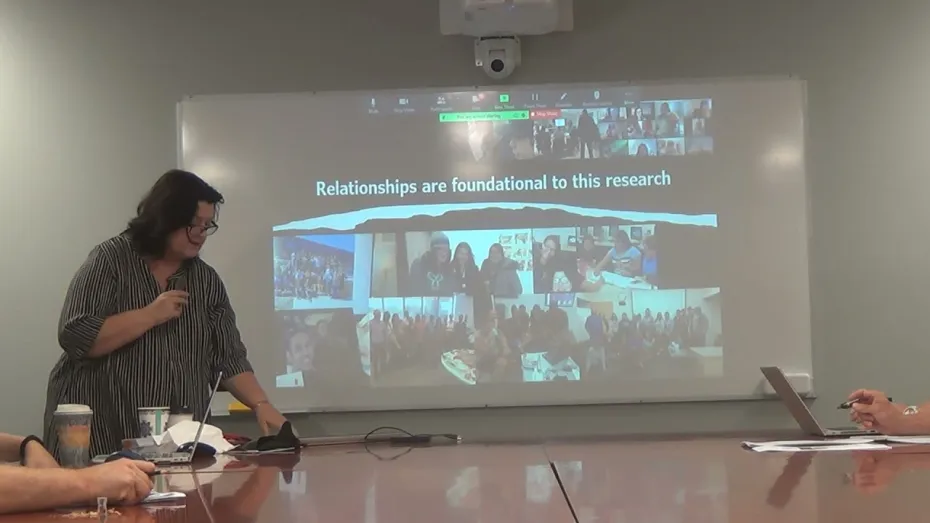
Developing effective oral presentation skills is essential for HDR students, as these abilities not only facilitate the clear communication of complex research findings but also enhance professional development and employability. Engaging in various presentation formats, such as seminars, conferences, and public lectures, enables students to tailor their communication to diverse audiences, fostering critical thinking and confidence. Moreover, proficiency in delivering compelling presentations is highly valued across professions, making it a crucial competency for academic and career advancement.
Aims of the page:
- Equip you with the necessary skills to effectively present your research findings to diverse audiences.
- Offer clear guidelines on preparing, structuring, and delivering oral presentations tailored to academic contexts.
- Support your growth as a researcher by developing your understanding on communicate complex ideas confidently and professionally.
Before you continue, reflect on your previous experiences communicating in academic settings and the feedback you have received. How would you rate your ability in the following skills? Rate your ability from ‘confident’ to ‘not confident at all’.
Oral presentation skills for researchers
The role and value of oral presentations
Oral presentations are a way for researchers to communicate and share their ideas and findings with peers, academics, and industry professionals. Strong presentation skills are essential for engaging with the broader academic community, contributing to scholarly debates and fostering collaboration, feedback, and networking opportunities. Moreover, the process of preparing and delivering a presentation encourages critical thinking, helping researchers refine their ideas, make their research more accessible, and improve clarity.
Type, purpose and audience of your presentation
Effective presentations are tailored to their specific type, purpose, and audience. Therefore, recognising these distinctions allows you to structure your content, adjust your delivery style, and engage your audience appropriately.
Confirmation of Candidature
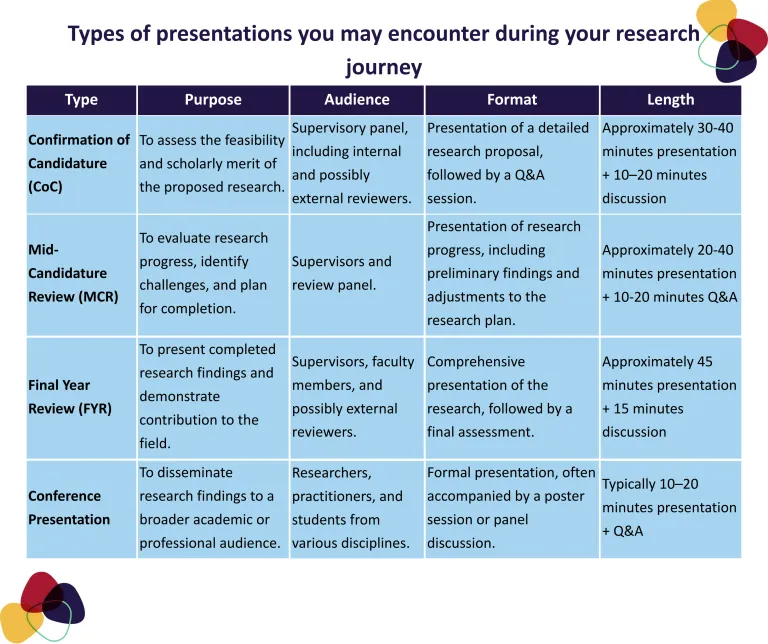
At CDU, the Confirmation of Candidature (CoC) oral presentation is a critical component of the HDR milestone. Scheduled between 6 to 10 months after course commencement, this presentation involves delivering a comprehensive overview of your research proposal to a panel of independent academics. The panel evaluates your proposed research, ensuring that the research direction is sound, methodologies are appropriate, and the standard of writing is satisfactory. The CoC presentation serves as an opportunity to receive constructive feedback and guidance from experienced researchers, aiding in the refinement and progression of your research project.
Below you can see Dr. Joanne Forrest’s Confirmation of Candidature presentation for her PhD at CDU.
Mid-candidature review
At CDU, a Mid-Candidature Review (MCR) oral presentation is typically conducted between 18 to 24 months from course commencement. This informal presentation involves delivering an overview of your research journey and current status to your supervisory panel. The presentation serves to assess the progress made, identify any challenges encountered, and refine plans to ensure successful and timely completion of the research project. In some cases, a formal presentation to a broader review panel may be required, depending on the progress reported and faculty requirements.
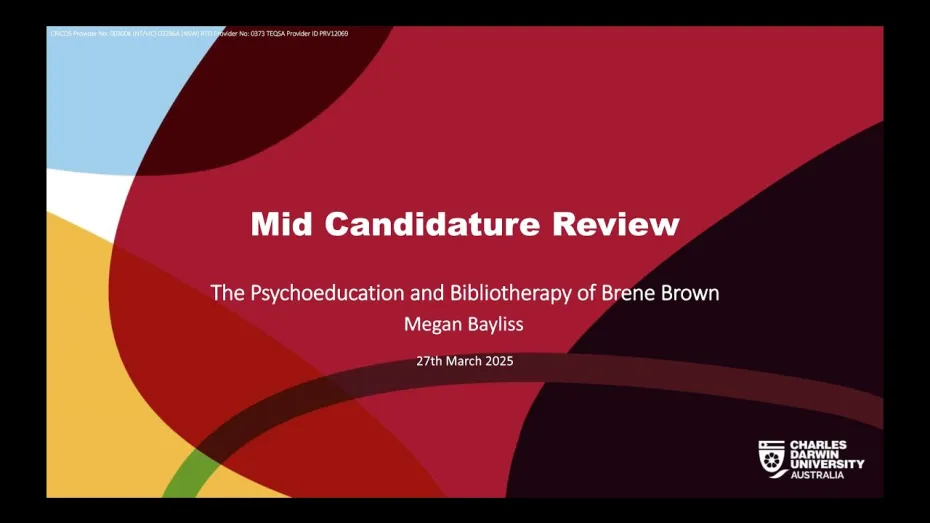
Below you can watch CDU PhD candidate Megan Bayliss conduct her MCR presentation.
Final-year review
The final-year review (FYR) precedes the final submission and external examination of the candidate’s thesis. At CDU, the FYR is typically conducted between 30 to 36 from course commencement for PhD candidates. This presentation involves delivering a comprehensive overview of your research journey and current status to your supervisory panel. Candidates are required to submit a research progress report, including key findings, challenges encountered, and solutions implemented. Additionally, a draft copy of the thesis must be submitted, encompassing all chapters to date. The presentation serves to assess the progress made, identify any remaining challenges, and refine plans to ensure successful and timely completion of the research project.
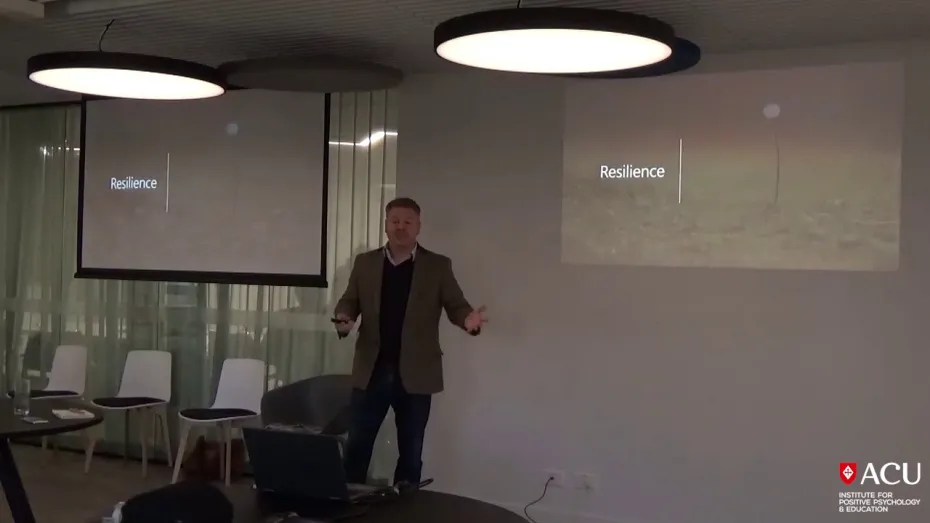
Watch below PhD candidate Darren Coppin presenting his FYR at the Australian Catholic University (ACU).
Conference presentations
Conference presentations offer HDR students a platform to share their research findings with a broader academic and professional audience. These presentations, such as those at the annual CDU HDR Conference, are integral to the research dissemination process. They provide opportunities for students to receive feedback, refine their communication skills, and engage in scholarly discussions. Participating in conferences also allows students to build professional networks, collaborate with peers, and enhance their academic profiles.
You can check the program for the CDU HDR Conference 2025 here:
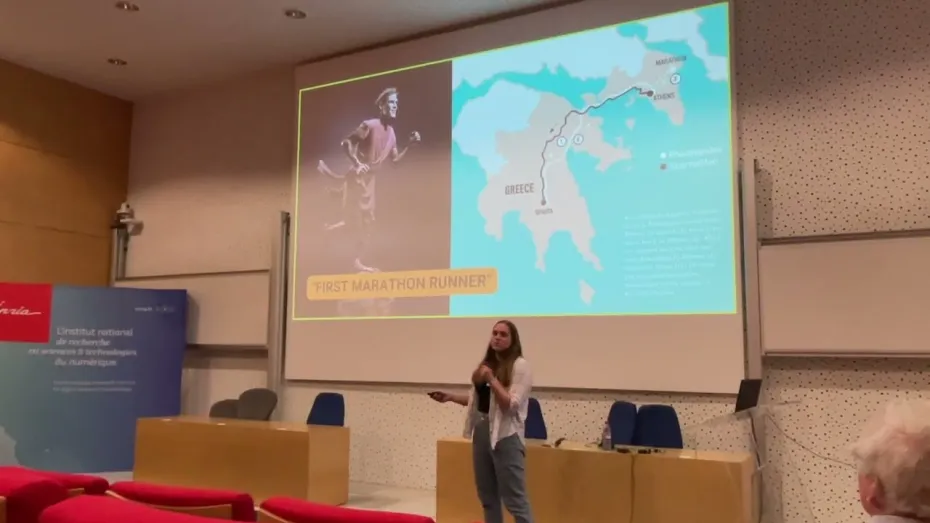
Below, watch PhD graduate Ciara Feely present her paper "An Extended Case-Based Reasoning System for Marathon Performance Prediction" at the International Conference on Case-Based Reasoning.
The structure of HDR oral presentations
Different stages of your PhD journey call for different kinds of oral presentations, each with its own purpose, audience, and emphasis. While all presentations should be clear, well-structured, and engaging, a Confirmation of Candidature focuses on feasibility, a Mid-Candidature Review highlights progress and challenges, a Final-Year Review demonstrates readiness for examination, and conference talks aim to share findings persuasively with the wider academic community.
Confirmation of Candidature
A strong CoC presentation opens with a concise overview of your topic, explaining its significance and situating it within the broader field. You then weave in a brief, critical review of the literature to pinpoint the gap your study addresses, before stating your research questions and objectives clearly. Next, outline your methodology (design, methods, and planned data collection), alongside any ethical considerations and how you will manage them. Finally, present a realistic timeline with key milestones, and conclude by summarising the expected contributions of your research and its potential impact.
Mid-candidature review
An effective MCR presentation briefly reintroduces your topic and objectives, emphasising the study’s significance, then sketches the key literature that frames your work and the gap you are addressing. You outline the methodology you’ve employed, noting any changes made along the way, before reporting progress since Confirmation of Candidature, such as drafted chapters, and presenting preliminary data or findings. You then candidly discuss challenges encountered and how you have adjusted your plan, set out the remaining tasks with a realistic timeline to completion, and close by summarising the key points and reaffirming your commitment to finishing within your candidature period.
Final-year review
A good FYR presentation opens by stating your project title, supervisory team, and current status (e.g., research complete, thesis in draft, submission target set). Then, you briefly restate the problem and your central contribution, then confirm the final research questions and outline the methods used, noting any refinements since MCR. Next, you highlight headline findings with clear visuals, interpret their significance, and point to implications, strengths, and limitations, alongside any publications, presentations, or engagement outcomes. You then show thesis readiness with a chapter completion map and quality-assurance checks (data management, reproducibility, similarity reports), before finishing with a realistic timeline to submission and a concise statement of readiness for external examination.
Conference presentation
Unlike milestone reviews (CoC, MCR, FYR), a conference talk is outward-facing and persuasion-focused, distilling your work for a broad audience. Start with name, affiliation, title and a one-line hook; set brief context, state the gap and a clear aim; sketch the key approach at a high level (enough for credibility, not a methods seminar). Present 2–4 headline results (one figure per point with takeaway titles) then give implications for theory/practice/policy and note the main limitation.
- Task: Conference presentation. Finish with three take-homes and next steps or collaboration invites, thank funders/collaborators and share contact/QR, and leave 2–3 minutes for Q&A with backup slides ready.
Materials and visual support
Visual support can enhance a presentation, but expectations differ by discipline. For instance, philosophy talks rarely use slides, while science and design often rely on digital or physical models. Tools like PowerPoint, Prezi, or Google Slides are usually permitted, but each has benefits and drawbacks. Whenever you include visuals, ensure they have a clear purpose and explicitly refer to them during your talk; for example, to outline your structure, introduce new ideas, emphasise key points, or present images, statistics, diagrams, and tables. Visuals must always be clear, legible, relevant and referenced accordingly.
Slides
- Limit text to a few bullet points (no more than six lines per slide).
- Use keywords instead of full sentences.
- Highlight important information with larger fonts (minimum 20–24pt).
- Choose clear sans serif fonts (e.g., Arial, Verdana, Century Gothic).
- Ensure strong contrast between text and background.
- Pause when displaying a dense slide (like a table or quotation) to let the audience read it.
- Avoid overcrowding slides or using too many in total.
Images
Graphics should complement, not overwhelm, text.
- Balance images and text on each slide.
- Limit to two graphics per slide.
- Steer clear of distracting visuals (e.g., animations, flashing text, emojis).
Handouts
Handouts are useful for material that people may want to revisit, such as a summary, contact details, references, or large tables. Keep them concise and, if possible, distribute them at the end so they don’t distract from your delivery.
Equipment
Familiarise yourself with the room and equipment beforehand. Practise using the projector, visualiser, and lighting controls, and check whether the system needs time to warm up. CDU’s Digital Technology Services (DTS) can provide support for operating audiovisual equipment on campus.
Handling questions
Managing presentation inquiries
In milestone presentations, you will likely be asked questions from the supervisory panel. In conference presentations, you should invite questions from the audience.
- Task: Handling questions. Click on the hotspots to see advice on how to handle questions.
Applying your learning
Reflect on what you have learned in this material and consider how you can use it in your own work.
Useful resources
- University of Melbourne – Developing Your networking and presentation skills (HDR)
- University of New England – Conference presentation skills (HDR)
- University of South Australia – Preparing an oral presentation for an academic audience (HDR)
- Charles Darwin University – Oral presentations (undergraduate, but includes helpful tips).
Next steps
Reflect on your learning:
- Revisit the self-analysis quiz at the top of the page. How would you rate your skills now?
- Remember that public speaking is a process and mistakes aren't necessarily a bad thing. They are a normal part of learning and can help you to improve.
If you would like more support, visit the Language and Learning Advisors page or make an appointment to speak about your research thesis and presentation skills.