News
A challenging new world for wildlife: How humans have reshaped the food webs
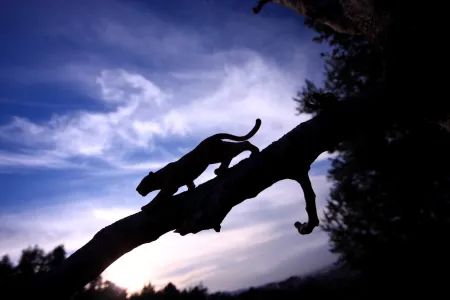
The relationship between predators and prey in the wild is underscored by an evolutionary arms race spanning millions of years, but new research has found modern human activity is reshaping the rules.
Led by Charles Sturt University (CSU) with support from Charles Darwin University and others, the review – published in one of the leading ecology and evolution journals – found that physical and behavioural traits of both predator and prey have been altered by human interference, and this has affected how they interact with each other.
The study examined the adaptations that different species evolved in response to human interaction such as fishing, climate change, species introductions, habitat alteration, or pollution.
For example, fisheries’ preference for harvesting larger fish has resulted in reduced body size and age structure in certain species, potentially increasing their vulnerability to predators.
Co-author Dr Chris Jolly, an adjunct for CDU’s Research Institute for the Environment and Livelihoods (RIEL) and Macquarie University Research Fellow, said these physical changes have flow-on effects for “who eats whom”.
“That matters because predator–prey interactions underpin the evolution of entire ecosystems,” Dr Jolly said.
“They influence everything from species abundance to vegetation and nutrient cycling – if we change how predators and prey interact, those effects can cascade through food webs and fundamentally alter ecosystems.”
Dr Jolly said one of the key takeaways from the study was that changes in animal behaviour and physiology weren’t always obvious or immediate, but could have long-term consequences.
“Trait shifts can build over time, leading to cascading effects like population declines, food web restructuring, or even local extinctions,” he said.
“The good news is that by understanding how human activities drive these changes, we can design better conservation strategies.
“Ultimately, this research highlights that conserving ecosystems means thinking not just about species, but about the dynamic relationships between them.”
Study lead author and CSU Postdoctoral Research Fellow, Dr Eamonn Wooster, said much of the work necessary to counteract the damage inflicted by human disruption was governed at a scale much higher than the individual.
But he said there were some “quick fixes” available at the individual level.
“The end of size selective hunting and fishing will help return natural variation to populations – trophy hunting is particularly damaging to animal populations.
“However, for other disturbances like climate change or urbanisation, preventing animals from responding to these rests on the prevention of the disturbance itself.
“Animals will continually adapt to the challenges humans present to them or in some cases, go extinct.
“Much of conservation in the Anthropocene is simply understanding the mess we created and how to help animals navigate it.”
Human-induced trait shifts reshape predator–prey interactions was published in the journal Trends in Ecology & Evolution.
Aligned with the United Nations Sustainable Development Goals
Responsible consumption and production
Goal 12
Ensure sustainable consumption and production patterns.
Life on land
Goal 15
Protect, restore and promote sustainable use of terrestrial ecosystems, sustainably manage forests, combat desertification, and halt and reverse land degradation and halt biodiversity loss.
Related Articles
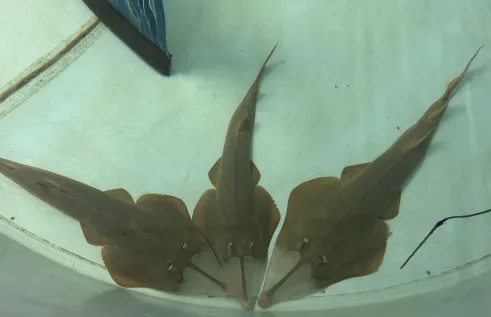
Sensory deterrents aren’t a ‘one-size-fits-all’ for sharks and rays
A study on how select species of rays and sharks respond to sensory deterrents has reinforced why there isn't a one-size-fits-all solution to prevent fisheries bycatch.
Read more about Sensory deterrents aren’t a ‘one-size-fits-all’ for sharks and rays
Indigenous land management practices can deliver improved conservation outcomes, study notes
Indigenous fire management in Australia sets one of the best practice examples globally of how traditional methods can protect the fire-prone environments, and this inclusive approach should be prioritised in modern conservation, according to research led by Charles Darwin University.
Read more about Indigenous land management practices can deliver improved conservation outcomes, study notes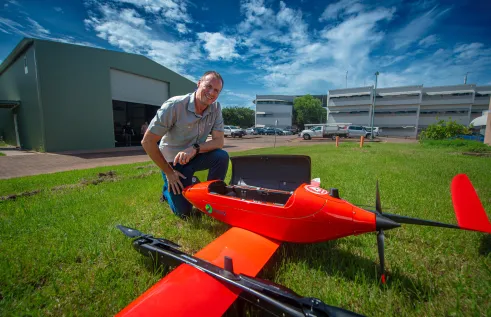
Expert alert: What eight new emergency response drones mean for the NT
Charles Darwin University's (CDU) North Australian Centre for Autonomous Systems (NACAS) Director Professor Hamish Campbell responds to the NT Government's investment in eight new drones to bolster emergency response management.
Read more about Expert alert: What eight new emergency response drones mean for the NT


