Indigenous land management practices can deliver improved conservation outcomes, study notes
Indigenous fire management in Australia sets one of the best practice examples globally of how traditional methods can protect the fire-prone environments, and this inclusive approach should be prioritised in modern conservation, according to research led by Charles Darwin University (CDU).
CDU Professor of Ecological Economics Kamaljit Sangha said that traditional methods in land management need to be considered globally, after studying the effects of modern exclusion-based conservation practiced in India — a conservation model prevalent globally.
Fortress conservation — or isolating environments from human disturbance — is a common wildlife protection practice but often results in the displacement, exclusion and alienation of Indigenous peoples and their rights.
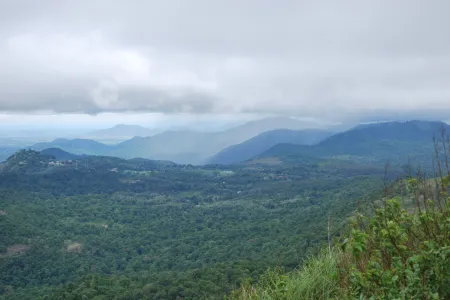
The study focused on the Indigenous Soliga, tribal people who live across the Western Ghats of India, and their life and role in the management of the Biligiri Rangaswamy Temple Wildlife Sanctuary. The Soligas practised hunting and agriculture. They continue to strongly practice their culture and traditions while living with the tigers and other wildlife (such as leopards and elephants) in the forest systems, to date.
Known as the Biligiri hills, it was declared a wildlife sanctuary in 1974 and later a tiger reserve. Following the establishment of the sanctuary, many tribal people were evicted with the population living within and near the area now at around 12,500. Since India’s amended Forest Act (2006), various conservation rights have also been given to Soligas, including some recognition of their management practices.
Researchers worked with Soliga elders and local experts, who shared insights into how Soligas traditionally managed the land applying mosaic burning (low intensity fires) and practised small-scale swidden agriculture (temporary clearing of forests).
These practices — which have been banned — regenerated the forest resources and prevented wildfires, which are now becoming threatening wildlife and people.
Professor Sangha, who is with CDU's Research Institute for the Environment and Livelihoods, has long worked with Indigenous communities to support two-way relationships between land and people.
Professor Sangha said the Soligas and conditions of the Biligiri hills underscored the urgent need for tribal people to be better engaged in conservation and turned to savanna fire management in northern Australia as an example to follow.
"The revival of Indigenous fire management across the north has enabled Indigenous peoples to work and live on Country, to look after their Country and learn and practice culture, ceremonies and language from Country and its people," Professor Sangha said.
"This has delivered many socio-cultural benefits for Indigenous peoples living in remote areas. Managing the natural landscapes also delivers many ecosystem services for the Australian public living off-site, such as climate regulation.
"To effectively manage the biodiversity-rich landscape of the Western Ghats, a global hotspot where tigers are an iconic species, it is important to look to traditional practices to better manage them, as those are essentially socio-cultural and ecological landscapes, shaped by people’s practices over a long time."
The study proposes five steps to achieve better conservation outcomes, including recognising Soliga's knowledge and skills to manage the land, building capabilities with modern techniques and technologies, developing co-governance and management models, and culturally appropriate incentivising mechanisms.
Globally, an estimated 1.65 to 1.87 billion people live in important biodiversity conservation areas, of which 363 million in existing protected areas.
While 43 million km2 of land is managed by Indigenous people and communities, many experience high levels of poverty and natural disasters, according to human rights organisation The International Work Group for Indigenous Affairs.
This research was conducted alongside academics from the Institute for Social and Economic Change and the Ashoka Trust for Research in Ecology and the Environment in Bangalore, India.
Fortress conservation versus traditional forest management: the example of Soliga tribal people from the Western Ghats, India was published in journal Ecosystems and People.
Aligned with the United Nations Sustainable Development Goals
Responsible consumption and production
Goal 12
Ensure sustainable consumption and production patterns.
Life on land
Goal 15
Protect, restore and promote sustainable use of terrestrial ecosystems, sustainably manage forests, combat desertification, and halt and reverse land degradation and halt biodiversity loss.
Partnerships for the goals
Goal 17
Strengthen the means of implementation and revitalize the Global Partnership for Sustainable Development.
Related Articles

Expert alert: What eight new emergency response drones mean for the NT
Charles Darwin University's (CDU) North Australian Centre for Autonomous Systems (NACAS) Director Professor Hamish Campbell responds to the NT Government's investment in eight new drones to bolster emergency response management.
Read more about Expert alert: What eight new emergency response drones mean for the NT
Study tracks Rum Jungle Mine’s metal legacy through Finniss River food web
The environmental legacy of a uranium-copper mine continues to impact the ecosystem of a major Top End river system more than 50 years since the site was closed, a first-of-its-kind study led by Charles Darwin University (CDU) has found.
Read more about Study tracks Rum Jungle Mine’s metal legacy through Finniss River food web
'Desert Rose' to be preserved
The legacy of a world record-breaking solar car, developed by and raced by Charles Darwin University students and staff, will be preserved and celebrated in the Northern Territory’s premier museum.
Read more about 'Desert Rose' to be preserved


