News
CDU researchers highlight emerging climate change risk to seafood industry
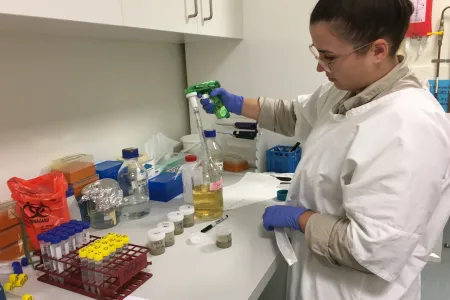
Leading Charles Darwin University (CDU) environmental microbiology researchers have presented research focused on understanding tropical rock oysters and Vibrios and the implications for food safety and human health at an international Aquaculture conference held this week in Darwin.
The research was presented by Dr Anna Padovan and Professor Karen Gibb from CDU’s Research Institute Environment & Livelihoods at the International Tropical Rock Oyster Workshop which is part of the World Aquaculture Conference 2023.
Vibrio bacteria occur naturally in many aquatic habitats especially coastal areas and estuaries and are associated with waters that are warmer than 15 degrees Celsius, which is the case in the tropics.
Dr Padovan said this collaborative research funded by the Fisheries Research Development Corporation, was of high priority given the increasing interest in developing a tropical rock oyster industry in Northern Australia.
“We urgently need to learn more about this bacteria, its growth rates and how pathogenic strains can suddenly dominate the bacterial population in both seawater and shellfish to adversely affect food safety and human health,” Dr Padovan said.
“We have detected over 40 Vibrio species in our warm northern waters, but very few of those species have the potential to threaten animal or human health. Even within those few species that are potential pathogens, there are many different strains. It’s a confusing story to tell.”
Pathogenic Vibrio bacteria can have an adverse effect on humans by entering our bodies through either contact with seawater and marine animals or through the ingestion of raw, undercooked or temperature abused shellfish.
Globally, there has been an increase of illnesses like gastroenteritis associated with Vibrio bacteria. This increase has been attributed to climate change where Vibrio bacteria can colonise new areas on warm currents.
“Even for those known pathogenic Vibrio species, not all strains of that species are a problem. But we urgently need to do more work on those pathogenic strains to find out what genes enable them to cause illness,” Dr Padovan said.
“We already know of some genes, but they are not always present in human clinical samples, so clearly there are more genes to find.”
“We can use these genes to develop mobile testing capability to provide early warning that pathogenic strains are present. This would provide greater reassurance to oyster growers in particular.”
Professor Gibb, Dr Padovan and their team have been working on Vibrios in Northern Australia for over 10 years. In that time, they have measured Vibrio levels in seawater and molluscs, including oysters, finding that pathogenic strains occur in less than three per cent of samples.
“In our research we identified a wide diversity of Vibrio species, and we found that temperature, salinity and nutrients influence Vibrio abundance,” Dr Padovan said.
“We’re only beginning the journey to understand pathogen genes, but this will be key to understanding when and how Vibrios cause illness in people.”
“Once we have a greater understanding of this, we will then be able to make even more significant contributions to quality assurance for the tropical rock oyster industry in Northern Australia.”
At the conference, the team will also present findings on tropical Blacklip Rock Oysters and the growth rates of potential pathogenic Vibrio at temperatures likely to be encountered post-harvest.
Zarah Tinning, PhD candidate funded by the CRC Developing North Australia also spoke, with her talk focusing on the health of Tropical Rock Oyster larvae which are also impacted by Vibrio bacteria, to overcome hatchery bottlenecks.
The annual World Aquaculture Conference, being held in Darwin for the first time since 2014, provides an opportunity for the aquaculture community from throughout the Asian-Pacific region and beyond to come together, exchange ideas and develop a vision for the future of the aquaculture industry.
The Conference is on at the Darwin Convention Centre from May 29 to June 1.
Following on from this, CDU researchers will be presenting on a range of topics at the WaterMicro23 conference which will be held in Darwin from June 4 to June 8.
Related Articles
Federal funding for Country-based health and climate resilience
A new research collaboration to support and strengthen Country-based health and climate resilience has received funding through the National Health and Medical Research Council’s Centres of Research Excellence scheme.
Read more about Federal funding for Country-based health and climate resilience
New livestream brings remote Australian arid zone waterhole to the world
A new livestream from a remote waterhole in the Northern Territory is giving people around the world the opportunity to observe wildlife in real time.
Read more about New livestream brings remote Australian arid zone waterhole to the world
Leading scientist recognised for lifetime of dedication to Australian biodiversity and conservation
One of the nation’s most distinguished experts in Australian biodiversity and conservation will be celebrated in an upcoming Charles Darwin University graduation ceremony.
Read more about Leading scientist recognised for lifetime of dedication to Australian biodiversity and conservation


