News
Charles Darwin University (CDU) has vital research projects that need researchers in face of shortages
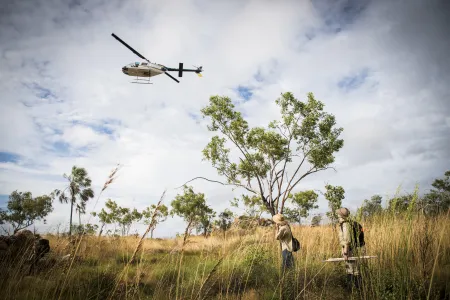
Charles Darwin University (CDU) has started a push to recruit higher degree students for vital research projects but will have to cast a wide net to get the right people, according to the University’s head of research.
CDU Pro-Vice-Chancellor Research and Innovation Professor Steve Rogers said the quality of the projects that need students was a testament to the talent of the researchers at the university.
“When you read the details of these projects, you get an idea of why research in Northern Australia is so important, not just for the NT communities, but also the global community,” Professor Rogers said.
“But for the best outcomes in the projects, we need higher education students with curiosity and enthusiasm for the fields, and they can be hard to find.”
CDU water expert Dr Dylan Irvine, from the Research Institute for the Environments and Livelihoods, has four projects that need the support of higher degree students interested in water research.
One of the projects that need students is researching the flow characteristics of Australia’s northern rivers to help with water security in some of Australia’s last remaining wild rivers.
“For people interested in the environmental sciences, the Territory is an amazing and interesting place to work,” Dr Irvine said.
“Imaging study the spring system that feeds the Daly River, that is an awesome project.”
Dr Irvine said there is a shortage of people interested in doing water research across the country, making it even harder to get students to the NT.
“It’s hard domestically to find students who want to live and study in the Northern Territory,” Dr Irvine said.
Dr Irvine said international students were making up most applications for roles in water research at the university, despite the university hoping to attract domestic markets in addition to international students.
Professor Rogers agreed with Dr Irvine that the skills shortage that has been felt in other industries has also impacted the pool of higher education talent.
“It’s an incredibly tight market to get higher degree students for projects,” Professor Rogers said.
“But we have some vacancies in exciting and impactful projects for Northern Australia, which should be appealing to top quality candidates.”
Professor Rogers said there were exciting projects at CDU in manufacturing, engineering, information technology, energy, and environment.
Read about some of the project vacancies here and apply here.
Related Articles
Darwin needs a BBL: Architecture student's vision for the Top End
A vertical promenade designed by a Charles Darwin University (CDU) architecture student and inspired by Singapore's Gardens by the Bay offers a glimpse into Darwin's future facelift.
Read more about Darwin needs a BBL: Architecture student's vision for the Top End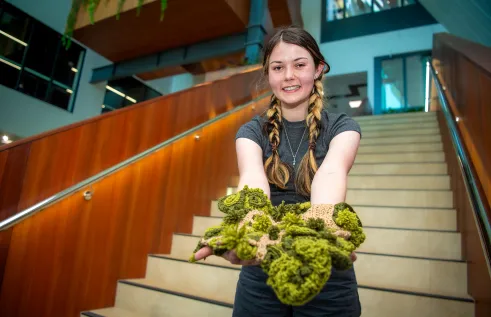
Crocheted landscape takes the gold in architecture competition
When tasked to defy growing reliance on artificial intelligence and create a landscape model without digital tools, Charles Darwin University (CDU) Bachelor of Architectural Design student Jorja Handebo turned to her hobby of the past five years: crochet.
Read more about Crocheted landscape takes the gold in architecture competition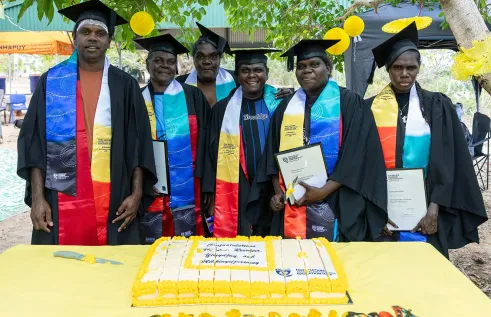
First Nations Training and Teacher Education Hub celebrates first major milestone
As Charles Darwin University's (CDU) First Nations Training and Teacher Education Hub draws closer to the end of its first year, one of its greatest milestones to date was conferring its first six graduates.
Read more about First Nations Training and Teacher Education Hub celebrates first major milestone


