News
Iconic Australian plant is the toast of UK’s botanical artist community
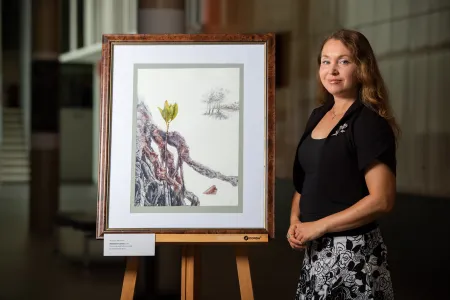
A botanical artwork of the iconic and crucial yet threatened Spotted Mangrove (Rhizophora stylosa) is one of 30 pieces of botanical art being showcased at the famous Royal Botanical Gardens in Kew.
Charles Darwin University (CDU) PhD student Anastasia Maksimova painted the ‘Spotted Mangrove’.
The Association of British Botanical Artists’ exhibition “Reflections: No Plants, No Planet” is in support of the United Nations 26th Climate Change Conference-COP26 in Glasgow.
Anastasia’s painting was selected by jury among other best works to be displayed in the prestigious Shirley Sherwood Gallery at Kew.
For Anastasia, botanical art is a way to combine aesthetically beautiful and scientifically accurate visual depictions of plant species with an exploration of how an artist’s ethical attitude can contribute to resolving current issues for Sustainable Development.
“The process usually takes around a month and that piece (Spotted Mangrove) was not an exception,” she said.
“You start with studying the plant in its natural environment, observing and measuring, making colour swatches and drawing sketches, thinking about the key idea and composition of the future painting.”
The Spotted Mangrove in this exhibition is one of coastal plants that Anastasia is painting as a practical part of her PhD research, devoted to ways botanical art can communicate the uniqueness and importance of the botanical world.
In this way the project explores the cultural, social and educational capacities of botanical art in raising awareness and engaging people in environmental sustainability issues.
“This Spotted Mangrove is a crucial Mangrove species of the Casuarina Coastal Reserve,” she said.
Right now, she is working on another threatened species from the reserve, Cycas Armstrongii.
“Botanical Art is one of the historically first and oldest genres of fine art. It is currently experiencing a period of growth due to the increased attention in socially engaged art, that addresses current environmental challenges.”
Anastasia is from Russia, but one of the reasons for the Australian focus of the research is its unique flora, rich art and cultural heritage and highly progressive scientific community.
“My supervisors share my ideas, have similar academic interests and support me greatly.” she said.
Society of Botanical Artists’ Reflections: No Plants, No Planet is an online exhibition at the Royal Botanic Garden in Kew from October 16, 2021 to March 27, 2022.
The original painting ‘Spotted Mangrove’ is on display at CDU Art Gallery till the end of February 2022.
Related Articles
Federal funding for Country-based health and climate resilience
A new research collaboration to support and strengthen Country-based health and climate resilience has received funding through the National Health and Medical Research Council’s Centres of Research Excellence scheme.
Read more about Federal funding for Country-based health and climate resilience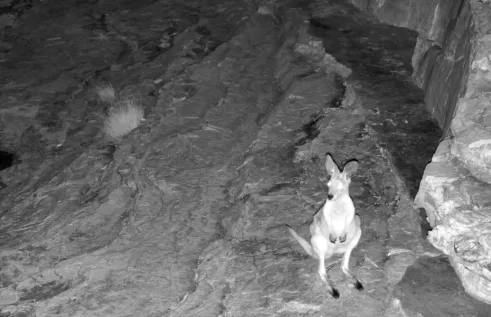
New livestream brings remote Australian arid zone waterhole to the world
A new livestream from a remote waterhole in the Northern Territory is giving people around the world the opportunity to observe wildlife in real time.
Read more about New livestream brings remote Australian arid zone waterhole to the world
How ants are cashing in on the fight against money laundering
An AI model inspired by ants, bees, and birds could be the key to cracking down on blockchain-based money laundering, new research led by Charles Darwin University (CDU) has found.
Read more about How ants are cashing in on the fight against money laundering


