Marine monitoring milestones to headline talk at MAGNT
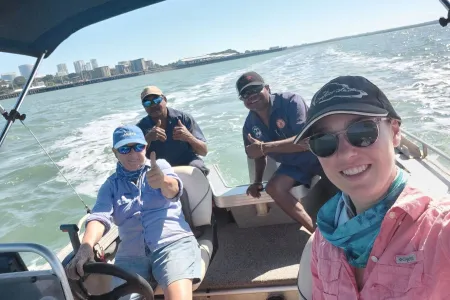
The first live sightings of two significant marine species in NT waters and the urgent need to monitor sea temperatures will be discussed at a new research talk at the Museum and Art Gallery of the Northern Territory.
This week, Charles Darwin University (CDU) Senior Research Associate Dr Carol Palmer and Tiwi ranger James DeSantis will speak in Marine Mammals of Northern Australia – a talk about Indigenous and Western research into the marine megafauna in Tiwi sea country.
The duo will present on the efforts of the Marine Megafauna Project, a partnership with Indigenous sea ranger groups for the first ever boat-based, broad-scale survey program for cetaceans (dolphins and whales) across the Top End. The project also collated citizen science sightings, with a total of 556 records made of 12 species.
“We sought to identify marine megafauna areas of importance and contribute to the conservation and implementation of sea country management,” Dr Palmer said.
“We surveyed up to 10,000 km and recorded the first live sightings in Northern Territory waters of the Short-finned Pilot Whale which is a dolphin, and the Pygmy Blue Whale. We were also able to identify their behaviour and see whether they were travelling or socialising, and the majority of what they were doing was foraging.
“To record a number of species never before recorded in these waters and see these behaviours shows we must be a very important area for these species.”
Mr DeSantis, who has spent decades monitoring sea country across the Top End, will speak about the crucial role rangers have in monitoring and conserving the environment.
The duo will also discuss the challenges sea country is facing from rising temperatures brought about by climate change and highlight what future research conservation efforts are needed.
“With this program (MMP) we’re realising where megafauna is travelling, if they’re coming home to lay or migrating around home, and the impacts major projects are having on the ocean life,” Mr DeSantis said.
“We want the public to understand the impact of climate change and how we’re losing our beaches, and why we need funding for research to access more country and monitor more species.”
Dr Palmer added: “We need to be recording sea temperatures at the surface and underneath.”
“Traditional Owners are seeing changes to coastal areas and islands which they’ve never seen before. We need to get more information and work together with researchers, remote sea rangers and Traditional Owners, and get more information out there about climate change.”
Marine Mammals of Northern Australia is on April 20 from 12pm to 1pm. The talk is part of a week of activities at the Museum and Art Gallery of the Northern Territory’s relaunch of Melville, the Pygmy Blue Whale whose skeleton has undergone recent restorations.
Related Articles
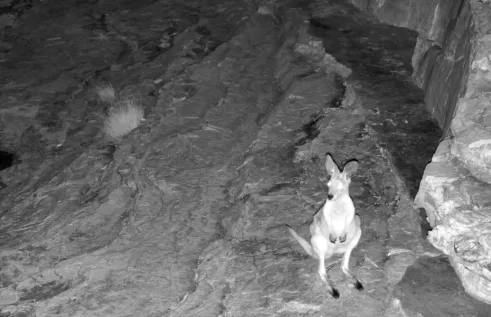
New livestream brings remote Australian arid zone waterhole to the world
A new livestream from a remote waterhole in the Northern Territory is giving people around the world the opportunity to observe wildlife in real time.
Read more about New livestream brings remote Australian arid zone waterhole to the world
Leading scientist recognised for lifetime of dedication to Australian biodiversity and conservation
One of the nation’s most distinguished experts in Australian biodiversity and conservation will be celebrated in an upcoming Charles Darwin University graduation ceremony.
Read more about Leading scientist recognised for lifetime of dedication to Australian biodiversity and conservation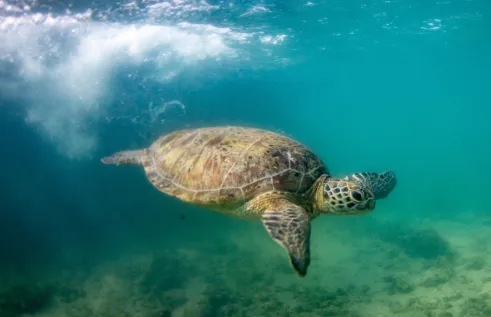
First Nations ranger knowledge reveals the threats facing NT’s green turtles
First Nations ranger groups working in protected areas such as national or marine parks identified illegal commercial fishing as a major concern for the Northern Territory’s green turtle populations, a study led by Charles Darwin University (CDU) and James Cook University (JCU) has found.
Read more about First Nations ranger knowledge reveals the threats facing NT’s green turtles


