New photography competition and exhibition showcases CDU’s research
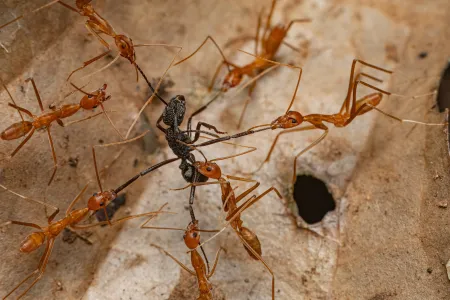
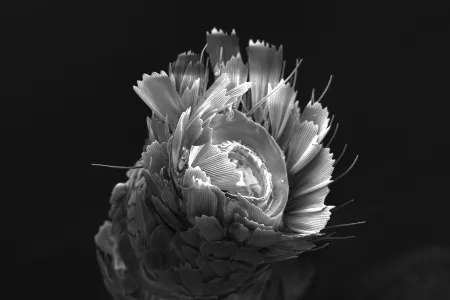
From ants encircling their prey to the microscopic details of a moth’s antenna, a new photography competition and exhibition is giving the public a rare glimpse into the fascinating world of academic research.
Charles Darwin University’s (CDU) new initiative Photo Synthesis: CDU’s Research through the Lens showcases the visual side of the incredible research conducted at the University across all faculties and disciplines.
Academics were invited to submit their best and most fascinating photographs taken while conducting their research.
More than 100 photographs were submitted to the inaugural competition and exhibition, with a top 20 determined by a panel of expert judges.
Voting is now open to the public to select their favourite photographs, with the entrants of the top three most voted for photographs to receive a credit to put towards their research.
Among the top 20 is Surrounded by François Brassard from the Research Institute for the Environment and Livelihoods (RIEL), which depicts a scene of spider ants encircling their prey, a line pony ant.
Higher Degree by Research (HDR) student Cedric Tan, who is from the Faculty of Science and Technology, made the top 20 with a photograph of a moth’s antenna taken with CDU’s new scanning electron microscope.
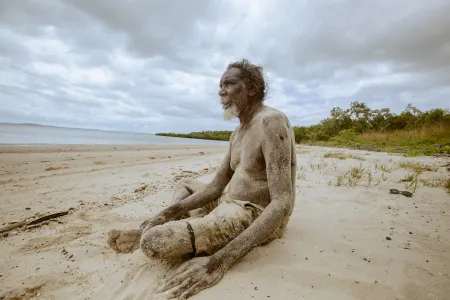
Raŋipuy by Mr P. G. Wunungmurra as part of Miyarrka Media from CDU’s Northern Institute highlights the importance of researching the land and how we can live and learn with it.
Deputy Vice-Chancellor Research and Innovation Professor Steve Rogers said the photographs highlighted the wide breadth of research at CDU.
“For those outside of academia, it can be difficult to imagine what research looks like besides lab coats and writing papers,” Professor Rogers said.
“Photography is a key part of the research process, and we are thrilled to showcase the incredible images taken by our staff and students.
“We hope these photos not only help to understand the world-class research we’re conducting, but also inspires others to consider a career in research.”
Voting is open until September 6.
View and vote for your favourite online, or visit the display at CDU’s Casuarina Campus library.
Related Articles

The good, the bad, and the ugly food: Why religious shoppers are buying bruised veggies
A recent study with Charles Darwin University examines how consumers’ religiosity influences the purchase of “ugly foods”, or foods that are aesthetically imperfect but nutritious.
Read more about The good, the bad, and the ugly food: Why religious shoppers are buying bruised veggies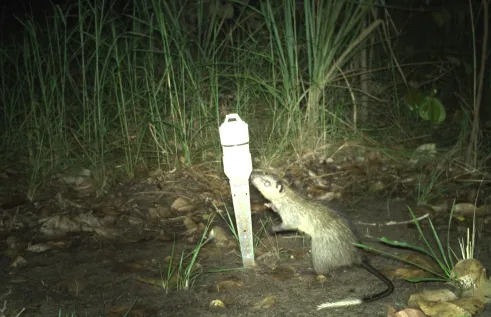
Rangers reimagine AI in wildlife monitoring
As workplaces around the world wrestle to integrate Artificial Intelligence in their operations, researchers and rangers in the heart of West Arnhem are successfully embracing this technology in conservation without compromising respect and knowledge.
Read more about Rangers reimagine AI in wildlife monitoring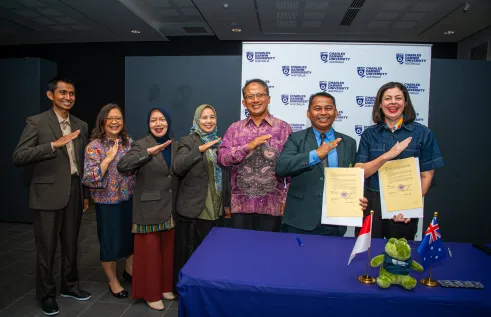
Partnership with Indonesian university to support education and research
A new partnership with one of East Java’s leading education institutions is aligning Charles Darwin University with priorities to strengthen Australia’s relationship with Indonesia.
Read more about Partnership with Indonesian university to support education and research


