news article
NT croc resurgence under investigation
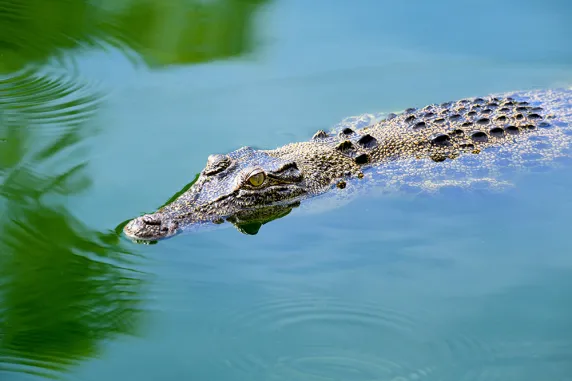
A team of researchers from Charles Darwin University will investigate the impact of the recovery of the northern Australian estuarine crocodile population on river ecosystems after being awarded a Discovery grant in the latest round of Australian Research Council funding.
Research Institute for the Environment and Livelihoods (RIEL) Professor Hamish Campbell said the $390,000 grant would allow his team to assess the ecological changes that have arisen due to the repatriation of estuarine crocodiles across northern Australia.
“The Northern Territory crocodile population has recovered substantially since protection in the 1970s,” Professor Campbell said. “While the recovery is heralded as a conservation success, estuarine crocodiles pose a serious threat to humans and livelihoods.”
He said the project in collaboration with Griffith University, the Australian Institute for Marine Science, the Northern Territory Government and Larrakia rangers would help to better understand the ecological role of estuarine crocodiles and the benefits of conserving them.
“We know crocodiles have significant economic and cultural value, but we don’t know what impact their recovery is having upon the Northern Territory’s unique wetland ecosystems,” Professor Campbell said.
“I have heard from fisherman that the barramundi fishing has improved with crocodile recovery, which suggests broad-scale ecological impacts. But these are only anecdotal reports, and this project will help us to understand if and why this is happening.
There is also a growing body of evidence that shows retaining or restoring large carnivores into ecosystems will counter environmental challenges such as biological invasions, disease, and climate change.”
RIEL co-researcher Dr Keller Kopf said that the three-year project aimed to estimate the amount of food and types of prey required to support populations of estuarine crocodiles in river systems across the Northern Territory.
“We’ll use bioenergetics modelling and field sampling of these predators and prey, including fish and other animals, to improve our understanding of how estuarine crocodiles influence food webs,” Dr Kopf said.
“The restoration of crocodiles provides a rare opportunity, similar to wolves in North America, to empirically test changes in ecosystem processes under varying degrees of large carnivore recovery.
“This is a unique opportunity because it will improve our understanding of the processes that govern the strength of predator-ecosystem interactions.”
The Discovery Projects scheme aims to expand the knowledge base and research capacity in Australia and support research that will provide economic, commercial, environmental, social and/or cultural benefits for Australia.
Related Articles
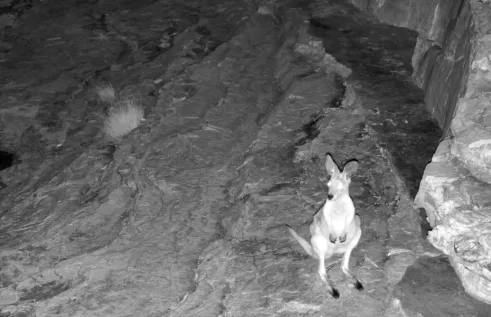
New livestream brings remote Australian arid zone waterhole to the world
A new livestream from a remote waterhole in the Northern Territory is giving people around the world the opportunity to observe wildlife in real time.
Read more about New livestream brings remote Australian arid zone waterhole to the world
Leading scientist recognised for lifetime of dedication to Australian biodiversity and conservation
One of the nation’s most distinguished experts in Australian biodiversity and conservation will be celebrated in an upcoming Charles Darwin University graduation ceremony.
Read more about Leading scientist recognised for lifetime of dedication to Australian biodiversity and conservation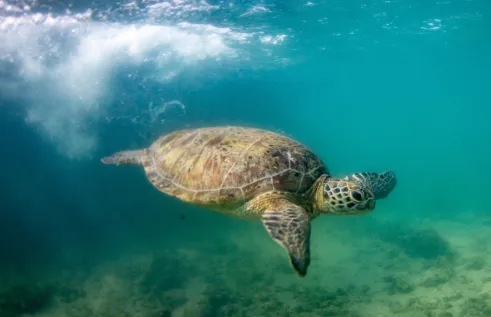
First Nations ranger knowledge reveals the threats facing NT’s green turtles
First Nations ranger groups working in protected areas such as national or marine parks identified illegal commercial fishing as a major concern for the Northern Territory’s green turtle populations, a study led by Charles Darwin University (CDU) and James Cook University (JCU) has found.
Read more about First Nations ranger knowledge reveals the threats facing NT’s green turtles


