News
Patterns of identity attacks in extremist language uncover their violent intentions
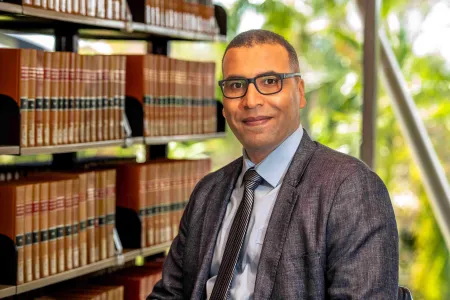
A groundbreaking new study into the patterns of terrorist language could help authorities create algorithms to detect and flag extremist content online.
The study by Charles Darwin University (CDU) Linguistics Lecturer and Forensic Linguistics expert Dr Awni Etaywe focused on public statements made by former Boko Haram leader Abubaker Shekau and former ISIS leader Abubaker al-Baghdadi.
Dr Etaywe examined the linguistic trends of each author, exploring the frequency of particular aggressive stance indicators – i.e. wording – and evaluated their meaning in concordance lines, i.e. in a sentence and the context in which words are used and what language is used before and after them.
“These linguistic markers and contexts allow us to uncover which aspects of identity are attacked and for which function in that specific situation,” Dr Etaywe said.
The results reveal the authors often draw on (personal, relational, interactional, and master) identity aspects, emotion, and social values such as culture and religion, justice, morality and aggression to gain support and justify violence.
“Identity attacks are not just random insults. They are carefully crafted rhetorical tools. They operate by othering and targeting personal traits and behaviours, emphasising power-distance relationships, and undermining interactional roles and master identities.
“Identity attacks are crucial in early detection and assessment of potential threats, providing law enforcement and security agencies with valuable tools for identifying and intercepting violent extremists.”
Dr Etaywe said there was immense value in examining the linguistic trends of these authors and their texts, with the Global Terrorism Index considering extremists from both jihadism and far-right extremism among the most lethal worldwide.
“Some might dismiss the importance of linguistic analysis in counterterrorism, but understanding the language used by extremists is vital,” he said.
“It reveals how identity attacks are strategically constructed to manipulate, dehumanise, and incite violence against specific groups. By uncovering these linguistic strategies, we can better predict and mitigate the threats posed by extremist communications, ultimately saving lives and promoting social cohesion.”
Dr Etaywe said this research can be applied in several ways such as being used to inform the creation of algorithms to detect and flag extremist content on digital platforms, used to train analysts in identifying and interpreting extremist language patterns, and to help educator and community leaders to develop programs to counteract extremist rhetoric.
“In today’s digital age, where extremist texts are easily accessible, understanding their linguistic patterns is more crucial than ever,” he said,
“Extremists incite, threaten, forge social (dis)alignments, propagate hatred, and more through language. These texts often spread rapidly online, reaching and radicalising vulnerable individuals. By analysing the language, we can develop more effective strategies to counteract extremist narratives and prevent the spread of harmful ideologies.”
Dr Etaywe is a leading expert in forensic linguistics focusing on terrorism, threatening communications, the ‘morality’ of terrorism and online deviance, and cyber incitement to hatred and violence.
His previous research includes a study published by Cambridge on how far-right conspiratorial terrorists use language to incite violence, research on how terrorists use language to justify violence, and how terrorists use language to mobilise support and legitimise harm.
‘Unmasking malicious stance indicators and attitudinal priming: An ‘evaluative textbite’ approach to identity attacks in violent extremist discourse’ was published in Corpus Pragmatics.
Related Articles

The good, the bad, and the ugly food: Why religious shoppers are buying bruised veggies
A recent study with Charles Darwin University examines how consumers’ religiosity influences the purchase of “ugly foods”, or foods that are aesthetically imperfect but nutritious.
Read more about The good, the bad, and the ugly food: Why religious shoppers are buying bruised veggies
Rangers reimagine AI in wildlife monitoring
As workplaces around the world wrestle to integrate Artificial Intelligence in their operations, researchers and rangers in the heart of West Arnhem are successfully embracing this technology in conservation without compromising respect and knowledge.
Read more about Rangers reimagine AI in wildlife monitoring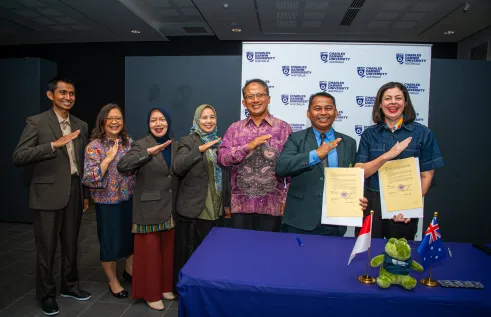
Partnership with Indonesian university to support education and research
A new partnership with one of East Java’s leading education institutions is aligning Charles Darwin University with priorities to strengthen Australia’s relationship with Indonesia.
Read more about Partnership with Indonesian university to support education and research


