
Key details
Duration
Intake
Locations
Entry requirements
View full entry requirementsCredit points required
80Course code
Overview
The Diploma of Science is the perfect starting point if you are curious about studying science and would like to learn more, but are unsure about committing to a degree, or if you already have a career in the sciences and want to upskill with another qualification and skills in another discipline.
You will explore a variety of science concepts, theories and principles in different fields such as general science, biology, chemistry, environmental science, spatial science, physics and mathematics so you can discover the field that truly resonates with you.
As you progress through your Diploma of Science, you will develop your knowledge of logical and critical thinking, and problem-solving from a scientific and technological perspective.
After completing your diploma, you have the option to move into our Bachelor of Science and Technology or Bachelor of Environmental Science courses.
Whether you're stepping into science for the first time, returning to study, or wanting to deepen your knowledge as a teacher, engineer, or professional from another field, this flexible diploma will help you find what you are looking for.
Career opportunities
Graduating from this course may lead to career opportunities in the industry, government, private companies, and non-government organisations (NGO)s.
Credit transfers and advanced standing
Credit transfer
For further information on credit transfer and how to apply visit ASK CDU
Credit transfers and advanced standing
Credit transfer
For further information on credit transfer and how to apply visit ASK CDU
Fees
Commonwealth supported places
Commonwealth Supported places are available in this course to students who meet one of the following residency requirements:
(a) be an Australian citizen, who will complete some of your course of study while resident in Australia; or
(b) a New Zealand citizen; or an Australian permanent visa holder; or an eligible former permanent humanitarian visa holder; who studies the entire course while living in Australia.
Further information about fees and charges can be found at Fees and Payments.
International tuition fees
The annual tuition fee for full time study in 2027 is AUD $36,480.00. This equates to $4,560.00 per 10 credit point unit (0.125 EFTSL).
These fees are subject to increases annually, effective at the start of each calendar year.
You can find a list of International fees and payments you can expect to pay as part of your studies in Australia. See 2026 Higher Education International Annual Tuition Fees.
CDU offers a number of scholarships to international students to assist with the cost of study.

Why study Science, Environmental Science and Management at CDU?
If you're interested in finding solutions to our planet's environmental issues, there's never been a better time to study science, environmental science and management at CDU. You'll be prepared to apply the academic theories and principles you learn in class to real-world problems in a diverse range of careers.
- #3 in Australia for agriculture and environmental studies starting salary (GUG 2024)
- Five-star Australian university for graduate employment outcomes (GUG 2024)
- Choose to study online, on campus, part-time or full-time as it suits you

Why study science, environmental science & management at CDU?
If you're interested in finding solutions to our planet's environmental issues, there's never been a better time to study science, environmental science and management at CDU. You'll be prepared to apply the academic theories and principles you learn in class to real-world problems in a diverse range of careers.
- Five-star Australian university for undergraduate employment outcomes (GUG 2024)
- #3 in Australia for agriculture and environmental studies starting salary (GUG 2024)
Why study Science, Environmental Science and Management at CDU?
If you're interested in finding solutions to our planet's environmental issues, there's never been a better time to study science, environmental science and management at CDU. You'll be prepared to apply the academic theories and principles you learn in class to real-world problems in a diverse range of careers.
- #3 in Australia for agriculture and environmental studies starting salary (GUG 2024)
- Five-star Australian university for graduate employment outcomes (GUG 2024)
- Choose to study online, on campus, part-time or full-time as it suits you
Why study science, environmental science & management at CDU?
If you're interested in finding solutions to our planet's environmental issues, there's never been a better time to study science, environmental science and management at CDU. You'll be prepared to apply the academic theories and principles you learn in class to real-world problems in a diverse range of careers.
- Five-star Australian university for undergraduate employment outcomes (GUG 2024)
- #3 in Australia for agriculture and environmental studies starting salary (GUG 2024)
What will I study?
The Diploma of Science is designed to give you both a strong academic foundation and the freedom to explore the scientific fields that excite you most. Your course structure includes:
Course structure
- 1 core unit
- 5 specialist elective units
- 2 additional elective units
The core unit is designed to assist you to gain the academic skills required to make the successful transition to higher education. The focus is upon developing the practical skills required for university study, including: assignment writing, reading and thinking critically, referencing, researching, IT skills, teamwork and communication.
Specialist elective units enable you to follow the scientific disciplines that interest you. Options include: chemistry, ecology, environmental science, earth science, physics, mathematics, geographic information science, indigenous environmental management and knowledge, and statistics.
Flexible Pathways and Upskilling Opportunities
Already completed a Bachelor's degree in another discipline? You can select from first-, second-, or third-year science units to upskill in a new scientific area.
If you plan to transition into a Bachelor of Science and Technology or Bachelor of Environmental Science, choosing the right first-year units in your Diploma can earn you full credit for the first year of those degrees to save you time and accelerate your progress.
A candidate must successfully complete units totalling 80 credit points (cp) as detailed below. All units are valued at 10 credit points unless otherwise indicated.
| Unit type | Credit Points | Specific requirements |
| Core Units (1 unit) | 10cp | Compulsory core units totalling 10 credit points listed below. CUC106 Real-World Design: Academic Skills in Practice (new title from 2027) |
| Specialist Elective Units (5 units) | 50cp | Specialist elective units totalling 50 credit points selected from the below listed units. Students seeking to maximise potential credit towards the Bachelor of Science and Technology, or the Bachelor of Environmental Science are advised to select units as detailed below. Science and Technology (50cp) HIT140 Foundations of Data Science Environmental Science (50cp) ENV101 Earth Systems |
| General Elective Units (2 units) | 20cp | General elective units totalling 20 credit points selected from undergraduate units offered by the University. It is recommended to select from the above Specialist Electives for the students chosen stream. When selecting elective units, choose units at a suitable level. The first number in each unit code indicates the year level at which the subject is taught. Undergraduate units are coded at 100 to 300 level therefore units coded as ENV1xx, ENV2xx and ENV3xx would be first, second and third year units respectively. |
| 80cp | Total Credit Points |
Course Rules (unless otherwise indicated in the above course structure)
- See the Higher Education Course Rules (Award Requirements) in the Units and Courses Policy.
COURSE CHANGES AND TRANSITIONAL ARRANGEMENTS - 2026
Students currently in YSCI02 will not be disadvantaged as all units taken will be mapped to the new course YSCI03 in consultation with the course coordinator.
Study plan
STUDENTS COMMENCING IN SEMESTER 1
The Recommended Study Plan provided below is suitable for a student enrolling in a full-time or part-time study load. Students entering this course with advanced standing, or wishing to vary their study plan due to work, personal, financial or other reasons should use the table as a guide to create an individual study plan.
When designing an individual study plan:
- maintain the basic order in which units are to be attempted; and
- check the prerequisite and assumed knowledge for each unit as some units assume you have completed foundation unit/s in the unit area at a lower level.
For Transfer to Bachelor Science and Technology
| Legend: | CU = Common Unit | CO = Core Unit | SE = Specialist Elective |
Full-Time Study Plan
| Semester 1 | Semester 2 | ||
| Year 1 | |||
| CUC106 Real-World Design: Academic Skills in Practice | CO | HIT137 Software Now OR IAS201 Cultural Capabilities | SE |
| SMA104 Concepts of Mathematics | SE | SBI228 Advances in Science and Technology | SE |
| SCH104 Introductory Chemistry OR HIT164 Computing Fundamentals | SE | SBI209 Design and Analysis of Biological Studies OR HIT140 Foundations of Data Science | SE |
| ENV101 Earth Systems OR SPH141 Concepts of Physics | SE | Elective* | E |
*Recommended to take the Specialist Electives for the Electives.
| Legend: | CU = Common Unit | CO = Core Unit | SE = Specialist Elective |
Part-Time Study Plan
| Semester 1 | Semester 2 | ||
| Year 1 | |||
| CUC106 Real-World Design: Academic Skills in Practice | CO | HIT137 Software Now OR IAS201 Cultural Capabilities | SE |
| SMA104 Concepts of Mathematics | SE | SBI228 Advances in Science and Technology | SE |
| Year 2 | |||
| SCH104 Introductory Chemistry OR HIT164 Computing Fundamentals | SE | SBI209 Design and Analysis of Biological Studies OR HIT140 Foundations of Data Science | SE |
| ENV101 Earth Systems OR SPH141 Concepts of Physics | SE | Elective* | E |
*Recommended to take the Specialist Electives for the Electives.
For Transfer to Bachelor of Environmental Science
| Legend: | CU = Common Unit | CO = Core Unit | SE = Specialist Elective |
Full-Time Study Plan
| Semester 1 | Semester 2 | ||
| Year 1 | |||
| CUC106 Real-World Design: Academic Skills in Practice | CO | IAS201 Cultural Capabilities | SE |
| ENV102 The Diversity of Life | SE | ENV103 Environmental Issues | SE |
| ENV208 Introduction to Geographic Information Systems (GIS) | SE | SBI209 Design and Analysis of Biological Studies | SE |
| ENV101 Earth Systems | SE | Elective* | E |
*Recommended to take the Specialist Electives for the Electives.
| Legend: | CU = Common Unit | CO = Core Unit | SE = Specialist Elective |
Part-Time Study Plan
| Semester 1 | Semester 2 | ||
| Year 1 | |||
| CUC106 Real-World Design: Academic Skills in Practice | CO | IAS201 Cultural Capabilities | SE |
| ENV102 The Diversity of Life | SE | ENV103 Environmental Issues | SE |
| Year 2 | |||
| ENV208 Introduction to Geographic Information Systems (GIS) | SE | ENV201 Introductory Ecology OR SBI209 Design and Analysis of Biological Studies | SE |
| ENV101 Earth Systems | SE | Elective* | E |
*Recommended to take the Specialist Electives for the Electives.
_____________________________________
STUDENTS COMMENCING IN SEMESTER 2
The Recommended Study Plan provided below is suitable for a student enrolling in a full-time study load. Students entering this course with advanced standing, or wishing to vary their study plan due to work, personal, financial or other reasons should use the table as a guide to create an individual study plan.
When designing an individual study plan:
- maintain the basic order in which units are to be attempted; and
- check the prerequisite and assumed knowledge for each unit as some units assume you have completed foundation unit/s in the unit area at a lower level.
For Transfer to Bachelor of Science and Technology
| Legend: | CU = Common Unit | CO = Core Unit | SE = Specialist Elective |
Full-Time Study Plan
| Semester 1 | Semester 2 | ||
| Year 1 | |||
| HIT137 Software Now OR IAS201 Cultural Capabilities | SE | ||
| SBI228 Advances in Science and Technology | SE | ||
| SBI209 Design and Analysis of Biological Studies OR HIT140 Foundations of Data Science | SE | ||
| CUC106 Real-World Design: Academic Skills in Practice | CO | ||
| Year 2 | |||
| Elective* | E | ||
| SMA104 Concepts of Mathematics | SE | ||
| SCH104 Introductory Chemistry OR HIT164 Computing Fundamentals | SE | ||
| ENV101 Earth Systems OR SPH141 Concepts of Physics | SE | ||
*Recommended to take the Specialist Electives for the Electives.
For Transfer to Bachelor of Environmental Science
| Legend: | CU = Common Unit | CO = Core Unit | SE = Specialist Elective |
Full-Time Study Plan
| Semester 1 | Semester 2 | ||
| Year 1 | |||
| IAS201 Cultural Capabilities | SE | ||
| ENV103 Environmental Issues | SE | ||
| SBI209 Design and Analysis of Biological Studies | SE | ||
| CUC106 Real-World Design: Academic Skills in Practice | CO | ||
| Year 2 | |||
| Elective* | E | ||
| ENV102 The Diversity of Life | SE | ||
| ENV208 Introduction to Geographic Information Systems (GIS) | SE | ||
| ENV101 Earth Systems | SE | ||
*Recommended to take the Specialist Electives for the Electives.
_____________________________________
STUDENTS COMMENCING IN SUMMER SEMESTER
The Recommended Study Plan provided below is suitable for a student enrolling in a full-time study load. Students entering this course with advanced standing, or wishing to vary their study plan due to work, personal, financial or other reasons should use the table as a guide to create an individual study plan.
When designing an individual study plan:
- maintain the basic order in which units are to be attempted; and
- check the prerequisite and assumed knowledge for each unit as some units assume you have completed foundation unit/s in the unit area at a lower level.
For Transfer to Bachelor of Science and Technology
| Legend: | CU = Common Unit | CO = Core Unit | SE = Specialist Elective |
Full-Time Study Plan
| Semester 1 | Semester 2 | Summer Semester | |||
| Year 1 | |||||
| CUC106 Real-World Design: Academic Skills in Practice | CO | ||||
| SMA104 Concepts of Mathematics | SE | ||||
| IAS201 Cultural Capabilities | SE | ||||
| HIT137 Software Now OR | SE | ||||
| Year 2 | |||||
| SCH104 Introductory Chemistry | SE | ||||
| ENV101 Earth Systems | SE | ||||
| HIT164 Computing Fundamentals | SE | ||||
| Elective* | E | ||||
*Recommended to take the Specialist Electives for the Electives.
For Transfer to Bachelor of Environmental Science
| Legend: | CU = Common Unit | CO = Core Unit | SE = Specialist Elective |
Full-Time Study Plan
| Semester 1 | Semester 2 | Summer Semester | |||
| Year 1 | |||||
| CUC106 Real-World Design: Academic Skills in Practice | CO | ||||
| IAS201 Cultural Capabilities | SE | ||||
| Year 2 | |||||
| ENV102 The Diversity of Life | SE | Elective* | E | ||
| ENV208 Introduction to Geographic Information Systems (GIS) | SE | ENV103 Environmental Issues | SE | ||
| ENV101 Earth Systems | SE | ENV201 Introductory Ecology OR SBI209 Design and Analysis of Biological Studies | SE | ||
*Recommended to take the Specialist Electives for the Electives.
Entry requirements
Admission criteria
Admission requirements are met by one of the following:
- Successful completion of the Northern Territory Certificate of Education and Training (or equivalent) and the awarding of an Australian Tertiary Admissions Rank (ATAR) of at least 60*.
- Successful completion of a national qualification at Certificate III level or higher.
- Successful completion of at least 0.5 year of full-time study (or equivalent) of a higher education degree/diploma.
- Overseas secondary or tertiary qualifications considered equivalent to the above Australian qualifications.
- Attainment of a STAT Multiple Choice score of 140.
- Successful completion of the Tertiary Enabling Program, the Preparation for Tertiary Success courses, or other recognised tertiary preparation course.
- Submission of an acceptable personal competencies statement and/or employment experience.
- Australian Defence Force (ADF) members with service of 1 year or more at the following ranks (or higher) meet the academic entry requirement for this course:
- Navy: Seaman, Able Seaman, Leading Seaman
- Air Force: Aircraftmen/Aircraftwoman, Leading Aircraftman/Aircraftwoman, Corporal
- Army: Private, Lance Corporal, Corporal
- Current School Leaver Pathways:
- Best of 3 Year 12 subject grades
- School recommendation program
* After any applicable adjustment factors have been applied.
Essential requirements
English language requirements
DOMESTIC STUDENTS
To be eligible for admission to this course, applicants must meet the standard English language proficiency requirements for Higher Education courses at Charles Darwin University (CDU) and provide evidence as part of their application.
You can meet the minimum English language requirement by providing evidence of one of following:
| Previous study in English |
|
| AHPRA Registration | Current registration with the Australian Health Practitioner Regulation Agency (AHPRA). |
| English Test^ | Completion of an approved English Test within two years of commencement, with the minimum scores shown below. |
| Primary language pathway | Completion of six years of primary and/or secondary schooling in a recognised English-speaking country*, including at least two years between years 7-12. |
| Employment pathway | At least two years full-time equivalent employment within the past five years in a recognised English-speaking country", where English was the primary language of workplace communication. |
Additional information about accepted tests and the evidence requirements is available on the English language proficiency requirements page.
^English tests - approved tests and minimum scores
| Undergraduate and postgraduate pathway program requirement | Postgraduate requirement (HDR and coursework) | |
| CDU ELICOS - English for Academic Purposes | Successful completion of EAP003 | Successful completion of EAP004 |
| International English Language Testing System (IELTS) Academic test | Overall minimum: 6.0 No band below: 6.0 | Overall minimum: 6.5 No band below 6.0 |
| Pearson Test of English (PTE) Academic | Overall minimum: 50 No score below: 50 | Overall minimum: 58 No score below: 50 |
| Test of English as a Foreign Language (TOEFL) | Overall minimum: 60 Minimum writing score: 21 | Overall minimum: 79 Minimum writing score: 21 |
| Cambridge English: Advanced (CAE) | Overall minimum: 169 No skill below: 169 | Overall minimum: 176 No skill below: 169 |
Information about test validity, accepted combined test results, IELTS One Skill Retake and evidence requirements is available on the English language proficiency requirements page.
*Recognised English-speaking countries:
| Standard List | Antigua and Barbuda, Australia, Barbados, British Virgin Islands, Canada, Ireland, New Zealand, Singapore, South Africa, United Kingdom, United States of America. |
| Extended List | Bermuda, Botswana, Cayman Islands, Fiji, Kenya, Malawi, Malta, Mauritius, Seychelles, St Vincent and the Grenadines, Tanzania, Trinidad and Tobago, Vanuatu, Zimbabwe. |
All previous studies must have been delivered in English (medium of instruction was English). Applicants who have studied at an institution from a country on the extended list must provide confirmation that their study was completed within the last five years.
For further details on the English requirements for CDU courses, please refer to the CDU English Language Proficiency Policy.
INTERNATIONAL STUDENTS
To be eligible for admission to this course, applicants must meet the standard English language proficiency requirements for Higher Education courses at Charles Darwin University (CDU) and provide evidence as part of their application.
You can meet the minimum English language requirement by providing evidence of one of following:
| Previous study in English |
|
| AHPRA Registration | Current registration with the Australian Health Practitioner Regulation Agency (AHPRA). |
| English Test^ | Completion of an approved English Test within two years of commencement, with the minimum scores shown below. |
| Primary language pathway | Completion of six years of primary and/or secondary schooling in a recognised English-speaking country*, including at least two years between years 7-12, by applicants who are citizens of that country. |
| Employment pathway | At least two years full-time equivalent employment within the past five years in a recognised English-speaking country*, where English was the primary language of workplace communication, by applicants who are citizens of that country. |
Additional information about accepted tests and the evidence requirements is available on the English language proficiency requirements page
^English tests - approved tests and minimum scores
| Accepted Test | International undergraduate requirement |
| CDU ELICOS - English for Academic Purposes | Successful completion of EAP003 |
| International English Language Testing System (IELTS) Academic test | Overall minimum: 6.0 No band below: 6.0 |
| Pearson Test of English (PTE) Academic | Overall minimum: 50 No score below: 50 |
| Test of English as a Foreign Language (TOEFL) | Overall minimum: 60 Minimum writing score: 21 |
| Cambridge English: Advanced (CAE) | Overall minimum: 169 No skill below: 169 |
Information about test validity, accepted combined test results, IELTS One Skill Retake and evidence requirements is available on the English language proficiency requirements page.
*International applicants must also satisfy the department of home affairs (DHA) English language requirements for student visa applications.
*Recognised English-speaking countries:
| Standard List | Antigua and Barbuda, Australia, Barbados, British Virgin Islands, Canada, Ireland, New Zealand, Singapore, South Africa, United Kingdom, United States of America. |
| Extended List | Bermuda, Botswana, Cayman Islands, Fiji, Kenya, Malawi, Malta, Mauritius, Seychelles, St Vincent and the Grenadines, Tanzania, Trinidad and Tobago, Vanuatu, Zimbabwe. |
All previous stu
ATAR profile
There are no statistics available for this course. It may be that the course is new or the profile data is unavailable.
I chose CDU because it has an excellent science course, with lots of opportunities for practical experience in the field. I love the small classes, community feel and the interaction with lecturers that you don't get at larger universities.
Brittany
CDU student

I am very proud that I am now an environmental expert who can work anywhere on this planet. There is nothing that can be done on the development of any projects without environmental experts. So, it is a very promising career.
Cassian
CDU student

I chose CDU because it has an excellent science course, with lots of opportunities for practical experience in the field. I love the small classes, community feel and the interaction with lecturers that you don't get at larger universities.
Brittany
CDU student
I am very proud that I am now an environmental expert who can work anywhere on this planet. There is nothing that can be done on the development of any projects without environmental experts. So, it is a very promising career.
Cassian
CDU student
Course details
Accreditation
This course is accredited by the University in accordance with the Higher Education Standards.
Inherent Requirements
There are inherent requirements for this course. Students must read and understand the requirements for this course.
Australian qualification framework
This course is recognised in the Australian Qualifications Framework at Level 5.
Student profile
There are no statistics available for this course. It may be that the course is new or the profile data is unavailable.
Additional information
Contact details
For further information about the course, enrolment procedures, closing dates and other administrative issues please contact Student Central on:

You make CDU
Together we are a positive force for change in our communities and the world.
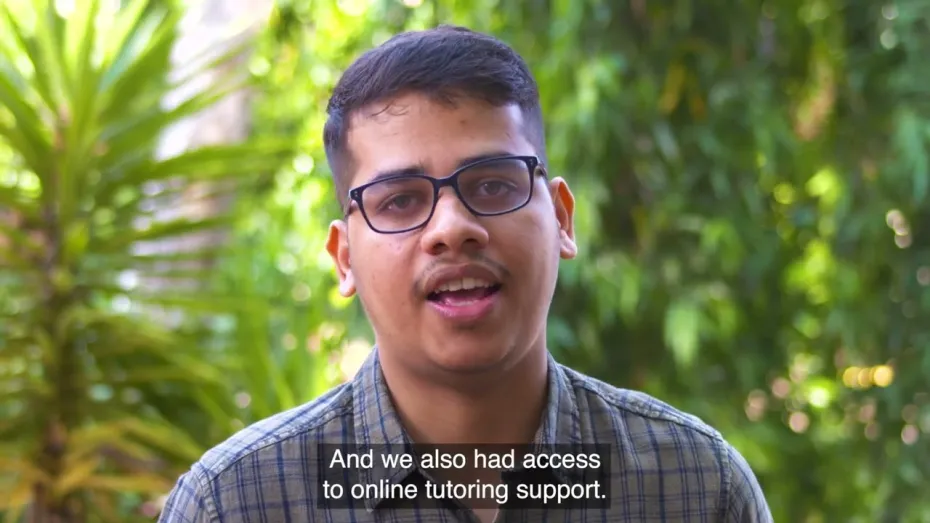
Learn more about environmental management
Vamshidhar is from India and studied a Master of Environmental Management at CDU. Hear more about his experience of studying, living, working and playing in Darwin, Northern Territory, Australia.
You make CDU
Together we are a positive force for change in our communities and the world.
Learn more about environmental management
Vamshidhar is from India and studied a Master of Environmental Management at CDU. Hear more about his experience of studying, living, working and playing in Darwin, Northern Territory, Australia.
How to apply
There are many ways to apply to CDU. The method you use depends on your course type, where you live and whether you are a new or returning student to CDU.
Remember to apply early for your best chance at securing an offer to study with us.
SATAC
SATAC is the application channel for residents of NT, ACT, SA, WA, QLD, VIC, NSW or TAS.
MyNextCourse
Direct applications are available to students who have completed a CDU or BIITE course at a Certificate III level or higher. Most CDU and BIITE enabling programs are also accepted through this process.
International applications
Applications must be submitted online through our application portal, Studylink. You'll need a valid email address to create your online account. Once you have started your application, you will be able to save it and resume it later. There is no application fee when you apply online.
You may be able to lodge a direct application; however, there may be restrictions on your geographic location. If you cannot submit a direct application via the application portal, please apply through one of our registered agents.
Apply through StudyLink or through an Agent.
International applicants currently studying year 12 in Australia should apply via SATAC.
If you do not meet any of the criteria above please visit Pathways to study to view the options available to you.
Share this course