
Key details
Duration
Locations
Entry requirements
View full entry requirementsCredit points required
160Course code
Overview
The Master of Environmental Management develops advanced knowledge and professional and research capabilities in environmental management within tropical, semi-arid, and arid ecosystems. The course combines core units in environmental management theory and social and policy context with specialist electives that develop technical competencies in natural resource assessment, policy analysis, and adaptive management. You will be equipped for roles requiring advanced environmental analysis and decision-making in research institutions, government natural resource agencies, Indigenous land management organisations, environmental consulting, and the resources sector. The degree is offered flexibly to accommodate working professionals. You will gain applied research skills through engagement with contemporary environmental research in the region and through independent research projects.
Career opportunities
Graduating from this course may lead to a career in areas of research or environmental and natural resources management, within regional agencies and departments, environmental NGOs, Indigenous natural resources management organisations, consultancy firms and the resources sector. Some graduates continue into a PhD program.
Professional recognition
Graduates may seek professional membership to associations such as the Australian Rangelands Society, Ecological Society of Australia and Environment Institute of Australia and New Zealand.
Credit transfers and advanced standing
Pathways
Pathways for Higher Education to Higher Education
For information about credit transfer available to students with complete or incomplete study at this or other Institutions refer to Pathways for Higher Education to Higher Education
Credit transfer
For further information on credit transfer and how to apply visit ASK CDU
Credit transfers and advanced standing
Credit transfer
For further information on credit transfer and how to apply visit ASK CDU
Fees
Both Commonwealth supported (CS) and full fee (FF) places are available for this course. If you would like to apply for a CS place use the SATAC code 1CM089. If you would like to apply for a FF place you will need to use the SATAC code 1CM589.
A limited number of Commonwealth Supported Places (CSPs) may be available for this course. If the number of eligible applicants exceeds the available CSP quota, applicants may be ranked based on academic merit to determine allocation. Applicants who are not offered a CSP may still add a preference for a full-fee place.
Commonwealth supported places
Commonwealth Supported places are available in this course to students who meet one of the following residency requirements:
(a) be an Australian citizen, who will complete some of your course of study while resident in Australia; or
(b) a New Zealand citizen; or an Australian permanent visa holder; or an eligible former permanent humanitarian visa holder; who studies the entire course while living in Australia.
Further information about fees and charges can be found at Fees and Payments.
Non-Commonwealth supported places
Full fee paying places are available in this course.
Information about fees and charges can be found at Fees and Payments.
International tuition fees
The annual tuition fee for full time study in 2027 is AUD $37,224.00. This equates to $4,653.00 per 10 credit point unit (0.125 EFTSL).
These fees are subject to increases annually, effective at the start of each calendar year.
You can find a list of International fees and payments you can expect to pay as part of your studies in Australia. See 2026 Higher Education International Annual Tuition Fees.
CDU offers a number of scholarships to international students to assist with the cost of study.

Why study science or the environment at CDU?
Interested in solving our planet's biggest environmental issues? There's never been a better time to study a postgraduate degree in science, environmental science and management with CDU. Gain advanced skills and knowledge that help progress your career. Apply critical thinking to future-focused solutions across real-world problems.
- #2 Australian university for postgraduate employment outcomes (GUG 2024)
- Choose to study online, on campus, part-time or full-time as it suits you
Why study science or the environment at CDU?
If you're interested in finding solutions to our planet's environmental issues, there's never been a better time to study science, environmental science and management at CDU. You'll be prepared to apply the academic theories and principles you learn in class to real-world problems in a diverse range of careers.
- #2 Australian university for postgraduate employment outcomes (GUG 2024)
Why study science or the environment at CDU?
Interested in solving our planet's biggest environmental issues? There's never been a better time to study a postgraduate degree in science, environmental science and management with CDU. Gain advanced skills and knowledge that help progress your career. Apply critical thinking to future-focused solutions across real-world problems.
- #2 Australian university for postgraduate employment outcomes (GUG 2024)
- Choose to study online, on campus, part-time or full-time as it suits you
Why study science or the environment at CDU?
If you're interested in finding solutions to our planet's environmental issues, there's never been a better time to study science, environmental science and management at CDU. You'll be prepared to apply the academic theories and principles you learn in class to real-world problems in a diverse range of careers.
- #2 Australian university for postgraduate employment outcomes (GUG 2024)
What will I study?
The course structure consists of core and specialist elective units, electives and a research project. The program offers an exciting range of opportunities to develop field, technical and practical skills, as well as master-level skills in scholarship and research application.
Course structure
Core units are Ecological Restoration and Conservation, Environmental Planning and Policy and Community Engagement for Biosecurity and Natural Resources Management. These units set the framework for the course as a whole. All SENVM1 students are required to complete at last one statistics or research design unit (Specialist Elective A) that builds on your existing skills - this can be chosen from an advanced or introductory level. Specialist Electives B are chosen from among units listed under clusters headings in: Livelihoods, Natural Resources Management or Spatial Science. Specialist Elective units have been chosen to complement the content knowledge, conceptual understanding and skills developed in the Core units.
Units including fieldwork may be taken (by students able to attend the relevant field location), through their choice of units. This ensures that students gain first-hand knowledge of biologically rich and diverse tropical ecosystems and meet senior professionals active in the field of environmental management as well as CDU academic staff. There is also the opportunity to undertake work integrated learning, where students include a workplace-based project in their choice of electives. Students can also choose to take intensive units with remote field locations, and there are often a range of international study opportunities available.
The final research project is undertaken over one semester (for full-time students) following completion of the coursework component and is conducted under the supervision of CDU research staff, with external professionals involved where appropriate. Each student designs, develops, and implements an independent research project in collaboration with CDU researchers or relevant environmental agencies. This provides students with practical experience of professional research and environmental management practices. Students may also undertake a research project within their workplace, where appropriate.
Note: The standard course offering is 2 yrs (4 semesters of study). Applicants with a degree in a directly related discipline, studied in English, can apply to enter a 1.5 yr study plan (3 semesters of study).
While all candidates enrol into the Master course, alternative exit points are available after one semester of study (Graduate Certificate) or two semesters of study (Graduate Diploma), subject to the candidate completing the required units of study.
A candidate must successfully complete units totalling 160 credit points (cp) as detailed below. All units are valued at 10 credit points unless otherwise indicated.
| Unit type | Credit Points | Specific requirements |
| Core Units (3 units) | 30cp | Compulsory Core units totalling 30 credit points as detailed below. ENV503 Ecological Restoration and Conservation (new to core from 2027) ENV509 Ecology and Management of Tropical Forests and Savannas (no longer available from 2027) ENV513 Environmental Planning and Policy ENV521 Community Engagement for Biosecurity and Natural Resource Management |
| Specialist Elective AUnits (1 unit) | 10cp | Specialist Elective unit totalling 10 credit points selected from the list of units detailed below: SBI209 Design and Analysis of Biological Studies ENV311 Practical Statistics and Data Reasoning (no longer available from 2027) ENV511 Real-World Statistics and Data Reasoning EMG505 Research Methodologies in Education PRT564 Data Analytics and Visualisation SID510 Advanced Communication and Engagement in Science and Technology (no longer available from 2027) |
| Specialist Elective BUnits (4 - 8 units) | 40 - 80cp | Specialist Elective units totalling 40 - 80 credit points from the list of unit clusters detailed below: (these unit clusters are a guide only and do not represent formal course specialisations; any of these units can be chosen) LIVELIHOODS NATURAL RESOURCES MANAGEMENT SPATIAL SCIENCE PROFESSIONAL PRACTICE/FIELD INTENSIVES |
| Research Project (1 - 2 units) | 40cp | Research Project 40 credit points After completing a minimum of 80 credit points of coursework, students have two research project options. Part-time option (spread the project across two semesters)
|
| Elective Units (0 - 4 units) | 0 - 40cp | Elective units totalling 0 - 40 credit points from available postgraduate units offered at CDU, including Specialist Elective A and B units not already completed or units from Master courses offered at other Australian universities. Students are encouraged to seek advice from the Course Coordinator on unit selection. |
| 160cp | Total Credit Points |
Course Rules (unless otherwise indicated in the above course structure)
- See the Higher Education Course Rules (Award Requirements) in the Units and Courses Policy.
COURSE CHANGES AND TRANSITIONAL ARRANGEMENTS - 2027
Course Structure changes:
Core units:
- ENV509 Ecology and Management of Tropical Forests and Savannas has been removed from the Core units.
- ENV503 Ecological Restoration and Conservation has been added to the Core units.
- Specialist Elective A: ENV311 Practical Statistics and Data Reasoning and SID510 Advanced Communication and Engagement in Science and Technology have been removed and are no longer available.
- Specialist Elective B: requirements have increased from 4-6 units to 4-8 units.
- ENV525 Hydrology and Catchment Processes has been removed from Specialist Electives B (Natural Resources Management cluster) and is no longer available.
- Research unit options have been clarified.
- Elective unit options have been clarified.
- Placement option Pathway 2: Professional Experience Capstone (20cp) PRT604 Professional Experience (20cp) has been removed and is no longer available.
Transitional Arrangements
- Students who have completed ENV509 prior to 2027 will have this unit count towards their Core Unit requirements in SENVM1.
- Students who have completed ENV509 will not be required to complete ENV503.
- Students who have completed SID510 prior to 2027 will have this unit count towards their Specialist Elective A requirements.
- Students who have completed ENV525 prior to 2027 will have this unit count towards their Specialist Elective B requirements.
- Students who have completed ENV525 Advanced Hydrology and Catchment Processes cannot enrol in ENV519 Aquatic Resource Management.
- Students who have completed the Placement option Pathway 2: Professional Experience Capstone (20cp) PRT604 Professional Experience (20cp) option will have this counted towards their research requirements.
COURSE CHANGES AND TRANSITIONAL ARRANGEMENTS - 2026
Two pathway options to be introduced in 2026:
- Research option (Pathway 1)
- Part-time: ENV821 Research Proposal (20cp) and ENV822 Research Thesis (20cp) OR
- Full-time: ENV840 Research Project #40 (40cp)
- Placement option (Pathway 2)
- A placement unit PRT604 Professional Experience (20cp)
- This pathway for the final semester of the SENVM1 course provides a new option for students who prefer to undertake additional coursework and do not wish to undertake a major thesis project.
- Students on the"Pathway 1 Research" option can choose to do the thesis:
- part-time over two semesters by taking ENV821 and then ENV822 in the following semester (both units = 20 credit points each) OR
- full-time on their final semester by taking ENV840 (40 credit points)
- Students do not do ENV821 and then ENV822 in the same semester.
Course Structure changes:
- ENV519 Aquatic Resource Management, ENV525 Advanced Hydrology and Catchment Processes, and ENV533 Environmental Micriobiology have been added to the specialist electives B (Natural Resource Management) selection
- SID515 Professional Practice in Environmental Management 2 has been added to specialist electives
- An additional option (Pathway 2) is added for the final capstone semester (40cp), comprising:
- Professional experience option (20cp)
- PRT604 Professional Experience (20cp)
- Students undertaking this option will select 60 credit points of Specialist Electives B units to meet course requirements.
- Professional experience option (20cp)
Transition Plan
The new pathway option for the final semester of SENVM1 does not impact currently-enrolled students. Any student currently undertaking 40cp of research can complete their research project by enrolling in ENV821 and ENV822. Students in the course currently undertaking coursework will now have more choices. This new pathway will suit the more diverse student profile in the course, including International students with a professional rather than research focus.
COURSE CHANGES AND TRANSITIONAL ARRANGEMENTS - 2025
Course changes:
- ENV527 Earth Observation Data Programming has been added as a specialist elective unit within the spatial science grouping.
- SID510 Advanced Communication and Engagement in Science and Technology has been added as a specialist elective A unit.
- Research unit ENV820 Research Project (20cp, repeatable) is replaced by ENV821 Research Proposal (20cp)and ENV821 Research Thesis (20cp).
Transitional arrangements:
- Students who have completed ENV820 Research Project (20cp) once should enrol in ENV822 Research Thesis (20cp).
COURSE CHANGES AND TRANSITIONAL ARRANGEMENTS - 2024
ENV523 added as a Specialist Elective choice in the Livelihoods cluster.
COURSE CHANGES AND TRANSITIONAL ARRANGEMENTS - 2023
Core units have been reduced from 40cp to 30cp
Specialist Elective A unit totalling 10cp has been added.
ENV511 has been removed as a required core unit and move to one of the Specialist Elective A choices.
ENV511, ENV311, SBI209, EMG505, PRT564 are included as Specialist Elective A unit choices.
Study plan
STUDENTS COMMENCING IN SEMESTER 1
The Recommended Study Plan provided below is suitable for a student enrolling in a full-time study load. Students entering this course with advanced standing, or wishing to vary their study plan due to work, personal, financial or other reasons should use the table as a guide to create an individual study plan.
When designing an individual study plan:
- maintain the basic order in which units are to be attempted; and
- check the prerequisite and assumed knowledge for each unit as some units assume you have completed foundation unit/s in the unit area at a lower level.
| Legend: | CO = Core Unit | SE = Specialist Elective A or B | E = Elective | R = Research |
Full-Time Study Plan (Part-time Research Project option)
| Semester 1 | Semester 2 | ||
| Year 1 | |||
| ENV513 Environmental Planning and Policy | CO | ENV521 Community Engagement for Biosecurity and Natural Resource Management | CO |
| Specialist Elective A | SE | ENV503 Ecological Restoration and Conservation (new to core from 2027) | CO |
| Specialist Elective B | SE | Specialist Elective A or B | SE |
| Specialist Elective B | SE | Elective 1 | E |
| Year 2 | |||
| ENV821 Research Proposal (20cp) | R | ENV822 Research Thesis (20cp) | R |
| Specialist Elective B | SE | Elective 3 | E |
| Elective 2 | E | Elective 4 | E |
Full-Time Study Plan (Full-time Research Project option)
| Semester 1 | Semester 2 | ||
| Year 1 | |||
| ENV513 Environmental Planning and Policy | CO | ENV521 Community Engagement for Biosecurity and Natural Resource Management | CO |
| Specialist Elective A | SE | ENV503 Ecological Restoration and Conservation (new to core from 2027) | CO |
| Specialist Elective B | SE | Specialist Elective A or B | SE |
| Specialist Elective B | SE | Elective 1 | E |
| Year 2 | |||
| Specialist Elective B | CS | ENV840 Research Project (40cp) | R |
| Elective 2 | SE | ||
| Elective 3 | E | ||
| Elective 4 | E | ||
SPECIALIST ELECTIVE availability
| Semester 1 | Intensive 4 | Semester 2 | Intensive 6 | Summer Semester |
| Specialist Elective A - total of 10cp | ||||
| ENV511 Real-World Statistics and Data Reasoning EMG505 Research Methodologies in Education PRT564 Data Analytics and Visualisation | EMG505 Research Methodologies in Education SBI209 Design and Analysis of Biological Studies | |||
| Specialist Elective B - total of 40cp - 80cp | ||||
| ENV501 Tropical Invaders and Biosecurity ENV502 Earth Observation ENV508 Geographic Information Systems ENV515 Desert Field Ecology (compulsory intensive) ENV520 Wildlife Management SID500 Professional Practice in Environmental Management 1 (WIL placement) SID515 Professional Practice in Environmental Management 2 (WIL placement) | ENV516 Exploring Ecosystem Dynamics: Field Studies in Northern Australia (compulsory intensive) | ENV507 Advanced Fire Ecology and Management in Northern Australia ENV517 Natural Resources and Indigenous Livelihoods (compulsory intensive) ENV519 Aquatic Resource Management (compulsory intensive) ENV523 Ecological Economics (not offered in 2027) ENV527 Earth Observation Data Programming SID500 Professional Practice in Environmental Management 1 (WIL placement) SID515 Professional Practice in Environmental Management 2 (WIL placement) | ENV506 Environmental Monitoring and Modelling ENV518 Applied Spatial Analysis for Real-World Problems SID510 Advanced Communication and Engagement in Science and Technology | ENV533 Environmental Microbiology |
| Electives (up to 40 credit points) | ||||
| Additional Specialist Electives may be completed as Elective units or units from Master courses offered at other Australian universities as approved by the course coordinator. | ||||
_____________________________________
STUDENTS COMMENCING IN SEMESTER 2
The Recommended Study Plan provided below is suitable for a student enrolling in a full-time study load. Students entering this course with advanced standing, or wishing to vary their study plan due to work, personal, financial or other reasons should use the table as a guide to create an individual study plan.
When designing an individual study plan:
- maintain the basic order in which units are to be attempted; and
- check the prerequisite and assumed knowledge for each unit as some units assume you have completed foundation unit/s in the unit area at a lower level.
| Legend: | CO = Core Unit | SE = Specialist Elective | E = General Elective |
Full-Time Study Plan (Part-time Research Project option)
| Semester 1 | Semester 2 | ||
| Year 1 | |||
| ENV521 Community Engagement for Biosecurity and Natural Resource Management | CO | ||
| ENV503 Ecological Restoration and Conservation (new to core from 2027) | CO | ||
| Specialist Elective A or B | SE | ||
| Elective 1 | E | ||
| Year 2 | |||
| ENV513 Environmental Planning and Policy | CO | ENV821 Research Proposal (20cp) | R |
| Specialist Elective A | SE | Specialist Elective B | SE |
| Specialist Elective B | SE | Elective 2 | E |
| Specialist Elective B | SE | ||
| Year 3 | |||
| ENV822 Research Thesis (20cp) | R | ||
| Elective 3 | E | ||
| Elective 4 | E | ||
Full-Time Study Plan (Full-time Research Project option)
| Semester 1 | Semester 2 | ||
| Year 1 | |||
| ENV521 Community Engagement for Biosecurity and Natural Resource Management | CO | ||
| ENV503 Ecological Restoration and Conservation (new to core from 2027) | CO | ||
| Specialist Elective A or B | SE | ||
| Elective 1 | E | ||
| Year 2 | |||
| ENV513 Environmental Planning and Policy | CO | Specialist Elective B | SE |
| Specialist Elective A | CO | Elective 2 | E |
| Specialist Elective B | SE | Elective 3 | E |
| Specialist Elective B | SE | Elective 4 | E |
| Year 3 | |||
| ENV840 Research Project (40cp) | R | ||
Entry requirements
Quota
A limited number of Commonwealth Supported Places (CSPs) may be available for this course. If the number of eligible applicants exceeds the available CSP quota, applicants may be ranked based on academic merit to determine allocation. Applicants who are not offered a CSP may still add a preference for a full-fee place.
Admission criteria
Successful completion of one of the following:
- a recognised bachelor degree or equivalent international qualification in a related field; or
- a recognised bachelor degree in an unrelated field plus completion of a graduate diploma in a related field or equivalent international qualification.
Related fields include: biological science, earth science, environmental engineering, environmental science, geography, geographic information or sustainability studies.
International entry pathway
International Pathway
Applicants who have completed the CDU International Masters Preparation Program (ZMPP01) are eligible for entry.
Essential requirements
English language requirements
DOMESTIC STUDENTS
To be eligible for admission to this course, applicants must meet the standard English language proficiency requirements for Higher Education courses at Charles Darwin University (CDU) and provide evidence as part of their application.
You can meet the minimum English language requirement by providing evidence of one of following:
| Previous study in English |
|
| AHPRA Registration | Current registration with the Australian Health Practitioner Regulation Agency (AHPRA). |
| English Test^ | Completion of an approved English Test within two years of commencement, with the minimum scores shown below. |
| Primary language pathway | Completion of six years of primary and/or secondary schooling in a recognised English-speaking country*, including at least two years between years 7-12. |
| Employment pathway | At least two years full-time equivalent employment within the past five years in a recognised English-speaking country", where English was the primary language of workplace communication. |
Additional information about accepted tests and the evidence requirements is available on the English language proficiency requirements page.
^English tests - approved tests and minimum scores
| Undergraduate and postgraduate pathway program requirement | Postgraduate requirement (HDR and coursework) | |
| CDU ELICOS - English for Academic Purposes | Successful completion of EAP003 | Successful completion of EAP004 |
| International English Language Testing System (IELTS) Academic test | Overall minimum: 6.0 No band below: 6.0 | Overall minimum: 6.5 No band below 6.0 |
| Pearson Test of English (PTE) Academic | Overall minimum: 50 No score below: 50 | Overall minimum: 58 No score below: 50 |
| Test of English as a Foreign Language (TOEFL) | Overall minimum: 60 Minimum writing score: 21 | Overall minimum: 79 Minimum writing score: 21 |
| Cambridge English: Advanced (CAE) | Overall minimum: 169 No skill below: 169 | Overall minimum: 176 No skill below: 169 |
Information about test validity, accepted combined test results, IELTS One Skill Retake and evidence requirements is available on the English language proficiency requirements page.
*Recognised English-speaking countries:
| Standard List | Antigua and Barbuda, Australia, Barbados, British Virgin Islands, Canada, Ireland, New Zealand, Singapore, South Africa, United Kingdom, United States of America. |
| Extended List | Bermuda, Botswana, Cayman Islands, Fiji, Kenya, Malawi, Malta, Mauritius, Seychelles, St Vincent and the Grenadines, Tanzania, Trinidad and Tobago, Vanuatu, Zimbabwe. |
All previous studies must have been delivered in English (medium of instruction was English). Applicants who have studied at an institution from a country on the extended list must provide confirmation that their study was completed within the last five years.
For further details on the English requirements for CDU courses, please refer to the CDU English Language Proficiency Policy.
INTERNATIONAL STUDENTS
To be eligible for admission to this course, applicants must meet the standard English language proficiency requirements for Higher Education courses at Charles Darwin University (CDU) and provide evidence as part of their application.
You can meet the minimum English language requirement by providing evidence of one of following:
| Previous study in English |
|
| AHPRA Registration | Current registration with the Australian Health Practitioner Regulation Agency (AHPRA). |
| English Test^ | Completion of an approved English Test within two years of commencement, with the minimum scores shown below. |
| Primary language pathway | Completion of six years of primary and/or secondary schooling in a recognised English-speaking country*, including at least two years between years 7-12, by applicants who are citizens of that country. |
| Employment pathway | At least two years full-time equivalent employment within the past five years in a recognised English-speaking country*, where English was the primary language of workplace communication, by applicants who are citizens of that country. |
Additional information about accepted tests and the evidence requirements is available on the English language proficiency requirements page
^English tests - approved tests and minimum scores
| Accepted Test | International postgraduate requirement |
| CDU ELICOS - English for Academic Purposes | Successful completion of EAP004 |
| International English Language Testing System (IELTS) Academic test | Overall minimum: 6.5 No band below: 6.0 |
| Pearson Test of English (PTE) Academic | Overall minimum: 58 No score below: 50 |
| Test of English as a Foreign Language (TOEFL) | Overall minimum: 79 Minimum writing score: 21 |
| Cambridge English: Advanced (CAE) | Overall minimum: 176 No skill below: 169 |
Information about test validity, accepted combined test results, IELTS One Skill Retake and evidence requirements is available on the English language proficiency requirements page.
*International applicants must also satisfy the Department of Home Affairs (DHA) English language requirements for student visa applications.
*Recognised English-speaking countries:
| Standard List | Antigua and Barbuda, Australia, Barbados, British Virgin Islands, Canada, Ireland, New Zealand, Singapore, South Africa, United Kingdom, United States of America. |
| Extended List | Bermuda, Botswana, Cayman Islands, Fiji, Kenya, Malawi, Malta, Mauritius, Seychelles, St Vincent and the Grenadines, Tanzania, Trinidad and Tobago, Vanuatu, Zimbabwe. |
All previous st
The people-first approach to flexibility and supportive learning environment at CDU meant I could find a balance with study, work and family life.
Nikki
CDU student

I am very proud that I am now an environmental expert who can work anywhere on this planet. There is nothing that can be done on the development of any projects without environmental experts. So, it is a very promising career.
Cassian
CDU student

The people-first approach to flexibility and supportive learning environment at CDU meant I could find a balance with study, work and family life.
Nikki
CDU student
I am very proud that I am now an environmental expert who can work anywhere on this planet. There is nothing that can be done on the development of any projects without environmental experts. So, it is a very promising career.
Cassian
CDU student
Course details
Accreditation
This course is accredited by the University in accordance with the Higher Education Standards.
Australian qualification framework
This course is recognised in the Australian Qualifications Framework at Level 9.
Additional information
Contact details
For further information about the course, enrolment procedures, closing dates and other administrative issues please contact Student Central on:

You make CDU
Together we are a positive force for change in our communities and the world.
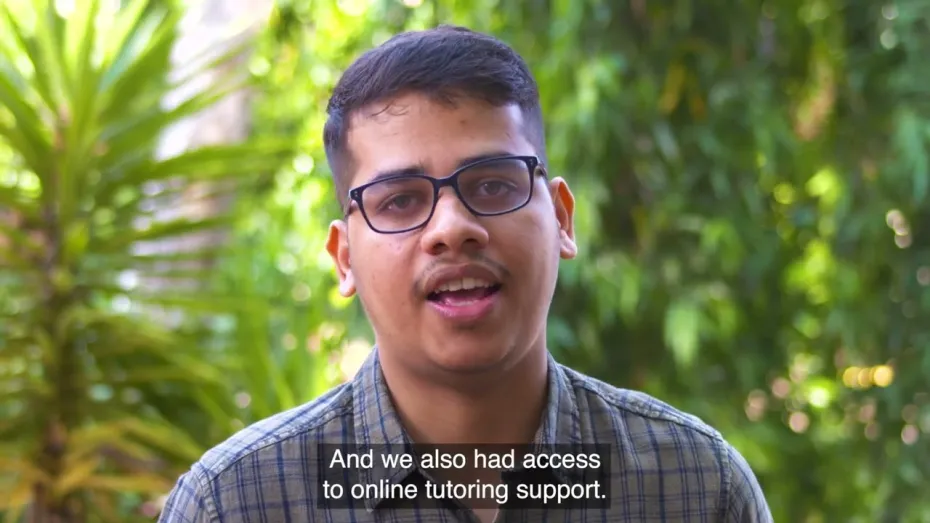
Learn more about environmental management
Vamshidhar is from India and studied a Master of Environmental Management at CDU. Hear more about his experience of studying, living, working and playing in Darwin, Northern Territory, Australia.
You make CDU
Together we are a positive force for change in our communities and the world.
Learn more about environmental management
Vamshidhar is from India and studied a Master of Environmental Management at CDU. Hear more about his experience of studying, living, working and playing in Darwin, Northern Territory, Australia.
How to apply
There are many ways to apply to CDU. The method you use depends on your course type, where you live and whether you are a new or returning student to CDU.
Remember to apply early for your best chance at securing an offer to study with us.
SATAC
SATAC is the application channel for residents of NT, ACT, SA, WA, QLD, VIC, NSW or TAS.
International applications
Applications must be submitted online through our application portal, Studylink. You'll need a valid email address to create your online account. Once you have started your application, you will be able to save it and resume it later. There is no application fee when you apply online.
You may be able to lodge a direct application; however, there may be restrictions on your geographic location. If you cannot submit a direct application via the application portal, please apply through one of our registered agents.
Share this course