
Research scholarship support
CDU is committed to fostering the best and brightest researchers. We have a range of scholarship options to support our future research students.
Research scholarships for international and domestic applicants are awarded annually on a competitive basis.
Stipend scholarships of up to AU$35,489 (2026 rate) per annum tax-free for full-time students are available and can cover living allowance. Most Scholarships also include a tuition fee-waiver valued at between $33,940 and $36,730 per annum (2026 rate) and relocation allowance.
Your research questions answered
PhDs and MRes can be undertaken at all CDU Faculties and the Menzies School of Health Research. We create research and researchers of excellence for the world.
What is the difference between a PhD and MRes at Charles Darwin University?
The main difference between a PhD and MRes is the duration of the study, length of the thesis, and level of originality.
| Doctor of Philosophy | Master by Research | |
|---|---|---|
| Minimum duration | Two years full-time or four years part-time | One year full-time or two years part-time |
| Maximum duration | Four years full-time or eight years part-time, from your start date | Two years full-time or four years part-time, from your start date |
| Thesis length | Maximum of 100,000 words | Maximum of 50,000 words |
| Time commitment | 40 hours per week for a full-time student 20 hours per week for a part-time student | 40 hours per week for a full-time student 20 hours per week for a part-time student |
| Thesis type | Standard Thesis Artefact /Exegesis Thesis PhD by Prior Publication (PPP) | Standard Thesis Artefact /Exegesis Thesis |
| Study location | On Campus Online | On Campus Online |
How does a research degree work?
The Doctor of Philosophy (PhD) and Master’s by Research (MRes) are the highest tertiary qualifications in Australia, Australian Qualifications Framework (AQF) Levels 9 and 10.
HDR students plan and execute an original research project under the mentorship of their supervisory panel, culminating in a body of work (often a thesis) that demonstrates either substantial supervised research or scholarship (for a Masters by Research) or substantial supervised research or scholarship that leads to an original contribution to knowledge (PhD).
Doctor of Philosophy (PhD) Course structure
- additional training around research integrity, research methods, communication, personal development, and career development
- a research proposal and oral presentation to confirm their candidature
- a second oral presentation midway through their candidature
- a third oral presentation towards the end of their candidature
- a thesis, usually comprising 60,000 to 100,000 words
Instead of a thesis, some candidates may complete a creative output, such as a film, novel, or exhibition, as well as an exegesis or explanation of this work, usually comprising 30,000 to 50,000 words.
Masters by Research (MRes) Course structure
- additional training around research integrity, research methods, communication, personal development, and career development
- a research proposal and oral presentation to confirm their candidature
- a second oral presentation towards the end of their candidature
- a thesis, usually comprising 30,000 to 50,000 words
Instead of a thesis, some candidates may complete a creative output, such as a film, novel, or exhibition, as well as an exegesis or explanation of this work, usually comprising 15,000 to 25,000 words.
What is the cost of a research degree?
Domestic students
Domestic candidates incur no fees if they complete their degree within the allocated time. Candidates may also be eligible to receive a living allowance while they complete the research project. Learn more about domestic scholarships.
International students
International candidates often pay fees to undertake a research degree at CDU. However, if their record is especially strong, they might receive a fee waiver or even an additional living allowance while they complete the research project. Learn more about international scholarships.
How to apply - Domestic Students
Step 1: Check your eligibility
To be eligible for entry to a PhD you should have completed either:
- a Bachelor Honours degree with first class or second class honours division A
- a Masters qualification which contains a substantial research component.
To be eligible for entry to a MRes you should have completed either:
- a Bachelor Honours degree with first class or second class honours
- a Masters by Coursework or Extended Masters which contains a substantial research component.
Please note research experience in the form of publications or creative outputs may be used to increase an honours score or honours equivalency—contact the HDR Team for further guidance.
Step 2: Identify a project and supervisor
Finding an appropriate supervisor is the key moment in summoning a successful PhD candidature. CDU ensures that students are supported by a principal supervisor and a panel of experts, including, where relevant, industry professionals spanning from civil engineering to GLAMS (galleries, libraries, archives and museums).
- If you have not already developed a project outline here is a list of projects that CDU academics are willing to supervise.
- If you have not identified a supervisor, please skim our supervisor profiles , or for more comprehensive information, visit our Research Webportal
As part of the application process, you must provide written confirmation from a CDU supervisor that they are willing to supervise your proposed project.
Step 3: Develop your Proposed research project outline
Whether you are developing your own research project or joining an available project, you must write a brief research outline (1500-1700 words or 3-4 pages) on the proposed research project. Your outline should include the project title, general field of research, proposed principal supervisor, brief description, ethical considerations, resource implications, fieldwork / travel requirements, any Intellectual property considerations, HDR internship ideas (if relevant) and any other relevant issues to the research. Refer to the Proposed Research Project Outline PDF below for more details:
Step 4: Course Fees and Identify financial support for your research degrees
Financial support for research degrees are available, including scholarships for living expenses (often called a stipend) and a tuition fee offset, which enables you to focus full-time on your research project.
- CDU offers a number of different competitive scholarship schemes for domestic research students. To find out more about these scholarships or to apply for a research scholarship, please visit the CDU Research Scholarship page
- For external scholarship opportunities, please visit the Scholarship Finder page.
- You can also contact our Scholarships team for enquiries regarding CDU external scholarships.
Step 5: Collate the necessary documentation
The online application process allows you to attach the relevant documents to your application. The following forms and documents are required to be submitted:
- Certified copies of all post-secondary qualification documents such as transcripts of results, award certificates, grading systems, and English translations, if required
- Research Project Outline (1500-1700 words or 3-4 pages)
- Proof of Citizenship
- Detailed CV / Resume with a list of publications
- Two referee reports should be completed via this Referee Report Form
- Supervisor’s confirmation in writing (e.g. email correspondence)
- Other supporting documentation, if applicable
Apply online - Domestic Students
Apply to undertake your Higher Degree by Research (HDR) at CDU, and you’ll be supported by committed supervisors who are experts in their fields, while you work in a distinct and unique part of Australia.
If you have questions, contact Higher Degree by Research Team: research.degrees@cdu.edu.au
How to apply - International Students
Step 1: Check your eligibility
To be eligible for entry to a PhD you should have completed either:
- a Bachelor Honours degree with first class or second-class honours division A
- a Masters qualification which contains a substantial research component.
To be eligible for entry to a MRes you should have completed either:
- a Bachelor Honours degree with first class or second-class honours
- a Masters by Coursework or Extended Masters which contains a substantial research component.
Please note research experience in the form of publications or creative outputs may be used to increase honours score or honours equivalency—contact the Global Team for further guidance.
Step 2: Check English entry requirements
A minimum IELTS (Academic) score of 6.5 with no band less than 6.0, or an equivalent English proficiency test result is required for entry into a Higher Degree by Research at CDU. However, please refer to the entry requirements page for more information on the forms for demonstrating English language proficiency.
Step 3: Identify a project and supervisor
Identifying a supervisor and a project is a crucial step before applying for admission into a research degree at CDU:
- If you have not already developed a project outline here is a list of projects that CDU academics are willing to supervise.
- If you have not identified a supervisor, please skim our supervisor profiles , or for more comprehensive information, visit our Research Webportal
Step 4: Course fees and financial support
As an international candidate you are required to pay tuition fees to undertake a research degree at CDU. However, if your record is especially strong, you might be eligible to receive a tuition fee waiver valued at between $31,135 and $33,705 per annum (2025 rate) and relocation allowance, while completing the research project.
Step 5: Develop your Proposed research project outline
Whether you are developing your own research project or joining an available project, you must write a brief research outline (1500-1700 words or 3-4 pages) on the proposed research project. Your outline should include the project title, general field of research, proposed principal supervisor, brief description, ethical considerations, resource implications, fieldwork / travel requirements, any Intellectual property considerations, HDR internship ideas (if relevant) and any other relevant issues to the research. Refer to the Proposed Research Project Outline Template (for CDU HDR admission application) - PDF below for more details.

Step 6: Collate the necessary documentation
The online application process allows you to attach the relevant documents to your application. The following forms and documents are required to be submitted:
- Certified copies of all post-secondary qualification documents such as transcripts of results, award certificates, grading systems, and English translations, if required
- Research Project Outline (1500-1700 words or 3-4 pages)
- Proof of English language proficiency – please visit our Entry Requirement page for more information: https://www.cdu.edu.au/international/how-apply/entry-requirements
- Copy of passport showing personal and visa details
- Detailed CV / Resume with a list of publications
- Two referee reports should be completed via this online form.
- A well-written Statement of Purpose (Single) or Statement of Purpose (Family)
- Supervisor’s confirmation in writing (e.g. email correspondence)
- Other supporting documentation, if applicable
There is no application fee when you apply online.
- Higher Degree by Research degrees are categorised as either low-cost or high-cost fields of education.
- Applicants can select either low-cost or high-cost during the application process; however, these costs are determined upon approval for an offer of admission.
- There is no difference in the entry requirements or documents required for a full application.
Apply online - International Students
Applications to CDU must be submitted online.
It is free to apply online directly with CDU, however depending on your nationality and the complexities of securing a Student Visa for your nationality we may ask you to nominate an Education Agent to help you with your application.
Education Agents help both with the application process for CDU, and also with the Student Visa application process.
If you are requested to nominate an Education Agent, you can find a list of approved Agents here Find an agent - Study with CDU | Charles Darwin University.
To start your CDU application please submit here - Apply now
If you require further assistance, please contact CDU Global.
Find a supervisor
- Identifying a supervisor and a project is a crucial step before applying for admission into a research degree at CDU
- As part of the application process, you must provide written confirmation from a CDU supervisor that they are willing to supervise your proposed project
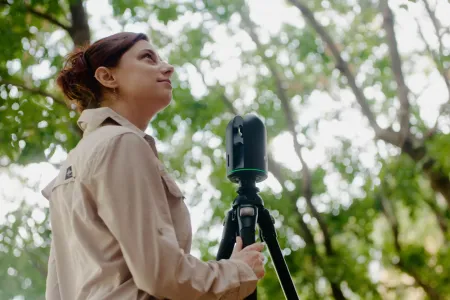

Research web portal
Our research portfolio has real-world impact, within and beyond our unique location in Northern Australia.
The CDU Research Web portal provides access to CDU's Research Projects and Researchers.
ExploreOther types of PhD and MRes available at CDU
PhD by Publication
CDU PhD by Publication Guidelines
What is a PhD by publication?
Different institutions use different names for the PhD by publication (PP), such as a PhD including publication. Regardless of name, the typical PP thesis format is initial and final chapters that cohesively link selected key publications, which are presented as the middle chapters with accompanying text. The publications are generated by research conducted during the PhD candidature and the thesis overall must clearly articulate their collective significant original contributions to a specific focused area of knowledge. The PP thesis follows the same examination process and criteria as a traditional PhD in which the SOCK is the key factor. (Some further reading is listed at the end of the guidelines).
Number and type of outputs
As a rule of thumb, a PhD by Publication thesis should include a minimum of 3 or 4 first author articles published in quality journals (see later section for non-traditional research outputs). This number can vary by discipline and contextual factors. For example, Paltridge & Starfield (2023) report between 3 to 6 articles for humanities/social sciences PP theses. Article length is also a consideration, and a larger number of articles with lower word counts may be needed.
The selected PP articles should cluster in a particular knowledge area, and each must demonstrate clear and distinct outstanding knowledge contribution. While this may vary by discipline, the selected articles will usually therefore present primary research, rather than literature review, or reflections and opinions about a subject (e.g. opinion piece and literature review articles may not count).
The selected articles should also be published in top-quartile journals, e.g. see https://www.scimagojr.com/ . This high ranking provides an objective, internationally recognised benchmark for research quality and impact – 3 Q1 (top 25% of journal) and a Q2 article might be therefore acceptable.
Credibility and quality of an articles’ contribution potential can further be demonstrated by relating a journal’s specific ranking percentile, e.g. see https://www.scimagojr.com/, as well as other objective indicators, including journal impact factor, and an article’s citation metrics, e.g. Google Scholar, ResearchGate; SciVal, etc. Additional indicators include reference in policy documents, regulation, education programs, etc. (After a student has enrolled, the ORI team can offer further insights on impact).
Other PhD research outputs, such as practitioner articles and reports, conference papers or book chapters, may be related in the thesis but these would not usually appear in full in the PP thesis, since the associated peer review process is often not as rigorous as top journals. Such outputs are often therefore mentioned in support of practical contributions and research impact, rather than knowledge contribution.
Is a PhD by publication is a suitable option?
The PhD journey provides candidates with Australian Qualifications Framework level 10 training in academic research and writing. Students and candidates sometimes mistakenly consider a PhD by publication as a simpler option. Whereas it presents additional challenges and requires a clear publication strategy to demonstrate the same significant contribution to knowledge as the traditional PhD. For candidates without a record of article writing and publication, a PhD by publication may not be a viable option.
Candidates considering a PhD by publication should conduct their own research to develop their understanding of what this PhD format entails. General reading around, along with specific reading in the chosen discipline or field of research (FoR) is essential. Reviewing examples of prior PhDs by publication in the relevant FoR can assist. Examples can be found by searching “dissertations” in the CDU library (e.g. Norris 2023). (The CDU library support team can also assist if needed).
Where possible, candidates should try and include a supervisor on their panel who has experience of supervising a PhD by publication in the relevant FoR. However, this will depend upon supervisor availability and may not always be an option.
Some research projects have an associated pre-planned PhD by publication. However, for most candidates considering a PhD by publication, the logical pathway is to start off with a traditional PhD in mind. Research and writing capabilities will be evaluated via a candidate’s progression, including the confirmation of candidature (CoC) proposal, and the initial thesis literature review and methodology chapters. The decision is thereby informed by this progress, and supervisors will determine whether the PP is a realistic option.
Starting off with a traditional PhD makes sense for most candidates, since the publication process is unpredictable. The period from paper submission to resubmission(s) to acceptance is often more than a year. While an under-review paper may be acceptable for inclusion in the thesis, most papers will need to have been published prior to the thesis submission. Furthermore, rejection of a key paper can undermine the viability of the PhD by publication.
Many traditional PhDs produce not only a thesis but also numerous high-quality journal articles. While the PhD by publication is becoming more common, candidates should also be aware that some disciplines may view it as a second-rate PhD.
Eligibility criteria for the PP
Determining a potential candidate’s suitability to submit a PP thesis will include consideration of:
- Publications produced during the candidature that cluster into a particular field and demonstrate significant original contribution to knowledge (SOCK). This SOCK will generally refer to new research that has impact and verifiable outcomes relating to knowledge, often in relation to the economy and/or society and/or environment.
- A minimum of 3-4 first authored quality journal articles, which form the focus of the PP thesis. The associated cohesive contribution narrative then demonstrates the significant knowledge contribution. (NB. High quality typically refers to top-quartile Q1 journals, i.e. ranked in the top 25% of academic journals in a particular subject area, though Q2 articles may be acceptable).
- Publications with other quality indicators such as high citation counts, or other demonstrable impacts might be relevant for inclusion, e.g. a highly cited articles from lower ranked journals, but in such cases including a higher number of outputs might be applicable.
- Other outputs like book chapters, conferences, reports, etc., can be related to support overall contribution and impact. However, these would usually receive mention rather than being part of the actual thesis, since such outputs do not undergo the same rigorous peer review process associated with most top-tier journals.
- The included publications must all have arisen directly from the PhD research work.
- Publications included in the PP should demonstrate originality of contribution. Literature review papers and opinion pieces would not therefore normally count toward the minimum number of articles required.
- In some disciplines, such as Arts, where research outputs often do not take the form of published written works, alternate outputs can be considered. For example:
- original creative works
- live performance of creative works
- recorded/rendered creative works
- curated or produced substantial public exhibitions and events
- research reports for an external body
- portfolio/collection
These are often referred to as non-traditional research outputs (NTROs). For PP theses comprising NTROs equivalent credible quality indicators will need to be provided, which could include quantifying the scale of works based on where they were exhibited, scale of audience, etc. (CDU Faculty of Arts and Society Associate Dean of Research can provide further insights to NTROs)
NB. The PhD format involving artefact and exegesis is likely to be more applicable for research producing NTROs.
Reading
Mason, S., Frick, L., Castelló, M., Cheng, W., Chong, S. W., Díaz Villalba, L., … Weise, C. (2024). What makes a Thesis by Publication? An international study of policy requirements and restrictions. Journal of Higher Education Policy and Management, 47(1), 57–72. https://doi.org/10.1080/1360080X.2024.2389357
Norris, E. (2023). Is Corporate Reporting Useful for Stakeholder Accountability? The Case of Aboriginal and Torres Strait Islander Not-for-Profits in Australia [ProQuest Dissertations & Theses]. https://doi.org/10.25913/8prr-t094
O’Keeffe, P. (2022). The PhD by Publication as Preparation for Work in the ‘Performative University’. In: Chong, S.W., Johnson, N. (eds) Landscapes and Narratives of PhD by Publication. Springer, Cham. https://doi.org/10.1007/978-3-031-04895-1_13
Paltridge, B., & Starfield, S. (2023). The PhD by publication in the humanities and social sciences: a cross-country analysis. Journal of Further and Higher Education, 47(7), 863–874. https://doi.org/10.1080/0309877X.2023.2190450
For further information please contact Research.Degrees@cdu.edu.au
Practice based HDR (Creative Artefact/ Research Object-Exegesis)
CDU Guidelines for Practice based HDR (Creative Artefact/ Research Object-Exegesis)
Institutional guidelines informed by CDU Higher Degree by Research policy discussions and consultation with relevant stakeholders, contributions from current and former CDU staff, and broader sector approaches to practice-led, practice-based, and artefact–exegesis research, including consideration of relevant guidance, policies, and frameworks from other Australian institutions and HDR/HE sector bodies such as the Australian Council of Graduate Research (ACGR)
1. Purpose
These guidelines outline the principles, expectations, and requirements for Higher Degree by Research (HDR) candidates undertaking a PhD or Master by Research through a Creative Artefact/Research Object–Exegesis pathway at Charles Darwin University (CDU).
The guidelines support a broad and transdisciplinary interpretation of creative artefacts and research objects across the arts, humanities, social sciences, sciences, health, public policy, engineering, technology, education, First Nations research, and professional practice contexts.
This pathway enables candidates to demonstrate a substantial original contribution to knowledge through an integrated combination of:
- a creative artefact and/or research object; and
- an accompanying exegesis that critically contextualises, analyses, and articulates the contribution to knowledge of the overall research project and discipline.
This form of research is also commonly described internationally as practice-led, practice-based, or “PhD by practice” research. In such approaches, creative or professional practice may function not only as an outcome of research, but also as a method of inquiry and knowledge generation.
2. Nature of the Thesis
A Creative Artefact/Research Object–Exegesis thesis combines scholarly inquiry with creative, professional, technical, or applied research outputs.
The creative artefact or research object may include traditional or non-traditional research outputs depending on disciplinary norms and the nature of the research question.
Examples may include, but are not limited to:
Creative artefacts:
- visual art exhibitions;
- performances;
- creative writing;
- films and media productions;
- other creative or practice-based works.
Research objects:
- software systems;
- datasets;
- engineering prototypes;
- digital platforms;
- policy or professional outputs;
- archives or collections;
- design projects;
- community-based projects;
- publications or portfolios of publications;
- Indigenous knowledge projects; or
- other discipline-specific artefacts, outputs, or research objects.
The artefact/research object and the exegesis are examined as complementary components of a single doctoral research project. Neither component is considered secondary or supplementary to the other.
3. Practice led and practice-based research
In practice-led and practice-based research, creative practice, professional practice, or applied inquiry may function as a mode of generating knowledge.
Research questions, conceptual understandings, and methodological insights may evolve iteratively through the research and creative process itself.
The relationship between the creative artefact/research object and the exegesis should itself form an important aspect of the original contribution to knowledge.
The exegesis is not merely a descriptive commentary or reflective journal. It should critically situate the research within relevant scholarly, disciplinary, theoretical, cultural, methodological, and/or professional contexts. It should argue the social, cultural, economic, environmental, political or educational impacts the artefact or object contributes to.
4. Individual and collaborative creative artefacts/research objects
Creative artefacts and research objects submitted for examination would normally represent the candidate’s individual research and creative effort. However, collaborative, co-created, co-produced, or co-authored outputs may be included provided these form part of a coherent and integrated doctoral research project and where the candidate’s individual contribution can be clearly identified and evaluated.
Where collaborative artefacts/objects/outputs are included:
- the candidate must clearly identify and document their individual contribution to each;
- contributions may include conceptualisation, methodology, analysis, writing, creative practice, technical development, design, production, curation, or other scholarly or professional contributions;
- the thesis must demonstrate that the candidate has made a substantial and original individual contribution to the overall research project;
- all collaborative and co-authored work must comply with CDU research integrity, authorship, copyright, and intellectual property requirements;
- co-created or co-authored outputs included within the thesis must not have been previously submitted, in whole or substantial part, toward another PhD, Masters by Research, or equivalent research qualification by another candidate.
Where appropriate, the candidate must provide contribution statements acknowledged by supervisors, collaborators, co-creators, or co-authors. Use of Generative AI should also be acknowledged.
All creative artefacts/research objects included within the thesis should be critically contextualised through the exegesis and integrated into the overall research narrative and contribution to knowledge.
5. Structure and length
The final structure of the thesis may vary according to disciplinary conventions, the nature of the artefact/research object, and supervisory and examination requirements.
As a general guide:
- the exegesis for a Masters by Research thesis would normally fall within the range of approximately 10,000–25,000 words;
- the exegesis for a doctoral thesis would normally fall within the range of approximately 30,000–50,000 words;
- shorter or longer exegetical components may be appropriate where justified by the scale, scope, complexity, or disciplinary nature of the creative artefact/research object.
The combined creative artefact/research object and exegesis should demonstrate the equivalent intellectual and research effort expected of the relevant HDR award level.
The exegesis would normally include:
- introduction and research context;
- literature and contextual review;
- research aims and/or questions;
- methodology and methods;
- critical analysis and discussion;
- articulation of the contribution to knowledge
- real world impacts
- and conclusion.
Alternative structures may be appropriate where justified by disciplinary practice, including integrated or non-traditional formats where these support the research aims and contribution to knowledge.
6. Ethics and research integrity
All Creative Artefact/Research Object–Exegesis projects must comply with CDU ethics and research integrity requirements.
Candidates must:
- complete relevant research integrity and ethics training;
- obtain ethics approval prior to commencing any required data collection or participant involvement;
- comply with copyright, cultural, confidentiality, and intellectual property requirements; and
- ensure appropriate permissions for the use of identifiable, confidential, ollaborative, or culturally sensitive material.
Projects involving autobiographical work, institutional critique, community participation, or Indigenous knowledge may require additional ethical consideration and consultation.
7. Supervision
Supervisory panels should collectively provide expertise relevant to:
- the discipline area;
- the research methodology;
- and the form of creative artefact or research object.
Candidates are expected to consult supervisors regarding:
- substantial changes in project direction;
- major methodological changes;
- changes to artefact/research object scope;
- publication plans;
- ethics implications; and
- collaborative arrangements.
8. Examination
Creative Artefact/Research Object–Exegesis theses are examined according to the same doctoral standards applied to all HDR degrees.
Examiners assess:
- originality and significance of the contribution to knowledge;
- intellectual and methodological rigour;
- coherence between the artefact/research object and exegesis;
- disciplinary and scholarly contribution;
- critical and reflective capacity; and
- the quality and significance of the overall integrated research project.
Where appropriate, examinations may involve exhibitions, performances, demonstrations, screenings, presentations, or access to digital or online materials. Candidates must ensure examiners are able to access and evaluate all examinable components appropriately.
9. Candidate capability and admission
Applicants should demonstrate capacity appropriate to doctoral-level research and/or professional or creative practice.
Evidence may include:
- prior academic study in the relevant discipline of the artefact/ object;
- creative works, exhibitions or performances;
- industry or community engagement;
- technical expertise;
- professional practice;
- publications or research outputs;
- or other evidence of scholarly and creative capability.
Applicants should demonstrate why the proposed research requires a Creative Artefact/Research Object–Exegesis approach and how the project will contribute original knowledge to the field. A draft budget may be required to demonstrate how the artefact/object fits within the scope of the allocated budget and be feasible based on CDU resources and equipment.
Recognition of Prior Learning (RPL) may be considered in accordance with CDU policy and HDR requirements. In some circumstances, candidates may seek recognition for prior doctoral-level research, creative artefacts, research objects, publications, or related outputs previously developed:
- as part of candidature at another institution;
- through prior CDU research projects or initiatives;
- or through other approved doctoral-level research contexts.
Applications for RPL would normally require evidence demonstrating:
- the originality and doctoral-level standard of the work;
- the candidate’s individual contribution;
- compliance with research integrity, ethics, authorship, copyright, and intellectual property requirements;
- and that the work has not previously been awarded as part of another completed PhD, Masters by Research, or equivalent qualification.
Where prior work has been developed through CDU research projects, initiatives, or approved research activities, this may assist in demonstrating appropriate research governance, ethics, and integrity processes. Any approved RPL must remain consistent with AQF requirements and CDU expectations regarding original contribution to knowledge and independent research capability.
10. Final Principle
The defining criterion of a PhD by Creative Artefact/Research Object–Exegesis is not the form of the artefact itself, but the extent to which the integrated thesis demonstrates a rigorous, original, and significant contribution to knowledge appropriate to doctoral-level research.
References and Acknowledgement
These draft guidelines were informed by:
- CDU HDR policy discussions and prior CDU guideline development;
- Contributions from current and former CDU staff;
- Australian and international institutional approaches to practice-led and artefact–exegesis doctoral research;
- Sector guidance relating to doctoral examination, publications, and practice-based research.
Relevant reference materials consulted include:
- UK Council for Graduate Education guidance on publications and artefacts in doctoral submissions;
- UniSA guidelines for theses containing published research and theses by creative practice;
- La Trobe University guidelines for practice-based research degrees;
- Selected Australian and international literature relating to practice-led, practice-based, and publication-integrated doctoral research.
Digital Doctorate
Higher Degree by Research have changed, and are now available online
- Students and supervisors can be located anywhere in the world
- Weekly meetings are held via Teams or Zoom
- Feedback is delivered digitally
- Charles Darwin University (CDU) Library provides full online services and support
- Milestone events are delivered and assessed digitally
- Thesis are sent to examiners digitally
Cotutelle Doctoral Degree
Cotutelle Doctoral Degree Guidelines
What is a Cotutelle?
A Cotutelle Doctoral Degree refers to a doctoral degree program that is undertaken jointly at Charles Darwin University (CDU) and another international higher education institution. A PhD student (domestic or international) is supervised jointly by academics from both institutions.
The candidature is divided between CDU and the partner institution, spending a minimum of 12 months at each university. Upon successful completion of a PhD students will also be awarded two parchments, one from each institution. CDU can either be the home institution (where the student spends the majority of their time) or the host institution.
Eligibility
To be eligible for a cotutelle doctoral degree a student will need to be:
- Admitted to a doctoral degree at your home institution
- A full-time student • Within the first year of your PhD
- Have the support of your home institution's principal supervisor, and
- Have identified a potential supervisor at the host institution
Timeframes
Due to the detailed nature of cotutelle arrangements, it can take up to three months to develop an agreement and gain approval.
Benefits of a Cotutelle PhD
Benefits for Students
- Exposure to diverse international educational environments
- Increased professional networks
- Enhanced career opportunities
- Access to different infrastructure and research expertise
Benefits for Supervisors
- Enhancing current research collaborations
- Developing broader research programmes
- Increasing professional networks
- Understanding innovative research perspectives extending the global impact of research
Contact us
If you have questions we are here to help:
Higher Degree by Research Team
research.degrees@cdu.edu.au
Contact us
If you have questions about studying a Higher Degree by Research, would like to discuss your options or check your eligibility, we are here to help.
Please contact CDU Global
Research success
-

How to finish a PhD quickly
The idea of committing a chunk of your life to research can be both exciting and daunting, but there are ways to make sure your timelines don’t blow out and your motivation doesn’t run out. CDU’s Dean of Graduate Studies, Professor Tara Brabazon, offers her top 10 tips for submitting your thesis quickly.
Read more -
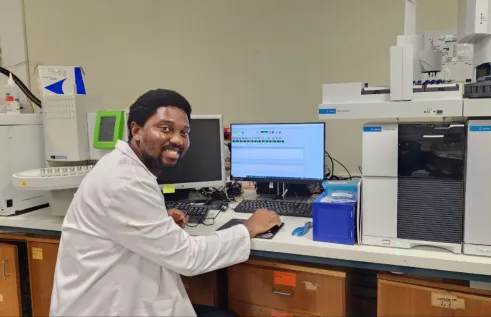
Life in plastic, it's (not so) fantastic
We are currently facing a plastic pollution crisis that impacts the health of humans, wildlife, marine and terrestrial environments, and even Earth’s climate system. Caleb Ojo, a Higher Degree by Research student at CDU, is trying to solve one of the plastic waste problems plaguing our beautiful planet.
Read more -
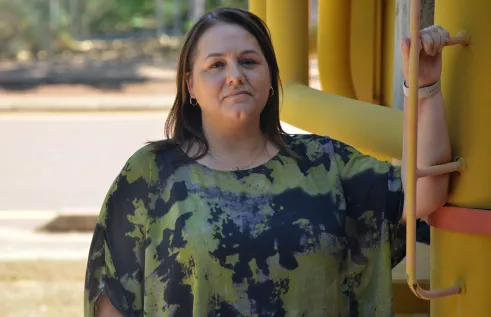
Seeking answers to low numbers of First Nations women in mining
CDU Researcher PhD candidate Jodi Cowdery investigates the low number of First Nations women working in the Northern Territory mining industry. The mining industry has long been populated by non-First Nations men from outside of the nearby communities.
Read more


