Student stories
John's digging his way to a new career

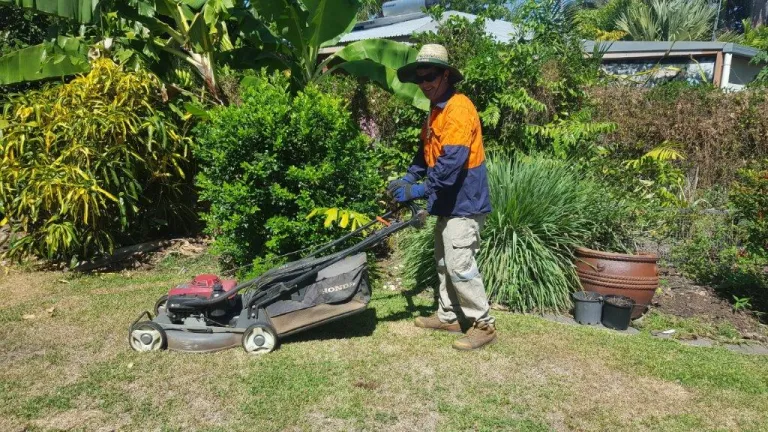
John Hogarth is no stranger to digging in the dirt. For 14 years he worked as a fly-in-fly-out worker in the civil and mining sector. But when long hours and a grueling FIFO roster took their toll, he knew it was time for a change. Now, with a certificate in horticulture from CDU, he’s getting his hands dirty again.
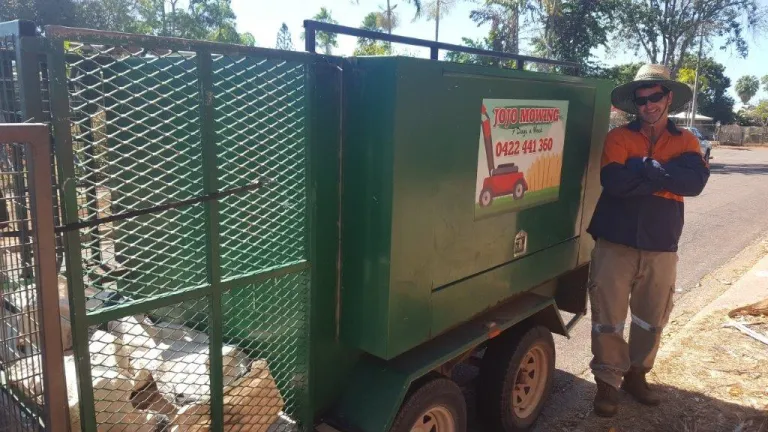
From day one, John was confident he’d made the right choice. Setting up his own business, Jojo Mowing, as a landscape gardener, he had less responsibility and was working less hours. However, he realised pretty quickly that there was more to gardening than he first thought.
Planting the seeds of knowledge
“Customers started asking me things I knew nothing about,” says John. “’How do I prune this plant?’, ‘What fertiliser do I use?’, ’Which plant is perfect for this landscape?’. I wanted to learn more and get hands on experience, so I enrolled in the horticulture course at CDU.”
“The teachers on the course were great. They were patient and generous with their time and, when I turned up with a list of customer questions at the end of a week at work, they happily helped me out.”
Thanks to his horticulture teachers, John has gained confidence in his abilities and knowledge. There’s been no more "winging it or relying on Google!".
Practical hands on learning for locals
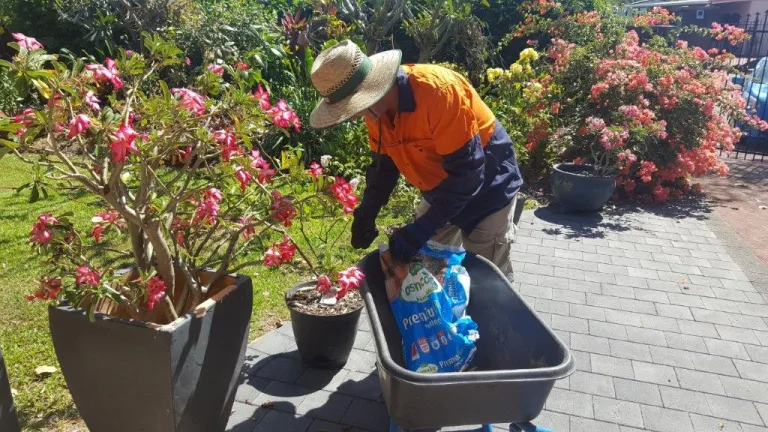
“I’ve learnt so much about gardening overall," he says. “There are a lot of things we do here, that wouldn’t be done down south.”
Doing the horticulture certificate at CDU means I have specific knowledge about Darwin vegetation and gardens.
It’s the same when it comes to fertilising, mulching, irrigation and tools.
Having this hands-on knowledge has made my life easier and changed my business for the better. Customers trust me and contact me for advice.
Challenges worth facing
Studying a horticulture course hasn’t come without its challenges. For starters, no two plants are the same. “I had to identify plants from their leaf shape, texture and colour and remember their generic form names,” says John. “Some of these generic names are like Greek 20 letter alphabets! Luckily my teacher was happy to go over and over it until it finally sank in.”
Juggling study, work and family was also something John had to manage. But with careful planning he kept it all under control. For any late nights, he had coffee.
From little things big things grow
“I enjoyed the horticulture course and got so much out of it, that it was worth the juggle. I think anyone working in the gardening industry would definitely benefit from it. The things I’ve learnt, I put into practice every day.”
There’s no doubt that John’s newfound skills and experience will help his business continue to grow. Some might say it’s already become a blooming success.
Is it time to nurture your green thumb? Explore CDU’s range of hands-on horticulture courses.
Related Articles

Finding Community in CDU
Why Alcyonie chose Environmental Science at CDU
Read more about Finding Community in CDU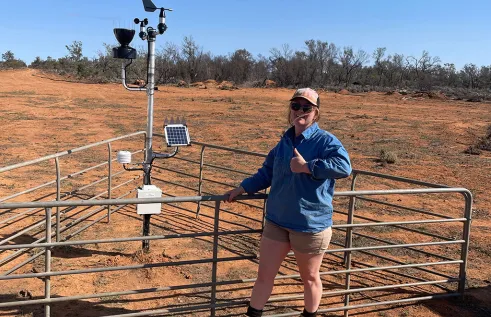
Following the flock: Samantha’s research could revolutionise water point placement
When Samantha first moved to South Australia's harsh outback, she was confronted by what she saw.
"Having recently moved to arid pastoral South Australia, I was struck by the hot, dry climatic conditions," she says. "I found myself questioning what made these landscapes so resilient, how livestock production could thrive in such conditions and whether this relationship was truly sustainable."
Read more about Following the flock: Samantha’s research could revolutionise water point placement
The NT inspired Kate to become an environmental scientist
A road trip around Australia sparked a huge career change for Kate. The recent Bachelor of Environmental Science graduate switched gears from real estate to environmental science after falling in love with the uniqueness of the Northern Territory.
Read more about The NT inspired Kate to become an environmental scientist


