Student stories
Knowing when to ask for help: Meg's study story

When Meg graduated from CDU with an environmental science degree, she quickly landed a job in her chosen profession. But Meg’s success came after many challenges. Her story is one of persistence, passion and knowing when to reach out for help.
Meg has bipolar disorder, a chronic mental health condition which causes strong changes in mood and energy and affects how an individual is able to function in everyday life. “But with the right treatment and help, people can manage the illness and are able to live full and productive lives,” says Meg.
Starting uni after seeing the world
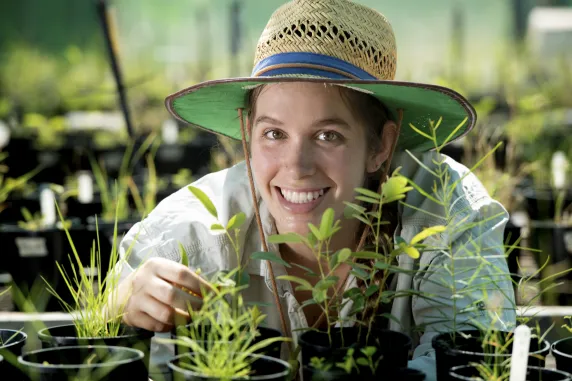
“When I was 17, I attempted to go to university right out of high school, but I ended up dropping out because I wasn’t coping well,” says Meg.
What followed for Meg included two years of backpacking through Southeast Asia, Central America, the Amazon and the Galapagos. Travelling helped Meg discover what she wanted to do next.
“It wasn’t until I experienced other amazing areas of the world that I began to truly appreciate the beauty and biodiversity of the Northern Territory.
My travel experiences solidified my desire to study and pursue a career within environmental sciences.
“I did some research and saw that CDU’s environmental science degree was regarded as one of the best in Australia. The course offered a lot of field intensives and hands-on experience, which appealed to me,” said Meg.
Supported to succeed
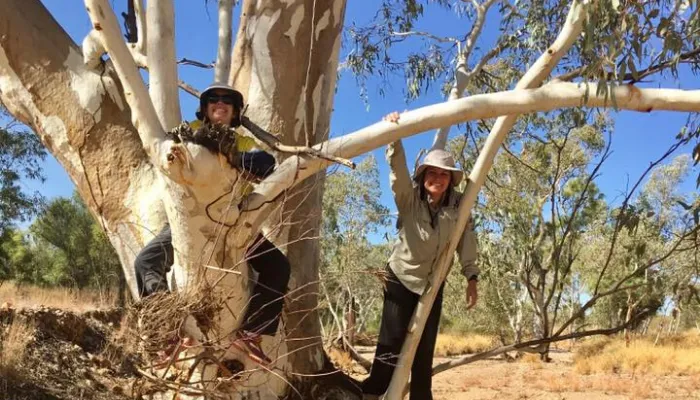
When Meg was thinking of studying again, she worried that she might again become unwell and be unable to continue with her course.
This time I reached out for support and talked to people about my condition, which made a big difference.
“One of the things I needed support with was exams," says Meg. It didn’t matter how much preparation and practise I did (and trust me, I did a lot!), I always experienced overwhelming anxiety. I was such a mess in my first-ever exam—uncontrollably shaking and crying—that it took me over an hour to calm down enough to write my name on the paper!
After that I reached out to CDU’s support staff, who helped me with special considerations for exams. I was given my own room, so I didn’t disturb other students, and extra time to walk around and burn off all that anxious energy.
"By my last year I was a pro and I breezed through my final exams. During the whole process my lecturers were kind and understanding. It made me realise that they cared about my wellbeing and wanted me to succeed,” said Meg.
Getting the grades - and awards
Meg finished her Bachelor of Environmental Science with a 6.88 GPA and her Honours degree with a perfect 7.00 GPA, along with the Chancellor’s Medal. She earned outstanding academic achievement awards for every semester of her studies, plus three environment scholarships and the Territory Natural Resource Management Award.
She also won the Outstanding Academic Achievement in the Bachelor of Environmental Science Award, and the Australian Council of Environmental Deans and Directors 2017 Top Scholar Award, recognising the top 10 environmental science graduates from around Australia.
“There’s no shame in admitting that you need help, or that you’re struggling, or you need extra time,” says Meg.
Lecturers are people too, and they understand that sometimes life gets in the way. There are amazing services at CDU.
“It’s always good to talk to someone. If you are at CDU student that's struggling, there are options for seeking help and support,” Meg adds.
If you’re experiencing mental health problems, supportive information can help you make informed choices and could change your life. CDU’s student support team is on hand to support CDU students.
Considering a future in environmental science? Explore CDU's environmental science courses.
Related Articles
Finding Community in CDU
Why Alcyonie chose Environmental Science at CDU
Read more about Finding Community in CDU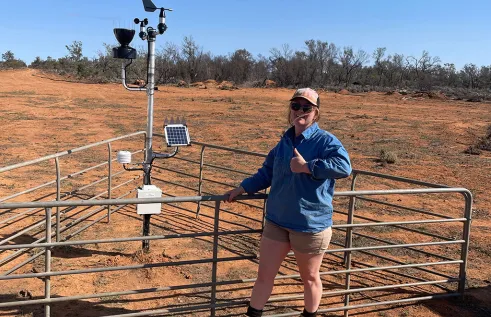
Following the flock: Samantha’s research could revolutionise water point placement
When Samantha first moved to South Australia's harsh outback, she was confronted by what she saw.
"Having recently moved to arid pastoral South Australia, I was struck by the hot, dry climatic conditions," she says. "I found myself questioning what made these landscapes so resilient, how livestock production could thrive in such conditions and whether this relationship was truly sustainable."
Read more about Following the flock: Samantha’s research could revolutionise water point placement
The NT inspired Kate to become an environmental scientist
A road trip around Australia sparked a huge career change for Kate. The recent Bachelor of Environmental Science graduate switched gears from real estate to environmental science after falling in love with the uniqueness of the Northern Territory.
Read more about The NT inspired Kate to become an environmental scientist


