News
CDU leads the sector on vaccination requirements

To prevent the spread of COVID-19 into Aboriginal communities, Charles Darwin University (CDU) has asked any staff travelling to and working on Aboriginal controlled land to be fully vaccinated.
From Friday, October 1, all staff travelling to these areas to undertake research or fieldwork, attend meetings with stakeholders or attend events, will be required to be vaccinated.
This is first for the Australian university sector and affirms CDU’s commitment to protecting vulnerable communities.
In addition to those travelling, CDU is encouraging all CDU staff to get vaccinated to protect their own health and stop the spread of COVID-19 across the Territory.
CDU Vice-Chancellor Scott Bowman said due to the University’s unique location in Northern Australia and its ongoing work and commitment to Aboriginal communities, CDU was taking a leadership role to safeguard public health.
“CDU is a university that occupies a unique place in Australia, and we acknowledge this with a sense of pride and a sense of responsibility,” Professor Bowman said.
“Aboriginal leaders are sending clear messages that they want people travelling to and working with communities to be vaccinated.
“We are very concerned about the possible spread of COVID-19 into Aboriginal communities. If this virus does take hold and enters those communities, it would be catastrophic and devastating.
“We’re proud to lead the way as an Australian university by showing the right way to respond to this virus to protect vulnerable Indigenous communities in the Northern Territory.”
The decision by CDU echoes the sentiment of Traditional Owners, Aboriginal leaders and organisations, such as NLC and the Aboriginal Medical Service Alliance, who have called for those entering remote communities to be vaccinated.
Related Articles
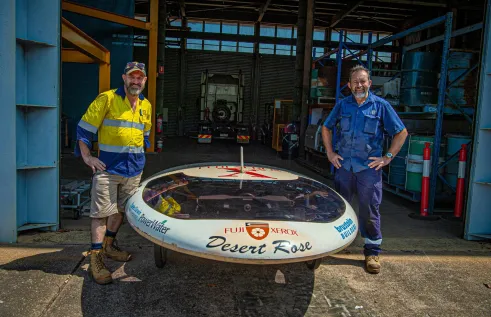
'Desert Rose' to be preserved
The legacy of a world record-breaking solar car, developed by and raced by Charles Darwin University students and staff, will be preserved and celebrated in the Northern Territory’s premier museum.
Read more about 'Desert Rose' to be preserved
Africans reuse, repair, recycle and resell waste: what’s needed to build on the circular economy basics
Africa’s circular economy is already at work in repair shops and scrap yards. Backing the people who keep goods in use could cut waste and create better jobs.
Read more about Africans reuse, repair, recycle and resell waste: what’s needed to build on the circular economy basics
Hamlet gets a contemporary twist in Darwin
Shakespeare’s most famous tragedy will be brought into the modern world in a bold new production of Hamlet at Charles Darwin University Theatre this month.
Read more about Hamlet gets a contemporary twist in Darwin


