News
Change in diet may contribute to rapid recovery of apex predator, new research reveals
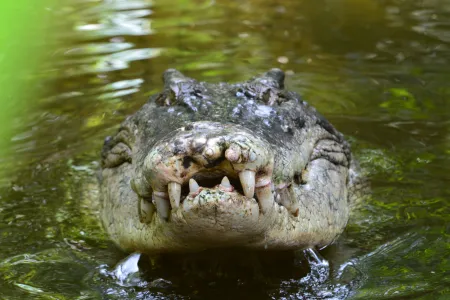
New research from Charles Darwin University (CDU) has revealed that the estuarine crocodiles (Crocodylus porosus) in the Northern Territory have shifted from an estuarine based diet to one that is largely derived from terrestrial sources.
CDU Research Associate Dr Mariana Campbell said this change in diet could be contributing to their increased movement into Northern Australia floodplains, where feral pigs are concentrated.
“We were surprised to observe such a significant shift in the diet of estuarine crocodiles across the Top-End over the past 50 years,” Dr Campbell said.
“Our results show that they have shifted from a marine-estuarine based diet, such as fish, marine turtles, to a more terrestrial based diet of feral pigs, and buffalo.”
The study, published today in Biology Letters, could explain why crocodiles in Northern Australia have successfully recovered so quickly from previously very low numbers.
The researchers compared stable isotopes from museum bone specimens collected when crocodile populations were low, to the isotopes in bones of crocodiles from today.
It was discovered that the isotopes prominent in predators with a mainly marine diet, such as in the crocodile from five decades ago, were lacking in the apex predators now.
The historical crocodile samples that were included in the study were from museum collections.
Crocodile numbers were reduced to a few thousand in the 1970s due to hunting, but since then have recovered in the Northern Territory.
Dr Campbell said the estuarine crocodile was Australia’s large carnivore success story, and increased availability of feral pigs in freshwater floodplains likely contributed to that success.
"A reduction in estuarine prey may have also contributed to the crocodiles diet change,” she said.
“It is likely a combination of a change in available prey, and a general ingress of crocodiles from the estuaries into the freshwater flood plains.”
According to CDU Professor of Environment Hamish Campbell, who is a co-author of the new paper, this latest research adds a piece to a bigger puzzle about the crocodile’s impact on the ecosystem.
“The research shows that crocodile recovery is having a significant impact on both freshwater and terrestrial food webs in northern Australia,” Professor Campbell said.
“Figuring out wider ecological impact from the growing crocodile population is what the research team are currently working upon under the Australian Research Council Discovery scheme.”
Related Articles
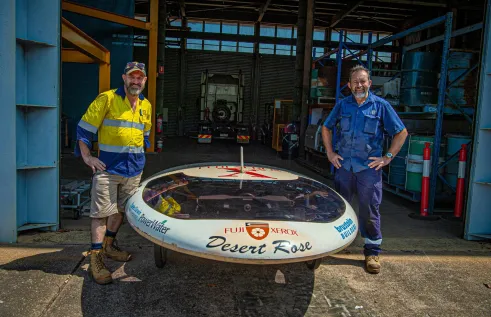
'Desert Rose' to be preserved
The legacy of a world record-breaking solar car, developed by and raced by Charles Darwin University students and staff, will be preserved and celebrated in the Northern Territory’s premier museum.
Read more about 'Desert Rose' to be preserved
Federal funding for Country-based health and climate resilience
A new research collaboration to support and strengthen Country-based health and climate resilience has received funding through the National Health and Medical Research Council’s Centres of Research Excellence scheme.
Read more about Federal funding for Country-based health and climate resilience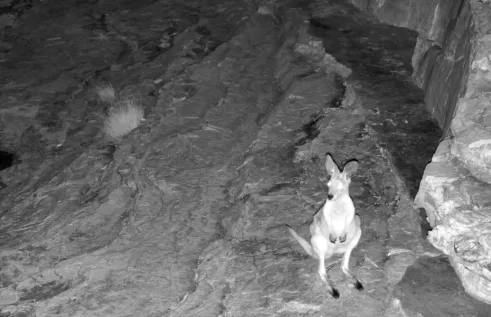
New livestream brings remote Australian arid zone waterhole to the world
A new livestream from a remote waterhole in the Northern Territory is giving people around the world the opportunity to observe wildlife in real time.
Read more about New livestream brings remote Australian arid zone waterhole to the world


