New project to enhance Australia-China agriculture and aquaculture
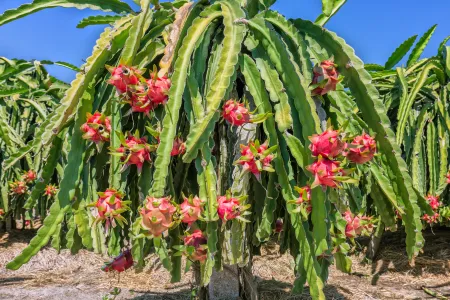
Enhancing the quality of Australian seafood and initiatives to introducing new dragon fruit cropping technologies will be among the activities and knowledge exchanged between Australian and Chinese researchers in a new project led by Charles Darwin University (CDU).
CDU has received $240,000 through the National Foundation for Australia-China Relations 2023-24 competitive grants round for the project Advancing Tropical Agriculture Collaboration between Australia and China through Academic Exchanges and Collaborative Initiatives: Towards sustainable tropical primary production with traceable products, which focuses on exchanging techniques and knowledge of each region’s agriculture and aquaculture practices.
The project will be headed by CDU and involve leading delegations of about eight Australian researchers to visit Shantou and Hainan, China in 2024 and 2025, as well as facilitating delegations of about eight Chinese researchers to visit northern Australia in 2025 and 2026.
Overall, the project will involve participation by more than 70 researchers across both countries and will be led by CDU Research Institute for Northern Agriculture’s (RINA) Professor of Tropical Broadacre Cropping Systems Stephen Xu and Professor of Tropical Aquaculture Sunil Kadri.
Australian researchers will focus on sharing expertise in sustainability practices to address environmental challenges such as such as greenhouse gas emissions, chemical pollution, animal welfare and food safety. The collaboration also aims to take advantage of Chinese knowledge and technologies to benefit Australian society and businesses, including in the dragon fruit crop market, and barramundi and tiger prawn markets.
While dragon fruit is still an emerging crop in Australia, valued at about $3.87 million in the 2020-21 growing season, the global industry is estimated to be worth $22 billion in 2024.
Australia’s tropical aquaculture industry is centered on barramundi and tiger prawns, with a forecasted value of $800 million during 2024.
The project will involve initiatives to facilitate the adoption of new dragon fruit varieties and lighting flower stimulation technologies from China by Australian growers and support Australian aquaculture producers to enhance the quality and sustainability of domestic Australian production.
Professor Xu said the program aimed to benefit the agriculture industry of both countries.
“The project will introduce Australia’s environmentally-friendly, sustainable cropping methods to China,” Professor Xu said.
“Simultaneously, we will promote collaboration with Chinese researchers on product traceability, which is essential for capitalizing on the reputation of Australian premium agricultural products in export markets.”
Professor Kadri said the project would provide for an exchange of knowledge and approaches which facilitate a move forward for both countries in addressing common challenges in the aquaculture sector.
"The project will provide a forum for in-person exchange, discussion and development with respect to the latest advances in fish welfare research and application, particularly with respect to environmental enrichment and positive welfare, which are gaining increasing attention, in aquaculture for both food production and stock enhancement,” Professor Kadri said.
Related Articles

Federal funding for Country-based health and climate resilience
A new research collaboration to support and strengthen Country-based health and climate resilience has received funding through the National Health and Medical Research Council’s Centres of Research Excellence scheme.
Read more about Federal funding for Country-based health and climate resilience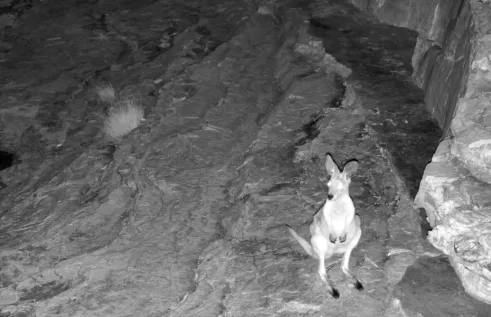
New livestream brings remote Australian arid zone waterhole to the world
A new livestream from a remote waterhole in the Northern Territory is giving people around the world the opportunity to observe wildlife in real time.
Read more about New livestream brings remote Australian arid zone waterhole to the world
Leading scientist recognised for lifetime of dedication to Australian biodiversity and conservation
One of the nation’s most distinguished experts in Australian biodiversity and conservation will be celebrated in an upcoming Charles Darwin University graduation ceremony.
Read more about Leading scientist recognised for lifetime of dedication to Australian biodiversity and conservation


