Northern Institute
Greenskin: Warrior Traditions in Defence of Country
| Presenter | Benjamin Ward | |
|---|---|---|
| Date/Time |
to
|
|
| Contact person |
Faculty of Arts and Society HDR
|
|
| Location | Savanna Room Yellow 1.2.48 and Zoom | |
| Open to | Public | |
Biography
Award-winning documentary filmmaker, creative producer and educator with a focus on cross-cultural storytelling and creative media production, Ben has produced short-form documentary films for television broadcast and on-demand streaming services, as well as many other independent film and art projects. Born, raised and schooled in Melbourne, he has lived in the Northern Territory since 1996 and worked extensively with the Aṉangu peoples of the Central and Western Desert regions and the Yolngu peoples of North East Arnhem Land.

Abstract
Greenskin: Warrior Traditions in Defence of Country will be a PhD by creative practice. I will produce a body of film work, together with an exegesis. My research practice is documentary filmmaking. I will be making critical-creative dialogue with traditions of ethnographic film and military propaganda. These filmmaking experiments will be shaped in response to Yolŋu modes of storytelling, which teaches us to allow room for different points of view, including Country as an authoritative voice in its own right.
My subject focuses on a special and yet largely untold moment in Australian social history. Adopting a hybrid observational-poetic mode of ethnographic filmmaking, the project will trace and re-map the journeys, adventures and clandestine activities of the miriŋu (Yolŋu warriors) from the once Northern Territory Special Reconnaissance Unit (NTSRU). Established in 1942, when Australia was under imminent threat of attack from the Japanese Imperial Army, the NTSRU was a special force of Yolŋu men trained by anthropologist Donald Thomson to defend the North Australian coastline. Led by Thomson and Rraywalla Mildjiŋi on behalf of the Australian Army, this unique force was organised along clan principles and guided by miriŋu tradition. Altogether, the NTSRU recruited 51 Yolŋu men organised according to clan structures. Their service was only made possible by conducting a culturally and historically significant ceremony (makarrata), which brought together previously warring groups to make peace with each other and defend the country as a unified group.
The aim of this creative research project is to research, record and reflect on previously undocumented dimensions of the history of NTSRU. Several interrelated media outputs will be produced to examine contemporary expressions of ‘warrior-hood’ through the lens of intercultural philosophy and poetic mode observational documentary. To date, nothing resembling this approach exists in the literature. The project will draw from and contribute to several broader interdisciplinary conversations in different modes (i.e. film and text-based) across film studies, anthropology, social history and Yolŋu studies. It will map a journey of exploration, creativity, discovery and storytelling surrounding these uniquely Australian stories. It will show the unbroken lineage and legacy from those events during the war to today’s representation of Defence activities along the northern coastlines of Australia from the perspective of both Yolŋu and Balanda project participants.
Join to watch
In-person: Savanna Room Yellow 1.2.48 and Zoom
Online: Please contact FASHDR@cdu.edu.au to request the Zoom link.
Related Events
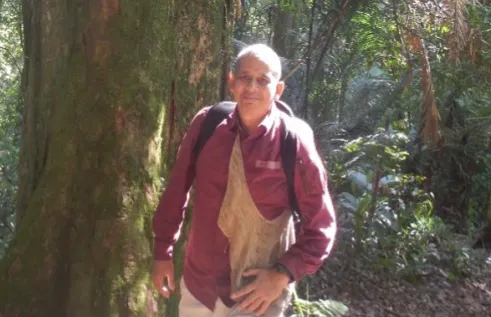
Last refugium of a critically endangered species: Three decades of conservation
The Banggai Crow (Corvus unicolor), is one of the world’s most threatened endemic species. The bird survives in an increasingly fragmented refugium within the Banggai Archipelago, Central Sulawesi.
Read more about Last refugium of a critically endangered species: Three decades of conservation
Time for research
This workshop shows you how to guarantee you spend high quality time on your research outputs. It covers prioritising, goal setting and managing competing demands in a university context. If you want to increase your research output without compromising your work/life balance, then this workshop is for you.
Read more about Time for research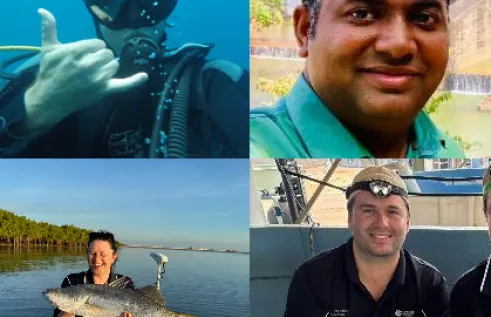
Marine science in the NT: From research and monitoring to stock assessment
In this seminar, the team will provide an overview of fisheries research in the Northern Territory, highlighting monitoring programs, data collection, and how these activities inform stock assessment and fisheries management
Read more about Marine science in the NT: From research and monitoring to stock assessment


